
Livraison le jour même ou le lendemain

Qualité garantie

Débloquez vos offres de bienvenue: Livraison GRATUITE | Jusqu'à -80 % | 30 jours d'essai gratuits à JoyPlus
Téléchargez l'application
A bidirectional OBD2 car scanner does more than simply turn off the engine warning light. It can communicate with several control units, display live data and, depending on the vehicle, operate certain actuators to help locate a fault. This is a useful feature for independent garages and private owners who maintain their own cars.
The problem is that product descriptions sometimes blur the distinctions between diagnostics, resets and programming. Here are the key points to check so you do not buy a diagnostic tool that does not really meet your needs.
A basic OBD2 code reader will generally only read and clear faults from the engine control unit. It will not necessarily provide access to the ABS, SRS, gearbox, air conditioning or the various body control modules.
Bidirectional control, also known as an active test, allows you to send a command to a compatible component, such as a fan, fuel pump, air-conditioning relay, electric window or solenoid valve. The available tests vary according to the make, model, year of manufacture and control-unit version. So just because a function appears in the menu does not mean it will be usable on every car.
The term all-system diagnostics means that the device can access the supported modules on certain vehicles. It does not guarantee that every function will be available on every model.
Before placing your order, have the 17-character VIN, engine type, gearbox type and date of first registration to hand. For a specific operation — EPB reset, ABS reset, BMS reset, throttle-body relearn or ECU coding — ask for confirmation of compatibility.
Some devices advertise free lifetime updates, while others only include them for a limited period. Once that period has ended, basic diagnostics may still be available, but advanced functions and new databases may require a renewal.
FCA AutoAuth access also deserves particular attention: the tool may support communication with certain protected vehicles, but creating an account and any fees charged by the manufacturer remain your responsibility. Take the time to read the terms and conditions before buying.
For regular use, choose a diagnostic tool that can read and clear codes from several systems, access control-unit information and display live data. Graphs, freeze-frame data and parameter recording make it easier to compare the vehicle’s behaviour before and after a repair.
In a garage, the ability to save, share or print a report can save valuable time. For private owners, a clear interface, a code library and automatic VIN detection help to minimise operating errors.
Newer vehicles may use faster networks or specific security gateways. The CAN FD protocol can carry more data per frame, while DoIP transmits diagnostic data via the vehicle’s Ethernet connection.
These protocols do not remove the need to check compatibility by VIN. However, they remain important if you work on several generations of vehicles or your fleet includes newer models. Also check whether the adapter is built into the diagnostic tool or sold separately.
Common functions include EPB Reset, ABS reset, BMS reset, SAS calibration, TPMS reset, throttle-body relearn, injector coding, gearbox adaptation and DPF regeneration.
ECU coding requires extra care. It can be used to adapt a replacement module or modify certain settings, but an incorrect operation could disrupt the vehicle’s operation. A stabilised power supply and strict adherence to the instructions displayed are essential. For operations involving the immobiliser, airbags or module programming, it is best to use a qualified professional if you are not completely confident with the procedure.
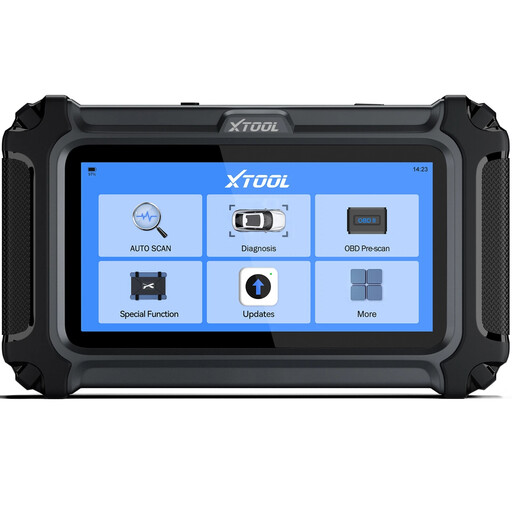
Why this choice suits this profile: Its touchscreen, guided menus and PDF reports are ideal for owners who want to check the engine, transmission, ABS and SRS systems without investing in a bulky professional tablet.
The product description states that service functions depend on the vehicle and recommends checking compatibility before buying. Software updates are advertised without an annual subscription.
Live-data readings, battery-voltage display, EPB and TPMS functions, plus throttle-body relearn, depending on vehicle compatibility.
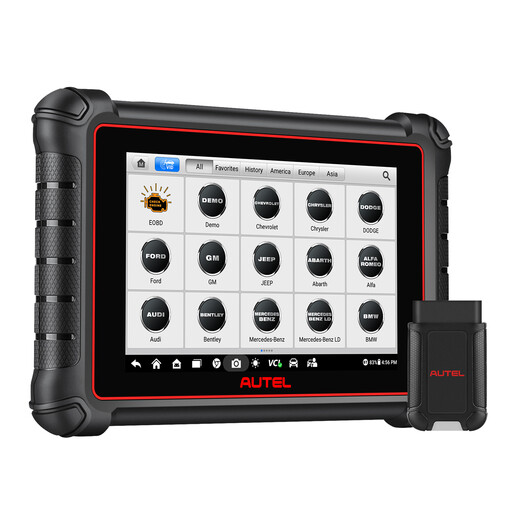
Why this choice suits this profile: Its 8-inch tablet, Bluetooth connectivity and access to manufacturer-level diagnostic functions will appeal to those looking for a complete, well-structured working environment.
The product description distinguishes between the initial included update period and services that depend on the vehicle. CAN FD and DoIP protocols are built in, with no additional adapter advertised.
More than 3 000 active tests advertised, over 40 service functions, data graphs and before-and-after intervention reports.
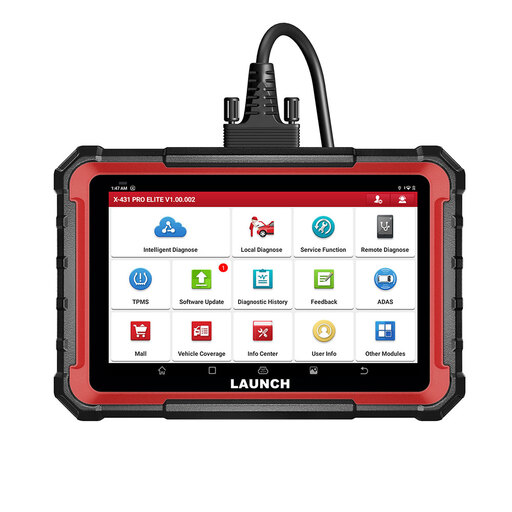
Why this choice suits this profile: Garages, technicians and fleet managers can make the most of its tablet format, all-system diagnostics, ECU coding functions and expansion options.
The product description states that coding and active tests depend on the make, model and system concerned. Included updates are limited to the period specified by the seller.
8-inch screen, 4 GB of RAM, 64 GB of storage and support for CAN FD and DoIP protocols, with TPMS, oscilloscope and endoscope extensions sold separately.
We have put together a comprehensive, real-time-updated selection of products that meet these demanding criteria and European safety standards.
Plug the VCI module into the OBD2 socket, usually located beneath the dashboard, then switch on the ignition. If the device works with a phone, download the official app, activate Bluetooth and follow the registration process. A Wi-Fi connection may also be required to download databases and updates.
No. The presence of an OBD2 socket and standard protocols makes compatibility easier, but the modules that can be accessed and the special functions available depend on the make, model, engine, gearbox and control unit. Checking by VIN remains the most reliable method.
It depends on the conditions specific to the model. Some offers cover software updates for the entire period of use, while others are limited to a defined period. Manufacturer accounts, particularly FCA AutoAuth, may incur additional charges. Check these details on the product page before confirming your order.