
Livraison le jour même ou le lendemain

Qualité garantie

Débloquez vos offres de bienvenue: Livraison GRATUITE | Jusqu'à -80 % | 30 jours d'essai gratuits à JoyPlus
Téléchargez l'application
A car diagnostic scanner is no longer used solely to switch off the engine warning light. For motorists who maintain their own vehicles, independent mechanics and workshops, a bidirectional OBD2 car diagnostic tool can also interrogate several control units, display real-time data and operate certain components to help identify the source of a fault.
However, not all scanners are created equal. The phrase ‘all makes’ can conceal limited compatibility, while a long list of resets may vary depending on the model, engine and year of manufacture. Here are the key points to examine before placing your order.
Entry-level readers are often limited to the engine control unit and emission-related codes. They may be sufficient for an initial check, but they do not necessarily provide access to the ABS, airbags, gearbox, air conditioning or other electronic modules.
For workshop use or in-depth diagnostics, look specifically for the phrase full-system diagnostics. The stated compatibility should also specify the makes, models covered and the functions that are genuinely accessible.
A scanner may advertise service resets, DPF regeneration, injector coding or throttle adaptation without these functions being available for every vehicle. Control units and protocols differ according to the make, model, engine and date of manufacture.
Before ordering, have the manufacturer, exact model, engine and vehicle year to hand, then ask for compatibility confirmation. This step is particularly important for vehicles fitted with security gateways.
Some solutions require an annual subscription to retain access to their databases. Others promise free lifetime updates, but you should check exactly what this offer covers: software, new makes, new functions or simply firmware updates.
A device that costs less to buy may therefore work out more expensive over time. Compare the initial price, update costs, accessories supplied and any potential fees associated with secure access.
An all-make OBD2 scanner should support OBDII and EOBD protocols. That does not necessarily mean it will be able to communicate with every vehicle module. CAN FD diagnostics may be essential on certain newer models, which use faster communication and larger data frames.
For the makes concerned, also check support for FCA AutoAuth and Renault SGW. These accesses may require separate authorisation or a token. They should therefore not be presented as available without any conditions.
Active testing allows you to send a command to a component from the scanner and then observe its response. Depending on the vehicle, you may be able to operate a fan, injector, valve, ABS pump, lock or air-conditioning actuator.
This function helps distinguish between a control, wiring or component fault. However, it does not replace safety precautions, wiring diagrams or compliance with the manufacturer’s procedures. An inappropriate command could cause mechanical movement or temporarily alter how the system operates.
The most common functions to compare include:
The screen, data readability, report history and Bluetooth connection stability also deserve your attention. In a workshop, a standalone tablet may prove more practical than an adapter that always requires a smartphone.
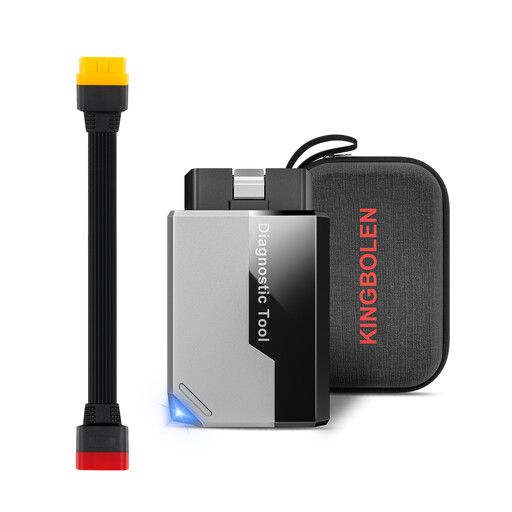
Why this choice suits this profile: This compact Bluetooth adapter turns a compatible Android or iOS smartphone into a reading and diagnostic tool. It is aimed at individuals who want to check their car’s faults without investing in a standalone tablet.
The product listing states that it provides access to supported systems, real-time data display and more than 15 service functions, while making clear that availability depends on the vehicle.
Bluetooth 5.2, a 36 cm extension cable, data stream display and lifetime free updates advertised by the manufacturer.
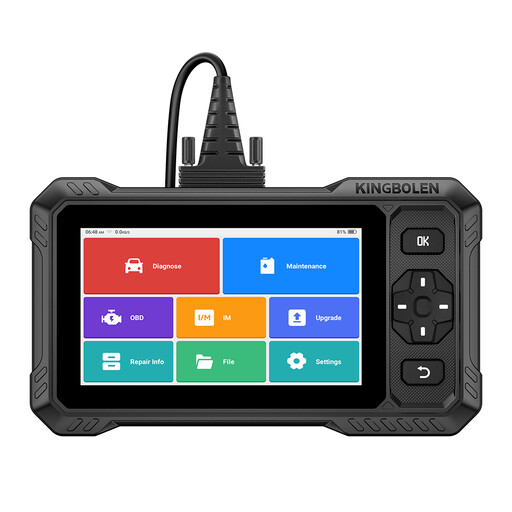
Why this choice suits this profile: With its standalone tablet and 6.2-inch screen, this model is suitable for users looking for full-system diagnostics, active tests and a more comfortable way to read parameters.
The listing details the functions available according to the vehicle’s make, model and year. It also specifies the particular conditions associated with FCA AutoAuth and Renault SGW.
Advertised CAN FD support, 15 service functions, bidirectional tests, exportable reports and lifetime free Wi-Fi updates, according to the product listing.
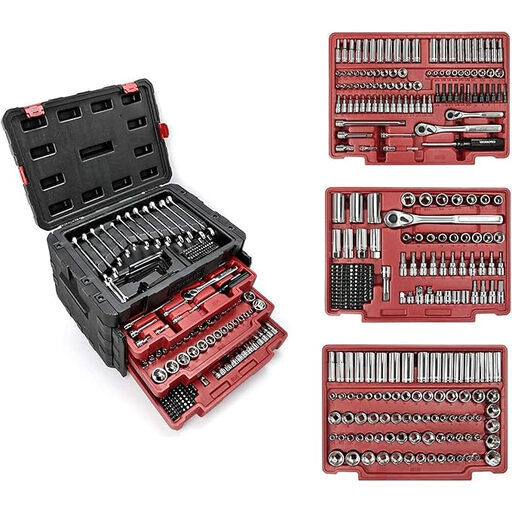
Why this choice suits this profile: This kit does not replace an OBD2 scanner, but it is an effective addition to a diagnostic workstation for mechanical work following fault identification.
It highlights that a diagnostic tool alone cannot make up a workshop’s complete equipment. Electronic diagnosis often needs to be followed by suitable dismantling and tightening to the correct torque.
450 pieces, several drive sizes, chrome finish and a moulded case for storing sockets and accessories in the garage.
We have put together a complete, real-time updated selection of products that meet these demanding criteria, while taking European safety regulations into account.
Download the associated app, create the requested account, activate the device using its code, then plug it into the OBD2 socket. The ignition generally needs to be turned to the ‘ON’ position. An internet connection may be required for activation and software downloads. Then check that your phone is compatible and allow the Bluetooth connection.
This depends on the battery when it is a standalone tablet, the quality of the connector and the availability of updates. An adapter powered through the OBD2 socket is not limited in the same way, but its use depends on the smartphone to which it is connected. Lifetime free updates can help limit recurring costs, subject to the conditions set by the manufacturer.
Clearing the code removes the stored information, but does not resolve the cause of the problem. If the fault reappears, the relevant system must be checked and repaired. For components related to braking, airbags, steering or emissions, follow the appropriate procedures. Temporarily switching off a warning light should never be regarded as proof that the vehicle is safe.