
Livraison le jour même ou le lendemain

Qualité garantie

Débloquez vos offres de bienvenue: Livraison GRATUITE | Jusqu'à -80 % | 30 jours d'essai gratuits à JoyPlus
Téléchargez l'application
Whether you're a passionate mechanic or a savvy DIYer, you know it: maintaining your car is an investment in both time and money. A bidirectional car diagnostic tool is the ultimate device to take back control and save hundreds of pounds in mechanic bills. But in a saturated market, it's hard to avoid the most blatant marketing traps. This guide is here to help you see clearly and make the right choice.
Navigating the jungle of diagnostic tools is no small feat. Many offers, tempting on the surface, hide costs or limitations that only reveal themselves after your credit card has been charged. Here's an overview of the most common traps.
To ensure your OBD2 diagnostic tool is a profitable long-term investment, three technical criteria are non-negotiable.
A true bidirectional tool must give you control over a maximum number of components. Before buying, scrutinise the list of available active tests. A good device should be able to command elements as varied as:
It's this ability to isolate a faulty component without taking anything apart that makes all the difference between a gadget and pro-level equipment.
Reading and clearing fault codes is the bare minimum. The true value of a scan tool is measured by the richness of its maintenance functions (or "service functions"). Look for a model that offers the most useful services for your vehicles, including:
The vehicle fleet is evolving at lightning speed. A tool that isn't updated quickly becomes an expensive paperweight. Prioritise models that include a free lifetime update. This is your guarantee of being able to diagnose the vehicles of tomorrow without opening your wallet again. Also, check for compatibility with recent protocols like CAN FD, used on recent GM vehicles, and support for FCA authentication for Stellantis group models (Chrysler, Jeep, Fiat) after 2018. A Bluetooth OBD2 scanner or a wireless fault code reader adds a very welcome convenience.
Based on these criteria, we've sifted through the market. Here is our selection of models that stand out from the pack for their balance of features, cost, and future-proofing, for different user profiles.
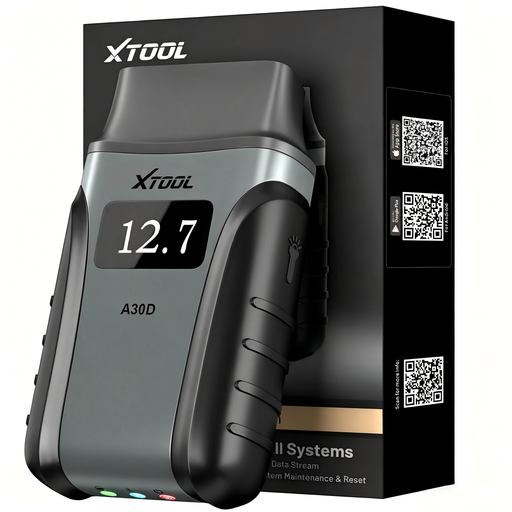
Why we love it: Perfect for the DIYer who wants to step up to advanced diagnostics without breaking the bank. Its wireless connection and pocket-sized format make it ultra-practical, both in the garage and on the go.
With its free lifetime software updates, the hidden subscription trap is a thing of the past. You pay once, and that's it.
It offers full bidirectional control and all-system diagnostics via a stable Bluetooth OBD2 scanner connection. It is also compatible with the CAN FD protocol.
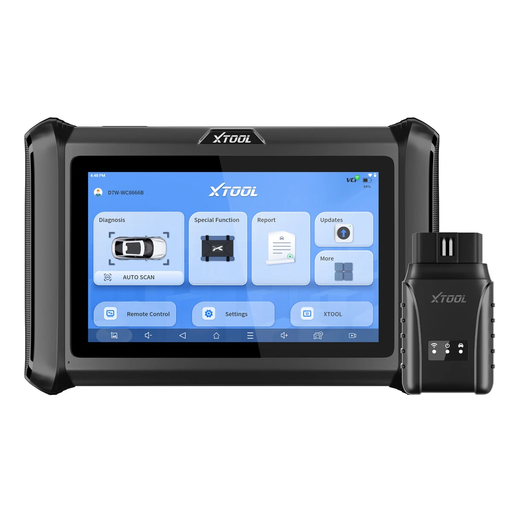
Why we love it: Designed for those who juggle multiple cars, including recent models. The tablet provides a clear interface, and the wireless connection offers great freedom of movement. It's an ultra-comprehensive solution for advanced diagnostics and maintenance.
With over 39 service functions and extensive bidirectional control, it delivers on its promise: this is a truly versatile tool that goes far beyond basic tasks.
It includes 3 years of free updates, a stable wireless connection, and support for DoIP and CAN FD protocols, ensuring maximum compatibility with the most modern vehicles.
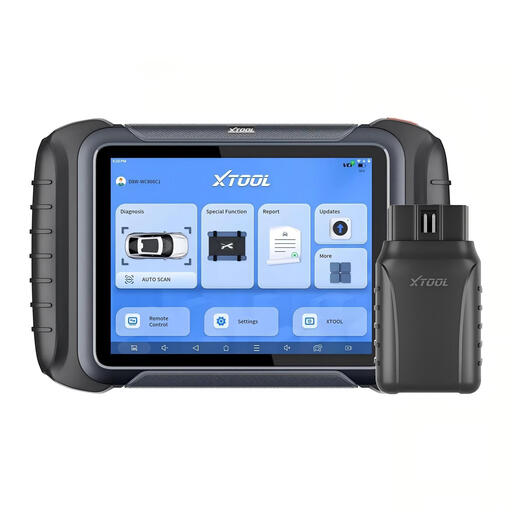
Why we love it: For those who want the absolute best: a future-proof diagnostic solution packed with cutting-edge features like module topology mapping and ECU coding. An investment for years of diagnostics without any compromise.
It offers comprehensive diagnostic coverage and OE-level (Original Equipment) functions, saving you from the disappointment of an "all-systems" tool that is one in name only. The included 3 years of updates guarantee its relevance for years to come.
Its advanced features, like ECU coding or topology mapping, and its high-performance wireless connection make it a tool that will grow with your skills.
We have prepared a complete and up-to-date selection of products that meet our strict selection criteria and current standards.
Let's be clear: no single tool is 100% compatible with the entire vehicle fleet. However, a good multi-brand tool will cover the vast majority of European, Asian, and American vehicles on the road (especially those made after 1996). It is therefore crucial to check compatibility with your specific car models with the manufacturer before you buy.
For core diagnostic tasks (reading codes, active tests), an internet connection is generally not required. It is, however, essential for downloading software updates. Some models also rely on Wi-Fi for advanced functions, such as online coding or looking up information on a fault code.
A simple code reader is a passive tool: it only reads error codes (usually from the engine) and clears them. A bidirectional scan tool is an active tool: in addition to reading vehicle data, it can send commands to the ECUs to test the operation of a specific component. It's this ability to "talk" to the car that allows for infinitely faster and more precise diagnostics.