What should you look for?
Start with your child’s age and stage of weaning, then compare the recipe and fat content. Choose the packaging format afterwards, based on where the product will be eaten.
| Criteria |
What to check |
Who is it for? |
| Age and weaning |
At the start of weaning, check what type of product it is and choose an unsweetened plain recipe to complement your child’s usual milk. |
I’m starting weaning and want to know when to offer yoghurt without replacing breastfeeding or bottle-feeding. Around 31% of consumers would put age suitability first. |
| Recipe and sugars |
Compare the ingredients list and the “sugars” line. A fruity flavour doesn’t mean “no added sugars”. |
I’m looking for a mild taste, but don’t want to choose based on flavour or “for children” packaging alone. Limiting added sugars would be the top priority for around 31% of consumers. |
| Fat content |
For a child under 3, check the exact recipe and avoid 0%, skimmed or semi-skimmed products, in line with Manger Bouger’s guidance. |
If my child is under 3, I want to avoid confusing plain yoghurt with a lower-fat version. Around 23% of consumers would prioritise this. |
| Format and portion |
Choose between a pot, pouch and bottle to suit how it will be used, then check the portion size and nutritional information. |
For a snack away from home, I need a format that’s easy to serve and suitable for my child. Around 15% of consumers would put convenience first. |
A product for the weaning stage
This selection features plain fromage frais described as suitable for children from 6 months. It isn’t a standard yoghurt, so check its ingredients and nutritional information before choosing it for a child under 3.
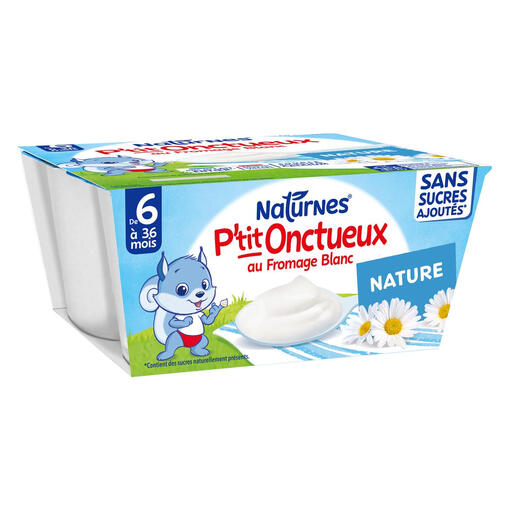 Image unavailable
Nestlé P'Tit Smooth, plain fromage frais, from 6 months, 4 × 90 g
Worth considering if you’re looking for plain fromage frais for weaning from the age shown on the product, to complement your child’s usual milk.
The ingredients include fromage frais made with skimmed milk. If your child is under 3, check the fat content and the recipe of the finished product on the packaging before choosing it.
View on Joybuy
Frequently asked questions
At what age can you offer a baby yoghurt?
According to Manger Bouger, unsweetened yoghurt or fromage frais can be offered when weaning begins, at around 4 to 6 months. It complements breastfeeding or bottle-feeding; introduce it in line with the advice you’ve received for your child.
Is 0% yoghurt suitable for a child under 3?
No. Manger Bouger’s French weaning guidance says that 0%, skimmed and semi-skimmed products aren’t suitable for under-threes. Check the exact recipe, even if the product is presented as plain.
Does “no added sugars” mean “sugar-free”?
No. A product with no added sugars may contain sugars that occur naturally in its ingredients. To compare two recipes, check their ingredients lists and the “sugars” line in the nutritional information too.
Can yoghurt replace your child’s usual milk?
Not automatically. During weaning, yoghurt is offered alongside your child’s usual milk. From the age of one, Manger Bouger recommends considering all the milk and dairy products they consume throughout the day.
What should you check on the label of a packaged dairy product?
First, check the product name, ingredients, quantity per pot or pouch and nutritional information, particularly sugars and fat. The DGCCRF reminds shoppers that any allergens in prepacked foods must be highlighted in the ingredients list.


