
Livraison le jour même ou le lendemain

Qualité garantie

Débloquez vos offres de bienvenue: Livraison GRATUITE | Jusqu'à -80 % | 30 jours d'essai gratuits à JoyPlus
Téléchargez l'application
Working out at home has never been more popular. Gone are the restrictive schedules and endless commutes to the gym. Creating your own fitness space, or home gym, promises absolute flexibility. At the heart of this space, the workout station stands out as the centerpiece. Versatile and relatively compact, it allows for comprehensive strength training without needing to collect a dozen different machines.
But with an overwhelming number of options on the market, it's hard to know where to start. From a simple Roman chair to a multifunction station with a built-in bench, how do you make the right choice?
This guide is here to help you make sense of it all. Our editors have analyzed the market to present the essential criteria and a selection of models that caught our eye, whether you're a beginner or an experienced athlete.
Before you commit, let's review the key points that will guide your decision.
The first step is to identify your needs. The basic model, commonly known as a Roman chair or power tower, focuses on bodyweight exercises. It typically includes:
To go further and incorporate weights (dumbbells, barbells), a station with a built-in adjustable weight bench becomes essential. This opens the door to flat, incline, or decline bench presses, and many other movements for a complete workout.
Safety is non-negotiable. Your equipment must be rock-solid to prevent any risk of tipping during your workout. To ensure this, keep a close eye on two indicators:
Before any purchase, take out your measuring tape. Compare the product's dimensions (length, width, height) with your available area, ensuring you leave enough clearance all around to perform movements without restriction. Many stations offer height adjustments, especially for the pull-up bar—a real plus for accommodating your body type and ceiling height.
Here are three models that stood out for their blend of versatility and quality, perfect for starting or upgrading your at-home strength training program.
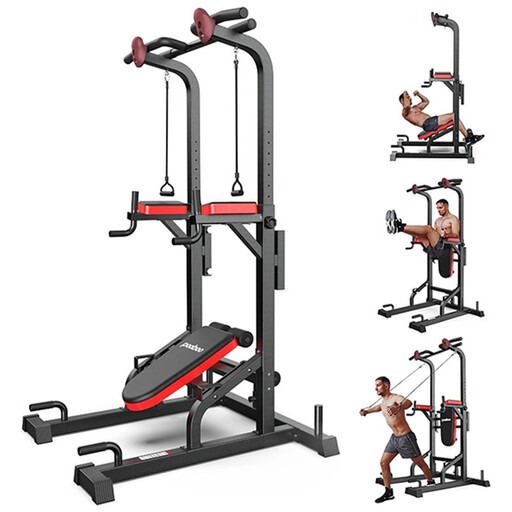
The Editor's Verdict: This model is the ultimate all-in-one solution, combining a classic power tower with a foldable weight bench. It allows you to switch seamlessly from bodyweight exercises (pull-ups, dips) to movements with weights (bench press). We particularly like the "rock climbing" grips on the pull-up bar, which offer alternative holds to vary your back and forearm workouts.
Pros:
Who is it for? Those who want a complete setup from the start, capable of evolving with their progress. A smart choice for combining bodyweight training and dumbbell workouts without buying multiple pieces of equipment.
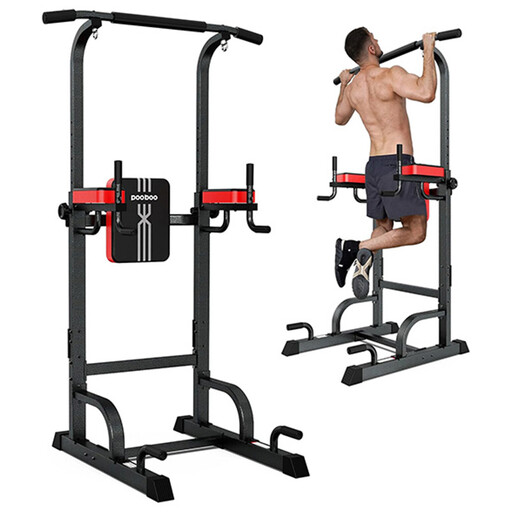
The Editor's Verdict: This model gets straight to the point: it's a pure, no-frills power tower that prioritizes robustness and stability. Its alloy steel frame is designed to withstand regular, intense workouts, making it a reliable foundation for any bodyweight strength program.
Pros:
Who is it for? Athletes who focus on bodyweight exercises and are primarily looking for a sturdy and durable free-standing pull-up bar and dip station. An excellent option if you already own a bench or don't need one right now.
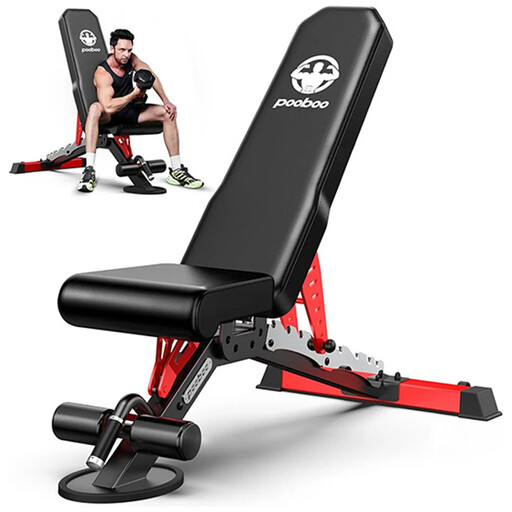
The Editor's Verdict: While not a complete station, this adjustable weight bench is a cornerstone of any serious home gym. Its main advantage—and it's a major one—is an impressive weight capacity that makes it suitable for the heaviest workouts. Its multiple positions (flat, incline, decline) make it a remarkably versatile tool.
Pros:
Who is it for? Those who already own a squat rack or power tower and want to tackle bench presses and other dumbbell exercises. It's also an excellent starting point for building your home gym equipment step by step.
A workout station is excellent for targeting the upper body and core. But for comprehensive strength training, don't forget to work your legs! Solutions are available to complete your setup with dedicated machines, such as adductor and abductor machines.
Discover our range of inner and outer thigh exercise equipment to round out your training routine.
A versatile station allows you to engage most of the major muscle groups in your upper body and trunk:
Absolutely. A Roman chair is an excellent starting point. It provides the four fundamental stations for bodyweight training (pull-ups, dips, abs, push-ups). It's the ideal investment for building a solid strength base before considering, if you wish, moving on to additional weights.
The terms are often confused, but the two pieces of equipment serve different purposes. The workout station (or power tower) is designed primarily for bodyweight exercises. The squat rack (power rack), on the other hand, is a larger, more reinforced structure equipped with safety catches. Its purpose is to secure free-bar exercises (squats, bench presses, etc.). Far from being mutually exclusive, these two pieces of equipment are actually highly complementary for building a truly comprehensive home gym.