The wok is the ultimate versatile kitchen tool. Essential for fans of Asian cuisine, it is the king of healthy, quick cooking. Stir-frying, deep-frying, simmering, steaming… it does it all and has rightfully earned its place in our kitchens. But when faced with a jungle of materials, coatings, and compatibilities, finding the right model can quickly become a headache.
This guide is here to give you clear, concrete criteria to find the wok that will perfectly suit your habits and your equipment.
How to Choose the Right Wok?
To make the right choice, several criteria must be taken into account. Here are the essential points to check before you buy.
1. The Material: The Heart of Performance
The material of your wok is crucial: it determines heat distribution, weight, and ease of maintenance.
- The iron or carbon steel wok: This is the traditional wok par excellence. Lightweight and highly responsive to heat, it's perfect for searing food in the blink of an eye. An iron wok requires special care: the famous "seasoning" (creating a natural non-stick layer by polymerising oil) is essential to develop its properties and protect it from rust. It is often preferred for use on powerful gas hobs.
- The stainless steel wok: Durable, scratch-resistant, and easy to maintain, the stainless steel wok is a modern and versatile option. Good models often feature a multi-layer base (stainless steel-aluminium-stainless steel) that ensures rapid temperature rise and even heat. A benefit that makes them compatible with all hobs, including induction.
- Coated aluminium: Ultra-light and an excellent conductor, aluminium is almost always paired with a non-stick coating. This is the ultimate practical option for daily use, as it allows you to cook with very little fat.
2. The Coating: Non-Stick and Safety
The coating is a decisive criterion, both for user comfort and for health reasons.
- Classic coatings (PTFE): They offer a perfect glide but can be sensitive to scratches and very high temperatures.
- Ceramic coatings: This is a very popular alternative, guaranteed free of PTFE and PFOA. A PFOA-free wok is an increasingly common choice for users concerned about the composition of materials.
- Innovative structures: Some models, like those with a honeycomb structure, combine a stainless steel base with a raised pattern that protects the non-stick coating nestled in the cells. This ingenious design even allows for the use of metal utensils without scratching the surface.
3. Compatibility and Accessories
It is imperative to check the wok's compatibility with your hob. For an induction wok, the base of the utensil must be flat and magnetic. Most manufacturers clearly indicate compatibility (gas, electric, ceramic, induction).
A diameter of 30?cm is the standard size, ideal for a family of 2 to 4 people. Finally, a wok with a lid made of glass is a real bonus: it allows you to monitor cooking without lifting the lid, perfect for simmered dishes or braising.
Our Top Wok Recommendations
Here are a few models that stand out for their design and features, adapted to different profiles.
Ochama 30 cm Non-Stick Wok with Honeycomb Structure
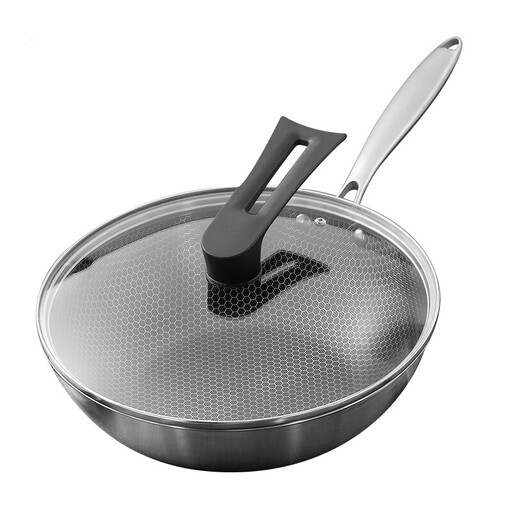
- Its key feature?: It combines the robustness of stainless steel with innovative non-stick technology. Its multi-layer structure (stainless steel, aluminium, magnetic steel) guarantees fast and uniform heating. The interior honeycomb pattern protects the coating, which, according to the manufacturer, allows for the use of metal utensils.
- Advantages:
- Multi-layer structure for excellent thermal conduction.
- Non-stick coating protected by a stainless steel grid.
- Compatible with all hobs, including induction.
- Generous 4.7?L capacity with a 30?cm diameter.
- Comes with a tempered glass lid and an anti-scald silicone handle.
- Who is it for?? Those looking for a versatile and durable wok, capable of withstanding intensive use without sacrificing the convenience of a non-stick surface.
View Product
SENSARTE 28 cm Deep Wok Pan with Ceramic Coating
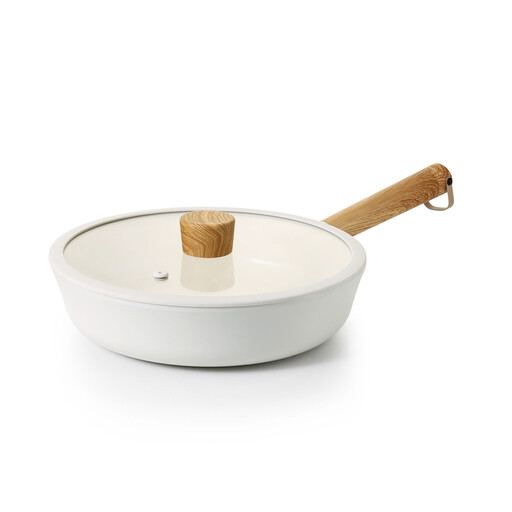
- Its key feature?: This wok focuses on its high-quality ceramic coating, which the manufacturer guarantees is free of PTFE, PFAS, cadmium, and lead. Its magnetic stainless steel base ensures good heat distribution and broad compatibility.
- Advantages:
- Ceramic coating for healthy cooking.
- Guaranteed PFOA-free, PTFE-free, PFAS-free, lead-free, and cadmium-free.
- Compatible with all hobs, including induction.
- Lightweight thanks to its aluminium body.
- Comes with a lid.
- Who is it for?? Ideal for cooks who are mindful of coating compositions and want a lightweight, easy-to-use wok for everyday cooking.
View Product
COOKER KING Uncoated Pure Iron Wok
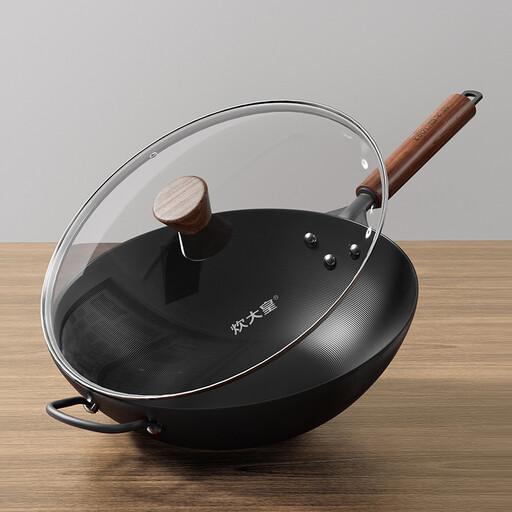
- Its key feature?: This is the traditional wok in its purest form. Made of iron with no chemical coating, it is designed to be seasoned and develop a natural non-stick patina over time. Its design is optimised for high-temperature cooking, ideal for stir-frying.
- Advantages:
- Pure iron material, without any chemical coating.
- Excellent heat retention and temperature rise for a perfect sear.
- Extremely durable: it gets better with age.
- Particularly suitable for gas hobs.
- Who is it for?? Purists and Asian cuisine enthusiasts who seek the authentic cooking performance of iron and aren't afraid to put in the effort to season it.
View Product
Looking for Other Options?
This selection is, of course, just a glimpse. Every cook is unique, and you may be looking for a different size, a specific material, or particular features.
To explore a wider range of cookware that will meet your needs, feel free to browse our complete category.
Discover More Cookware
Frequently Asked Questions About Woks
1. How do you season an iron wok?
Seasoning is a simple process that creates a natural and durable non-stick surface.
- Clean?: Wash the new wok with hot, soapy water to remove the factory protective layer, then dry it meticulously.
- Heat?: Place the wok on high heat until it changes colour (it will turn bluish).
- Oil?: Lower the heat, pour in a tablespoon of high-smoke-point oil (canola, grapeseed, sunflower) and spread it over the entire inner surface using tongs and a paper towel.
- Polymerise?: Heat on medium until the oil smokes slightly. Remove from the heat, let it cool, and wipe away the excess. Your wok is ready! Repeat this process during the first few uses to build up the patina.
2. Can you use a wok on an induction hob?
Absolutely, provided you choose an induction-compatible wok. To work, its base must be flat and made of a ferromagnetic material (cast iron, steel, magnetic stainless steel, etc.). Always check for the symbol or manufacturer's note. Be aware that traditional round-bottomed woks are not compatible without a specific adapter ring.
3. What's the difference between a wok and a sauté pan?
It's all in the shape! The wok has high, deep, and curved sides, whereas a sauté pan has straighter edges and a wider flat bottom. This unique geometry allows the wok to concentrate intense heat at the bottom to sear food, while the cooler sides are used to keep ingredients warm. This shape also facilitates the constant movement of food, which is typical of stir-frying.


