
Livraison le jour même ou le lendemain

Qualité garantie

Débloquez vos offres de bienvenue: Livraison GRATUITE | Jusqu'à -80 % | 30 jours d'essai gratuits à JoyPlus
Téléchargez l'application
A whitening toothpaste can reduce some surface stains caused by coffee, tea, wine or smoking. However, it does not change the natural shade of your enamel and is not a substitute for professional teeth whitening. To avoid disappointing purchases, it is important to distinguish between an immediate visual effect, stain removal and everyday oral care.
Purple or blue formulas can make teeth appear lighter thanks to their optical pigments. However, the effect is generally temporary: it does not mean that the internal colour of the tooth has changed.
A toothpaste for whiter teeth containing cleansing agents can act on discolouration present on the surface of the enamel. These two mechanisms are completely different and should be assessed separately.
A charcoal whitening toothpaste is appealing because of its natural appearance and dark paste. However, the mere presence of charcoal does not indicate how gentle a formula is. Texture, polishing agents and frequency of use also play a role.
If your teeth are sensitive or your enamel is weakened, avoid using lots of products that focus heavily on “polishing”. Instead, opt for gentle brushing with a soft toothbrush.
A toothpaste that focuses entirely on whiteness is not necessarily suitable for everyday use by the whole family. Check the fluoride content, recommended age and precautions stated on the packaging.
Gums that bleed regularly, feel painful or remain irritated should prompt you to seek dental advice. A whitening toothpaste for gums can form part of an oral hygiene routine, but it cannot determine the cause of a persistent problem.
For adults, toothpastes intended for everyday oral hygiene often contain around 1,450 ppm fluoride. When used as directed, fluoride helps protect teeth against cavities. Children should follow the recommended age guidance and use an appropriate amount, under adult supervision where necessary.
Some products, such as the Avril formula featured below, are fluoride-free. This may reflect a preference for a particular formulation, but it should be considered alongside your oral hygiene habits and your dentist’s recommendations.
Look for a clear indication that matches one of the following categories:
Numerical claims should be treated with caution. For example, the product information for Colgate Max White Expert Original mentions whitening of up to four shades. This claim should be interpreted in light of the conditions and source stated by the manufacturer: it is not a guaranteed result for every user.
A 75 ml tube generally lasts several weeks, depending on how much you use and how often you brush. For a household or for stocking up, a whitening toothpaste multipack can reduce the cost per tube. However, remember to compare the total volume, use-by date and storage conditions.
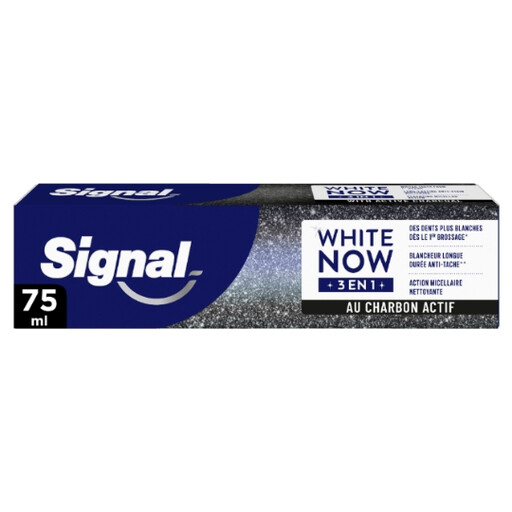
Why it suits this profile: With its 75 ml size and formula combining charcoal, micellar cleansing and fluoride, this toothpaste can be a good introduction to everyday whitening care.
The product information distinguishes between the immediate optical effect and action on stains. This helps prevent visual improvement from being confused with surface cleaning.
75 ml tube, sodium fluoride measured at 1,450 ppm and 96% ingredients of natural origin, according to the product information.
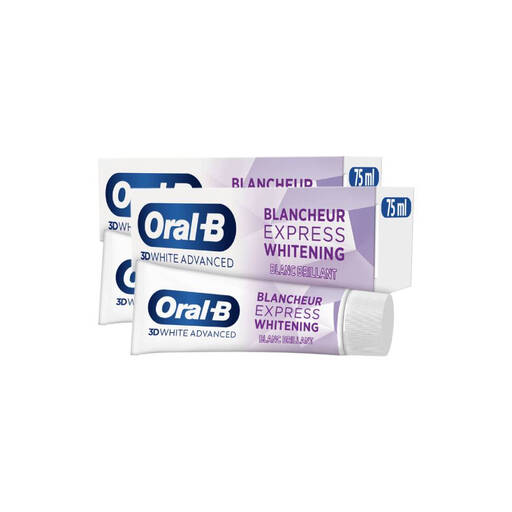
Why it suits this profile: The two-tube pack is well suited to a regular routine, with a formula focused on surface stains and protection against acid attacks, according to the product information.
The product highlights its action on surface stains without promising to change the natural shade of the teeth.
2 × 75 ml pack, fluorides listed in the ingredients and recommended use at least twice a day.
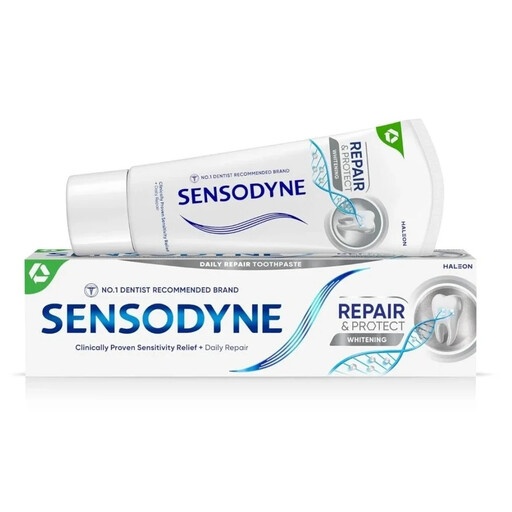
Why it suits this profile: This formula combines gentle whitening action with a focus on sensitive teeth. It is suitable for people who want to maintain a regular routine without using a highly abrasive toothpaste.
The product information combines sensitivity protection with gentle stain removal, rather than relying solely on intensive polishing.
75 ml tube, sodium fluoride and stannous fluoride listed in the ingredients, with daily use recommended.
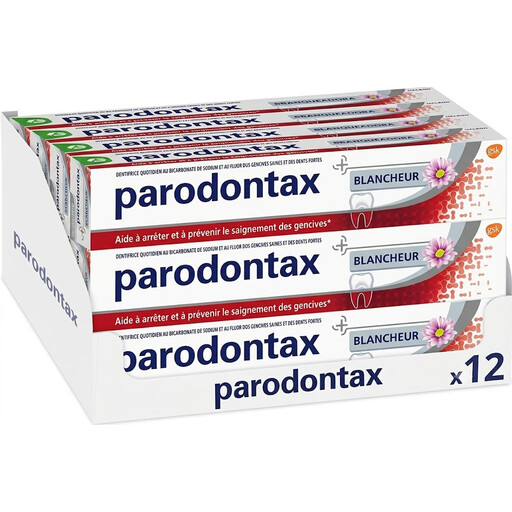
Why it suits this profile: This large pack is aimed at regular users and families who want to shop less often.
With 900 ml in total, it is easy to calculate the price per tube and avoid relying solely on the displayed price for the pack.
12 × 75 ml tubes, with a formula focused on plaque removal and restoring natural whiteness, according to the product information.
We have brought together a complete, real-time updated selection of products that meet these strict criteria and European safety requirements.
Brush your teeth twice a day for around two minutes, using a soft toothbrush and without applying excessive pressure. For adults, an amount about the size of a pea is generally sufficient. Pressing harder will not speed up whitening; it is more likely to irritate your gums.
If your teeth are sensitive, start gradually and stop using the product at the first sign of irritation. Follow the recommended age guidance, do not swallow the toothpaste and keep the tube out of children’s reach. Fluoride formulas should not be combined without care with other significant sources of fluoride. If in doubt, ask your dentist or doctor for advice.
No. It mainly acts on surface stains. Deep discolouration, crowns, veneers and certain changes in shade require a dental examination. Purple or blue pigments can, meanwhile, produce a temporary visual correction.
Some products are designed for everyday use, but you should follow the instructions and pay close attention to how your teeth and gums react. If sensitivity persists or worsens, stop using the product and consult a dental healthcare professional.
Not necessarily. Divide the total price by the number of tubes and check the volume of each one. Also consider the use-by date, storage conditions and your actual consumption before choosing a pack of two, four, six or twelve tubes.