
Livraison le jour même ou le lendemain

Qualité garantie

Débloquez vos offres de bienvenue: Livraison GRATUITE | Jusqu'à -80 % | 30 jours d'essai gratuits à JoyPlus
Téléchargez l'application
Achieving a delicious, consistent espresso at home can sometimes feel like an uphill battle. You might have the best machine, a top-tier grinder, and freshly roasted beans, but your extractions are still inconsistent. One day, your coffee is perfectly balanced; the next, it's sour or bitter, with those infamous jets spraying chaotically from your portafilter. This phenomenon, known as channeling, is the barista's nightmare and often stems from an uneven distribution of the coffee grounds.
Clumps that form as the grounds exit the grinder create areas of different density in the coffee puck. The pressurised water, ever so cleverly, takes the path of least resistance, over-extracting some parts while leaving others untouched. This is precisely where the WDT espresso tool comes in. This deceptively simple accessory uses fine needles to break up clumps and homogenise the grounds before tamping.
This guide is designed to help you choose the grounds distributor that will transform your coffee routine. We will break down the essential features and present our selection of the best models to finally achieve the perfect extraction, cup after cup.
Before settling on a model, it's crucial to understand what separates a good grounds stirrer from a mere gadget. Here are the key points to consider.
The secret to an effective WDT tool? Its needles. Their performance depends on two main factors:
A good barista accessory must be practical for daily use. Think about how you will use it and, more importantly, how you will store it:
Don't overlook durability and versatility. Most quality tools use SUS304 stainless steel for the needles, ensuring hygiene and corrosion resistance. The body is typically made of aluminium alloy, offering an excellent balance of lightness and sturdiness. Some more advanced models even offer adjustable needle spacing, which is ideal for adapting the tool to the size of your portafilter and your dose.
To help you say goodbye to channeling, we have selected three models from the MHW-3BOMBER brand, each with its own strengths.
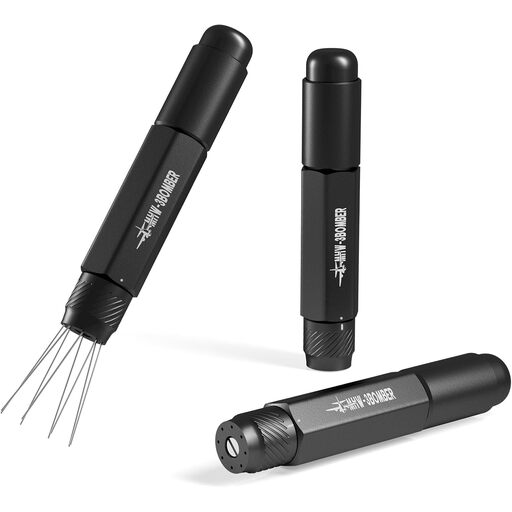
Why it stands out
This model focuses entirely on safety and convenience. Its retractable mechanism, which activates with a single motion, protects both the user and the 8 fine needles. Its metal body can stand on its own or attach magnetically to any iron surface, like the chassis of your coffee machine.
Key Strengths
Who is it for?
Ideal for the home barista looking for a safe, compact, and easy-to-store tool. Its clever design addresses the safety concerns of classic WDT tools.
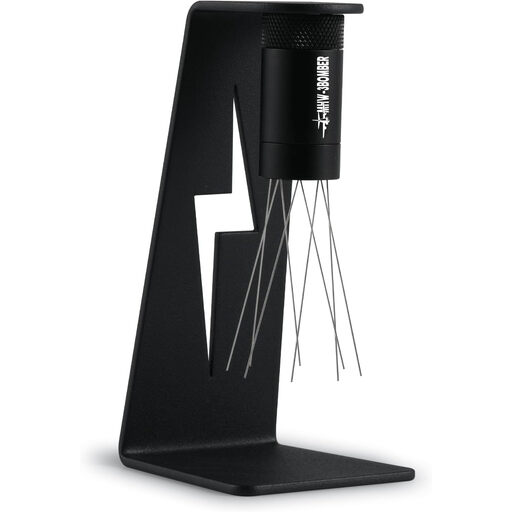
Why it stands out
This needle distributor is distinguished by its adjustment range, which offers enhanced control. A ring on the upper part is used to adjust the needle spread, increasing the contact area with the grounds for a wider, more effective distribution. It comes with a dedicated magnetic stand.
Key Strengths
Who is it for?
Perfect for the discerning enthusiast or barista who wants precise control over their grounds distribution and appreciates a pristine workspace thanks to the dedicated stand.
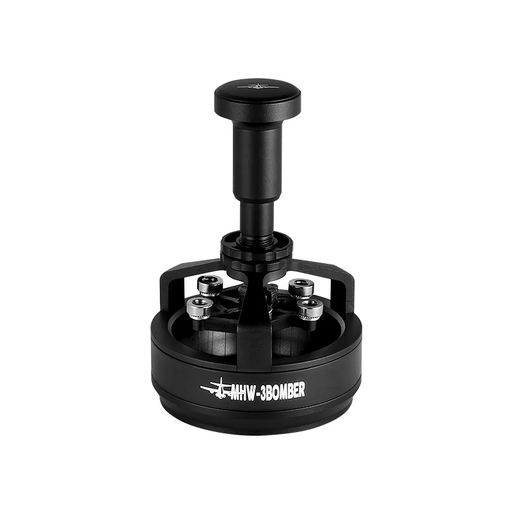
Why it stands out
This model offers a semi-automated approach to distribution. Designed for 58?mm portafilters, it sits directly on the basket. A simple turn of the handle rotates the 14 ultra-fine needles for quick and effortless distribution. Its base incorporates 10 magnets for a stable and precise fit.
Key Strengths
Who is it for?
Aimed at owners of machines with 58?mm portafilters who are seeking maximum efficiency and consistency. It's a precision tool for those who want to optimise every step of their preparation.
If the models presented don't perfectly match the aesthetic of your coffee corner or if you simply want to explore other options, feel free to browse our wider selection. To complete your setup with products featuring a sleek design, discover our collection of black kitchen tools.
Channeling occurs when pressurised water finds paths of least resistance through the coffee grounds in the portafilter. The result is an uneven extraction: some areas are over-extracted (bitter taste) and others are under-extracted (sour taste). A WDT espresso tool solves this problem by using fine needles to break up clumps and distribute the grounds evenly. This homogeneous coffee puck provides consistent resistance to the water, promoting a balanced and flavourful extraction.
Yes, it's a crucial factor. Needles that are too thick (over 0.5?mm) tend to push and compact the grounds instead of de-clumping them, which can actually worsen channeling. Fine espresso needles (between 0.25?mm and 0.4?mm) are much more effective at aerating the grounds and breaking up coffee clumps without creating new preferential pathways for the water.
This is a common DIY solution, but it is far from ideal. A paperclip or toothpick is often too thick and lacks the finesse of a proper espresso distribution tool. Furthermore, a dedicated tool has multiple needles, allowing you to cover the entire surface of the basket much more quickly and evenly. Finally, the materials of WDT tools, like stainless steel, are food-grade and therefore much more hygienic.