
Livraison le jour même ou le lendemain

Qualité garantie

Débloquez vos offres de bienvenue: Livraison GRATUITE | Jusqu'à -80 % | 30 jours d'essai gratuits à JoyPlus
Téléchargez l'application
A hybrid of drawing and painting, watercolour pencils are the ultimate versatile tool for creatives. Whether you're a seasoned artist, an illustrator, or just a hobbyist, the right equipment can make all the difference. But with an overwhelming number of options available, how do you make the right choice? This guide is here to shed some light and help you find the perfect watercolour pencil set for your creative needs and budget.
Before diving into our top picks, let's review the key criteria for making a smart purchase.
A good watercolour pencil must, above all, dissolve completely in water. This is the secret to achieving even washes and smooth gradients, without any unsightly pencil marks. The richness of the pigments, in turn, determines the intensity and vibrancy of your colours, both dry and when activated with water. For artwork that will stand the test of time, check the lightfastness rating of the pigments—a detail often provided by manufacturers on high-end fine art supplies.
Watercolour pencil sets range from 12 to over 100 colours. Are you just starting out or do you enjoy sketching outdoors? There's no need to go overboard: a set of 24 to 36 colours offers a very versatile palette. Professional artists and illustrators working with pencils for complex illustrations will naturally prefer larger sets for a maximum range of shades. Good to know: some kits include accessories like a paintbrush, which is a real bonus for getting started right away.
Don't underestimate the packaging! A sturdy metal tin isn't a luxury; it's the best way to protect your fragile pencil leads from damage, both in the studio and on the go. It also ensures your pencils stay organised for quick access to the right colour. For portable use or simply to protect your investment, a metal tin is a smart choice.
We've selected three sets that truly impressed us. Each has its own strengths, catering to different needs, skill levels, and budgets.
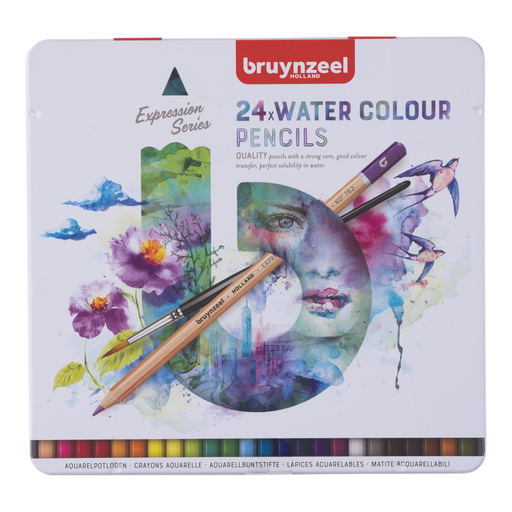
What sets it apart: This set from the Dutch brand Royal Talens is an excellent entry point into the world of watercolour. It offers a complete and balanced solution, combining the precision of drawing with the spontaneity of painting, all housed in a practical and protective metal tin.
The pros:
Who is it for? Perfect for students, hobbyists, and artists looking for a high-quality, complete, and affordable set to begin or advance their skills.
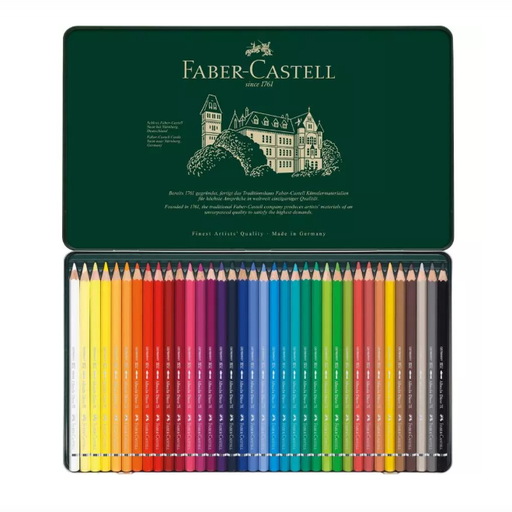
What sets it apart: Faber-Castell needs no introduction—it's a benchmark brand in fine arts. This 36-colour set embodies the brand's reliability and quality. The acid-free pigments ensure better preservation of your artwork over time, while the certified wood demonstrates an eco-friendly commitment.
The pros:
Who is it for? An excellent choice for art students, illustrators, and discerning hobbyists who want reliable and versatile supplies from a renowned brand.
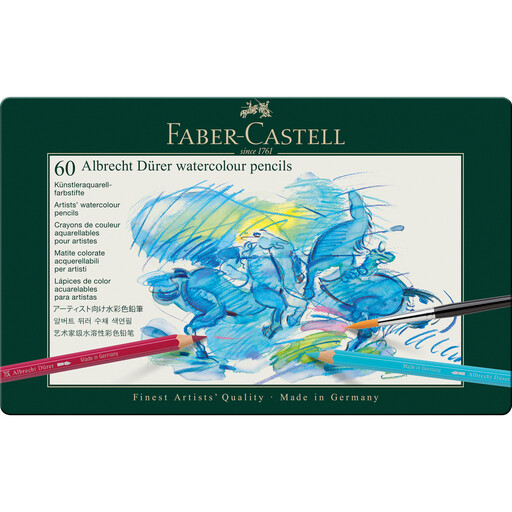
What sets it apart: Now we're entering the professional league. The Albrecht Dürer range is the gold standard for Faber-Castell's watercolour pencils. This 60-colour set is designed for demanding artists, featuring pigments with maximum lightfastness and a thick, soft lead for unparalleled comfort and performance.
The pros:
Who is it for? For professional artists, illustrators, and discerning creatives who demand professional watercolour pencils with zero compromise on quality and performance.
Our selection doesn't cover every need, and choosing art supplies is a personal journey. If protecting your pencils is a top priority or if you're looking for different set sizes, feel free to explore our full range of metal pencil tins. There you'll find a wider variety of brands and sets to complete your toolkit.
1. What is the difference between classic coloured pencils and watercolour pencils? The entire difference lies in the binder used in the lead. A watercolour pencil's binder is water-soluble, allowing you to transform a drawing into a watercolour painting with a simple stroke of a wet brush. In contrast, classic coloured pencils do not dissolve and are intended for dry use only.
2. How do you use watercolour pencils? There are several possible approaches. The most common is to first draw on dry paper, then go over it with a wet brush to dissolve the pigments. You can also lift colour directly from the pencil tip with a wet brush, just like with a paint pan. Finally, drawing on already damp paper will create softer, more diffused effects.
3. Can you mix different brands of watercolour pencils? Absolutely. You can mix different brands without any issues. However, keep in mind that solubility, pigment intensity, and texture can vary. Our advice: always do a few tests on a scrap piece of paper to see how the colours interact before starting on your final piece.
By the Joybuy Product Recommendation Officer