
Livraison le jour même ou le lendemain

Qualité garantie

Débloquez vos offres de bienvenue: Livraison GRATUITE | Jusqu'à -80 % | 30 jours d'essai gratuits à JoyPlus
Téléchargez l'application
Faced with a wall of bottled water at the supermarket or the jungle of online options, making a choice can be a real headache. Spring or mineral water?? Which composition should you choose?? What's the right format?? It's not easy to find your way. Not to mention the chore of carrying heavy packs, a hassle we could all do without.
Our mission at Joybuy?? To help you see things more clearly. We've sifted through the various waters on the market to offer you concrete recommendations, whether you're looking for water for the whole family, a targeted mineral intake, or a solution suitable for the little ones. The goal of this guide is to simplify your choice and help you (re)discover the convenience of home water delivery.
Before we get to our selection, here's a quick reminder of the essential points for making the right choice of bottled water.
This is THE big question. Understanding this distinction is key to choosing the water that's truly right for you.
Your bottle's label is a true identity card. The famous "dry residue at 180°C" indicates the water's overall minerality (the amount of minerals left after evaporation).
The ideal format depends on your habits. Small 50?cl bottles fit everywhere: in a gym bag, at the office, or while travelling. The 75?cl or 1?L formats are perfect for mealtimes. By ordering your still water pack online, you not only save yourself the chore of carrying it, but you can also effortlessly manage your stock for the entire household.
We have selected three bottled waters that each meet a very specific need.
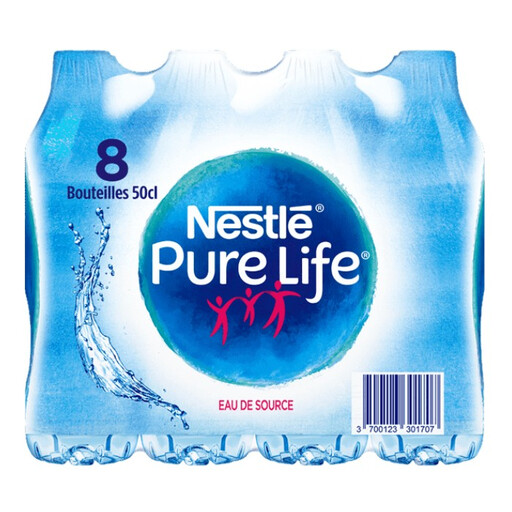
What sets it apart
Nestlé Pure Life spring water is drawn from the heart of a protected nature park. Its very low mineral content and neutral taste make it a versatile, all-rounder water, ideal for the daily consumption of the whole family.
Key features
Who is it for??
For families looking for a gentle, everyday water that everyone will love. It's the safe choice for parents of young children, including infants.
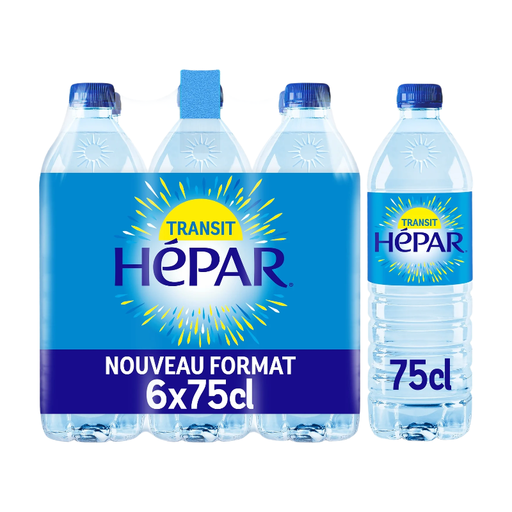
What sets it apart
Hépar is a natural mineral water with a unique profile. The brand highlights its effectiveness on intestinal transit, proven by clinical studies. Its exceptional concentration of minerals, particularly magnesium and sulphates, puts it in a class of its own.
Key features
Who is it for??
For those who expect a real health benefit from their water, especially for regulating difficult digestion. It's also an excellent option for naturally increasing your magnesium intake.
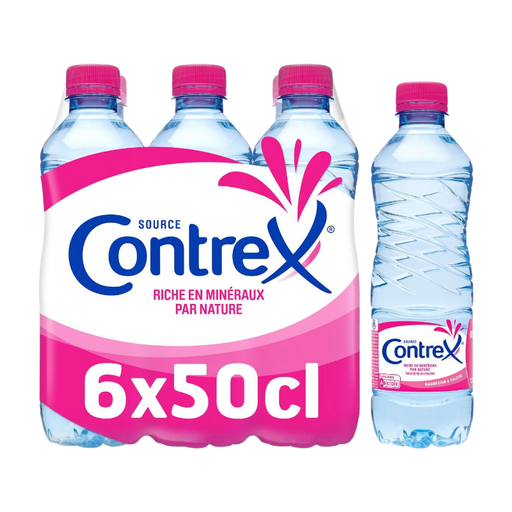
What sets it apart
Drawn from the heart of the Vosges mountains, Contrex is a mineral-rich water, famous for its high calcium and magnesium content. Its unique mineral signature is the result of its long journey through the region's rocks.
Key features
Who is it for??
For active people and athletes, but also for anyone who wants to use hydration to boost their calcium and magnesium intake. It's the perfect ally for those who are mindful of their figure and mineral balance.
Our selection highlights specific needs, but the world of bottled water is much broader. Flavoured waters, other brands of mineral water, family-sized formats... feel free to explore our full catalogue to find the water that's right for you.
? Discover our full range of still drinks.
1. What is the difference between spring water and natural mineral water?? A natural mineral water has a stable and constant mineral composition, which can give it unique properties. The composition of a spring water, however, can vary over time. Both are from underground sources and protected from all pollution.
2. Can you drink mineral-rich water every day?? For a healthy adult, daily consumption of mineral-rich water generally poses no problem. However, it is advisable to vary the waters you drink to ensure a balanced intake of trace elements. In case of a specific medical condition (e.g., kidney problems), your doctor's advice is essential.
3. How do I know if water is suitable for a baby?? Water intended for baby bottles must be very low in minerals. Look for the "suitable for infant feeding" statement on the label; it is mandatory. The technical criterion to check is the dry residue at 180°C, which must be below 500?mg/L.