Which households need to consider this most carefully?

Large household with frequently full laundry baskets

You want to reduce the number of cycles because clothes, towels and bedding genuinely build up into large loads. The question is whether a 10 to 12 kg capacity will be used regularly rather than occasionally. UFC-Que Choisir reports that 10 to 12 kg becomes more worthwhile when large washes are carried out one after another.

Household alternating large washes with smaller sorted loads

You need space for sheets or towels, but you also wash sportswear, delicates or colours separately. Capacity alone is therefore not enough: check whether the model offers documented water adjustment or settings based on the load size.

Buyer focused on real-world use

You want to compare water, electricity, cycle duration, spin-drying and rinsing before buying. The European Commission explains that the label provides harmonised measurements for the Eco 40-60 programme, while independent tests can compare washing, rinsing and ease of use.

Buying criteria for a household doing frequent washing

8 to 9 kg capacity

Consider it: if you do laundry frequently, but most everyday loads remain moderate in size.

Bear in mind: there is less room for thick duvets and very large loads; limits vary by programme and fabric.

10 to 12 kg capacity

Consider it: when full large loads, sheets, towels or duvets are frequently part of your washing routine.

Bear in mind: a large drum that is only partly filled is not automatically more economical; also check the machine’s actual dimensions.

Capacity with load adjustment

Consider it: if large laundry baskets alternate with numerous smaller, separate loads.

Check: the feature must be explicitly described for the model you choose; its presence alone does not allow you to compare performance.

Priority What to check Your needs
Usable capacity Compare the capacity in kg of dry laundry for the cotton or Eco 40-60 programme. Also check the maximum loads for synthetics, jeans, wool and delicates. I want to combine more laundry without buying a drum that will often remain half empty. A capacity of 10 to 12 kg is mainly justified if full large loads genuinely occur frequently.
Water, electricity and duration Compare kWh/100 cycles, litres/cycle and the Eco 40-60 programme duration. Check separately any advertised load-adjustment function. I want to compare figures on a like-for-like basis and avoid assuming that a larger appliance will use less energy on every cycle.
Washing, rinsing and spin-drying Look at the spin-drying class and advertised speed and, where possible, the results of an independent test covering washing and rinsing for the exact model. I do not want to sacrifice rinsing or spin-drying to gain capacity. UFC-Que Choisir tests measure washing, rinsing, spin-drying, duration and consumption, among other things.
Maintenance and durability Check the durability index, access to the filter, warranty terms and the model’s repair options. I am looking for an appliance suited to intensive use, with routine maintenance and repairs that remain manageable over time.

Mistakes to avoid before buying

  • Choosing 10 to 12 kg without checking how full your loads really are

    A large capacity can reduce the number of cycles when loads are genuinely substantial. However, an XL drum that is rarely full may result in unnecessary water and electricity consumption.

    Over one or two weeks, note which cycles are genuinely close to a full load and which fabrics you wash together. Choose 10 to 12 kg only if these full loads occur frequently.

  • Assuming the cotton capacity applies to every programme

    Synthetics, jeans, woollens and delicate fabrics may not support the stated nominal weight. A household that sorts its laundry extensively may therefore continue to do small loads even with a high-capacity washing machine.

    Check the maximum loads for each programme in the manual or technical specification for the exact model, especially if sportswear, synthetics or delicates make up a significant proportion of your laundry.

  • Comparing the energy class alone

    The class letter alone does not tell you how much water is used per cycle, the duration, rinsing performance or results on your usual loads. Economy claims may depend on a particular programme or specific conditions.

    Compare kWh/100 cycles, litres/cycle, the Eco 40-60 programme duration and the spin-drying class. For connected or load-adaptation features, check the activation conditions.

  • Overlooking rinsing, the filter and durability

    Reducing the number of cycles is not enough if rinsing, maintenance or repairs become inconvenient. In France, the durability index is useful when choosing between similar appliances.

    Before making your choice, check the model’s washing and rinsing test results, how accessible the filter is, the warranty terms and the durability index.

Washing machine brands at a glance

Bosch

The French range includes 7 to 10 kg front-loading washing machines, making it useful for comparing a standard capacity with a 10 kg model and, depending on the model, water management for smaller loads.

  • The Bosch WGH254A0FR is specified at 10 kg and 1,400 rpm, with a depth of 590 mm.
  • Bosch attributes up to 50% water savings on smaller loads to Active Water Plus on the WGG04209FR; this claim applies to that model and does not characterise the range as a whole.

Beko

The French range includes several 10 kg washing machines, including models advertised with automatic variable capacity, for households alternating between large and small loads.

  • The Beko BM3WFU410211B is specified at 10 kg with automatic adjustment of the amount of water used.
  • Beko’s savings claims for EnergySpin are based on tests and references defined by the brand; compare them with the harmonised data on the energy label.

Samsung

The French range includes 10 kg front-loading washing machines with connected features and AI Energy mode, for households that want to monitor their consumption.

  • The WW10FG5U34AEEF is specified at 10 kg, 600 × 850 × 575 mm and class A.
  • Samsung claims savings of up to 70% with AI Energy in certain conditions, including Wi-Fi, a Samsung account and eligible programmes; results may vary depending on use.

Miele

The premium range includes 9 kg front-loading washing machines for households that prioritise high spin speeds, automatic dosing and adaptive features.

  • The WQ 1000 WPS Nova Edition is specified at 9 kg, 1,600 rpm, class A, 49 kWh/100 cycles and 50 L/cycle.
  • Miele states that SmartMatic adjusts consumption and that TwinDos can save up to 40% on detergent; these are manufacturer claims that should be considered alongside your own habits.

Washing machines available on Joybuy

These Joybuy options cover capacities from 9 to 11 kg for regular family loads, with several models whose specifications mention load detection or adjustment.

Haier X Series 11 HW100-BD14397PGU1 washing machine, 10 kg

Haier X Series 11 HW100-BD14397PGU1, 10 kg

An option for regular large laundry baskets and households that alternate between different laundry volumes.

The specifications state 10 kg, 1,400 rpm, class A, 41 kWh/100 cycles, 48 L/cycle, Smart AI load detection and a depth of 611 mm.

Check the permitted loads for each programme, as well as the available space and delivery access routes.

Joybuy
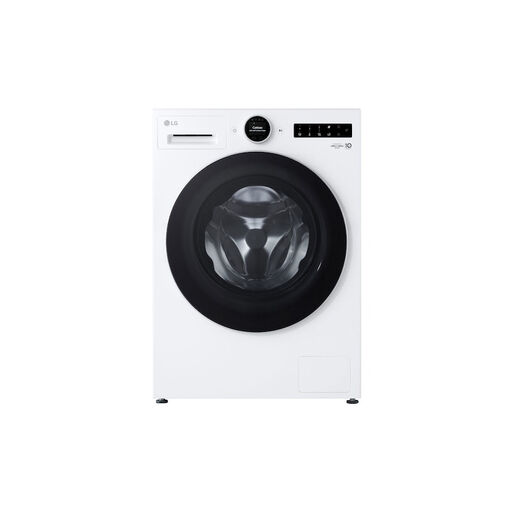
LG F4WX851Y washing machine, 11 kg

LG F4WX851Y, 11 kg

This 11 kg model may suit households where bulky fabrics and large loads are genuinely frequent.

The specifications mention 37 kWh/100 cycles, 50 L/cycle, an Eco 40-60 duration of 4 hours, spin-drying class B, a duvet programme, LoadSense and automatic water level adjustment.

Check the full dimensions before installation and make sure your usual loads justify an 11 kg drum.

Joybuy

Electrolux EW7FI259160V washing machine, 9 kg

Electrolux EW7FI259160V, 9 kg

A 9 kg capacity worth considering when family loads are regular but not consistently very large.

The specifications state 9 kg, 1,600 rpm, a 73 L drum, 44 kWh/100 cycles, 48 L/cycle, plus SensiCare and SmartSelect.

Its stated depth of 66 cm must be compatible with the installation space; also check the load limits for each programme.

Joybuy
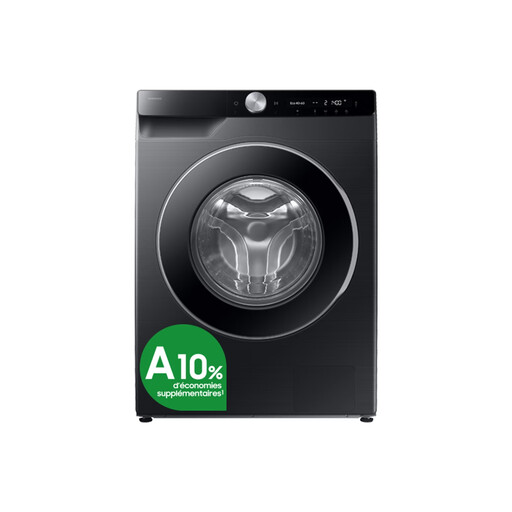
Samsung WW90DG6U85LBU3 AI Wash 6000 Series washing machine, 9 kg

Samsung WW90DG6U85LBU3 AI Wash 6000 Series, 9 kg

This model is designed for frequent family laundry where load size and level of soiling vary from one cycle to the next.

The specifications state 9 kg, 1,400 rpm, class A, spin-drying class B, 44 kWh/100 cycles, 50 L/cycle, AI Wash and Auto Dispense.

The stated dimensions are 60 × 85 × 55 cm. Check the load limits for each fabric and the conditions for using the connected features.

Joybuy
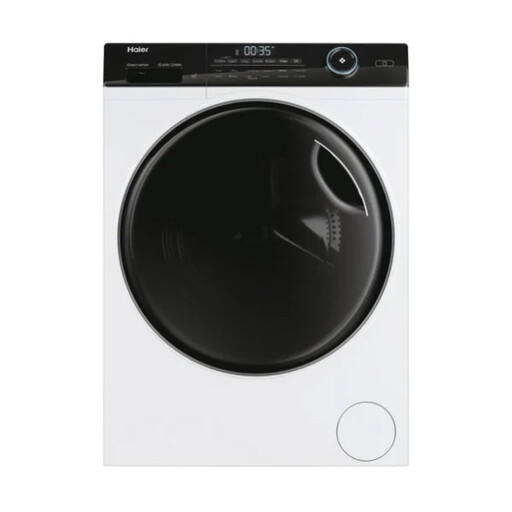
Haier HW90-B14959U1 I-Pro Series 5 washing machine, 9 kg

Haier HW90-B14959U1 I-Pro Series 5, 9 kg

A 9 kg option for regular everyday loads, with bedding or larger volumes only occasionally.

The specifications state 9 kg, 1,400 rpm, class A, spin-drying class B, 49 kWh/100 cycles, 48 L/cycle, an Eco 40-60 duration of 3 hours 48 minutes and automatic load detection.

The stated depth is 583 mm. Check the maximum loads for synthetics, wool and delicates before comparing models.

Joybuy

Frequently asked questions

Which figures should you compare between washing machines with different capacities?

Compare the energy label data on the same Eco 40-60 basis: energy class, kWh per 100 cycles, litres per cycle, duration and spin-drying class. The European Commission explains that the nominal capacity is expressed in kg of dry laundry, so do not focus solely on the energy class letter.

Can the stated capacity be used with every programme?

No. The advertised capacity mainly applies to cotton or Eco 40-60, and the limits may be lower for synthetics, jeans or wool. Check the manual for the exact model if these fabrics make up a significant proportion of your laundry.

How can you check whether the washing machine will fit?

Compare the product’s exact dimensions, including its depth, with the available space. Also measure doors, corridors and lifts, taking the packaging into account, to avoid access problems during delivery.

Is the label enough to assess rinsing and spin-drying?

It allows you to compare standardised consumption figures and the spin-drying class, but it does not replace an independent test of washing and rinsing performance. UFC-Que Choisir’s testing protocol measures washing, rinsing, spin-drying, duration, water and electricity, among other things.

Which durability indicator should you look at in France?

For washing machines, the durability index has been gradually replacing the repairability index since 8 April 2025, according to the French Ministry for Ecological Transition. This score out of 10 takes spare parts, maintenance, ease of dismantling and resistance to wear into account, among other factors; consider it alongside the seller’s warranty and service terms.