Households with frequent large loads
You often wash bedding, towels or children’s clothes and want to avoid regularly splitting a load across several cycles. Que Choisir recommends considering how often you do these loads when choosing a capacity.


Choose a capacity based on the large loads you wash regularly, rather than the number of people in your household alone. According to Que Choisir, 8 to 9 kg is generally enough for a household of 3 to 4 people, while 10 to 12 kg is a better fit when large loads are frequent. Front-loading machines offer more options at higher capacities; a top-loader may still work if its maximum 8 kg capacity meets your needs. Then compare similarly sized models by their energy labels, programme durations and installation dimensions.
You often wash bedding, towels or children’s clothes and want to avoid regularly splitting a load across several cycles. Que Choisir recommends considering how often you do these loads when choosing a capacity.
You alternate between large washes and small, urgent loads. Capacity matters, but programme duration and model-specific features are also worth considering.
You have a lot of laundry to get through, but the loading style and dimensions limit your options. According to Que Choisir, top-loaders have a maximum capacity of 8 kg, so check that this is enough before opting for this style.
Consider this if: you regularly have a lot of everyday laundry, but very large loads are occasional. According to Que Choisir, this capacity is generally enough for a household of 3 to 4 people.
The trade-off: bulky items or back-to-back washes may still mean running several cycles.
Consider this if: you often have large loads to wash, or regularly wash bedding, towels and duvets. Que Choisir considers this capacity range a better fit in these situations.
The trade-off: a capacity you rarely use offers less benefit. Also check the space needed for the machine and to open the door.
Consider this if: top loading better suits your installation and your loads fit within 8 kg.
The trade-off: according to Que Choisir, top-loaders have a maximum capacity of 8 kg, so they won’t meet the same needs as a 10 to 12 kg front-loader.
| Criterion | What to check | Who is this important for? |
|---|---|---|
| Usable capacity | Identify the loads you regularly have to split, then check the model’s rated capacity in kg. | When bedding and towels often pile up, I want to avoid running another wash to finish the same load; around 33% of consumers prioritise usable capacity. |
| Water and electricity | For models with a similar capacity, compare the kWh/100 cycles and litres/cycle shown on the label. | If I do lots of cycles, I want to compare the consumption of machines suited to my laundry; around 27% of consumers share this priority. |
| Style and installation | Measure the space, check that the door or lid can open, and allow room for the connections. | My available space may limit which style will fit, even if I have lots of laundry to wash; around 20% of consumers prioritise whether a machine will fit their space. |
| Cycle timings | Check the Eco 40-60 duration, programmes for smaller loads, spin speed and noise level. | Between a large wash and an urgent load, I need to fit cycles around my day; around 20% of consumers prioritise this. |
According to Que Choisir, your needs change when you regularly have large loads to wash. A larger capacity won’t help reduce the number of cycles if your loads already fit comfortably in a smaller drum.
Make a note of which loads you genuinely need to split and how often you wash bulky items.
The rating doesn’t tell you everything about water and electricity consumption, which matters if you do lots of washing. ADEME recommends checking the detailed information on the energy label.
For models with a similar capacity, also compare kWh/100 cycles, litres/cycle and the Eco 40-60 duration.
According to Que Choisir, top-loading washing machines have a maximum capacity of 8 kg. If you regularly need to wash loads of 10 kg or more, this style could leave you having to split your washing.
First check the capacity you need, then look at front-loaders that will fit your space.
A time-saving feature is specific to the model and doesn’t necessarily describe how it washes every load or fabric type. Que Choisir assesses several factors in its tests, including washing, rinsing and duration.
Check the model’s instructions for the conditions of its quick programme, and compare the Eco 40-60 cycle data separately.
A brand to consider if you’re looking for a 10 kg front-loader and need to check it will fit your space.
A brand to consider when comparing 10 kg front-loaders, particularly if you alternate between large and smaller loads.
A brand to consider if you prefer a top-loader and 8 kg is enough for your usual loads.
These 8 or 10 kg front-loaders let you compare two capacities to suit how often you wash and the size of your loads. Check the dimensions and model-specific details before choosing.
 Image unavailable
Worth considering if you often have large loads and need a 10 kg front-loader.
The product name indicates 1,400 rpm, an A rating, AutoDose, steam and Wi-Fi. Check the space needed for installation and make sure the plug is compatible with your electrical setup.
 Image unavailable
Compare this model if frequent loads point you towards a 10 kg front-loader.
Electrolux lists consumption of 51 kWh/100 cycles and 52 L/cycle for this model. Check its dimensions, Eco 40-60 duration and the conditions for the TimeSave and Steam Anti-Allergy features mentioned in its product name.
 Image unavailable
Consider this if your usual loads fit within 8 kg. This capacity may not suit you if you often need to split large loads.
The product name indicates a spin speed of 1,400 rpm. Check the full dimensions and the clearance needed in your home.
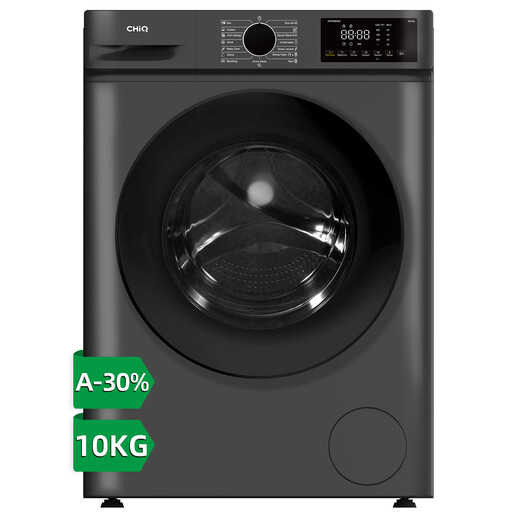 Image unavailable
Worth considering if frequent, large loads make a 10 kg capacity useful.
The product name indicates 1,400 rpm, 16 programmes and a 530 mm drum. To compare its consumption, check the kWh/100 cycles and litres/cycle on its label, along with its Eco 40-60 duration.
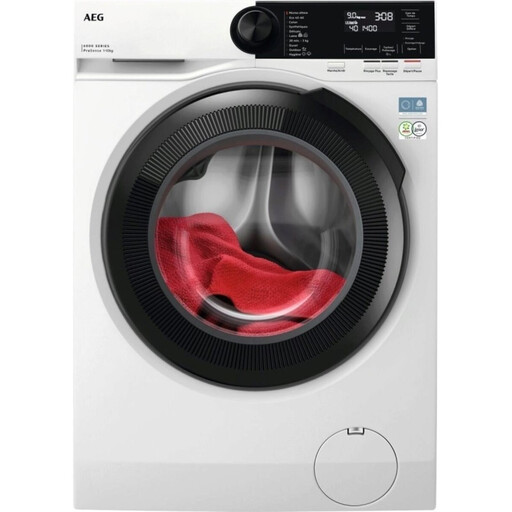 Image unavailable
Compare this model if your regular loads call for a 10 kg front-loader.
The product name indicates 1,400 rpm and an A rating. Check this model’s installation dimensions, kWh/100 cycles, litres/cycle and Eco 40-60 duration.
First compare models with a similar capacity, then look at the kWh/100 cycles, litres/cycle, rated capacity, Eco 40-60 duration, spin speed and noise level together. ADEME recommends using the energy label rather than relying on a single selling point.
No. This capacity can save you extra cycles if you often split large loads, but it offers less benefit if your usual washes are smaller. According to Que Choisir, start by considering how often you wash and the size of your loads, then compare water and electricity consumption for suitable models.
Knowing the duration can help you plan back-to-back cycles. It can’t be inferred from the machine’s capacity or whether it has a quick programme. Check the duration listed for the model and the loads concerned, then see which other programmes suit your laundry.
Yes, for the front-loading and top-loading washing machines covered by the scheme. According to the French Ministry for the Ecological Transition, the durability index replaced the repairability index for these appliances from 8 April 2025. Compare the index shown for the models you’re considering, alongside their capacity and usage information.
You can take it to a collection point or recycling centre, or ask a retailer about their take-back service. The French Ministry for the Ecological Transition lists these collection options for electrical equipment. Check the arrangements at your chosen location before moving the appliance.