Which households is it for?

Families with frequently full laundry baskets

If clothes, towels and bedding regularly fill the drum, look for a capacity you will genuinely use to avoid running extra cycles. UFC-Que Choisir and ADEME recommend matching the capacity to your actual needs.

Households that regularly wash duvets and household linens

When duvets, bedding and other bulky textiles are frequently washed at home, check the usable capacity of the selected programme, as well as the space needed to install the appliance.

Households with highly variable loads

If small, sorted loads alternate with occasional bulky loads, compare the standardised data on the energy label and avoid choosing a very large drum solely for occasional use.

Priorities before buying

Standard capacity

Consider it: for ordinary family loads that do not regularly fill a very large drum.

What to watch out for: thick duvets or constantly full laundry baskets may mean running more cycles.

Large capacity

Consider it: when bedding, towels and large loads regularly need washing at home.

What to watch out for: measure the space and make sure the drum will not be oversized for most of your cycles.

Priority What to check Your needs
Suitable capacity Compare the rated capacity in kg of dry laundry with the usual size of your laundry loads and how often you wash bulky textiles. I want to wash bedding and towels without running extra cycles, but I do not want to buy a drum that is too large for my everyday laundry.
Part-load use Compare kWh per 100 cycles, litres per cycle and the duration of the Eco 40-60 programme. The European label factors full, half and quarter loads into its weighted consumption figures. My small, sorted loads should still be taken into account, even though I sometimes wash larger volumes.
Size and loading Measure the width, depth, height, door clearance, delivery access and position of the connections. Also check which loading type is best suited to the room. The machine must fit into its space and remain convenient to load every day.
Maintenance and durability Check the displayed durability index, warranty terms, access to the filter and the manufacturer's maintenance instructions. As the appliance will be used frequently, I want to be able to maintain it easily and compare the information relevant to its service life.

Mistakes to avoid

  • Assuming maximum capacity automatically means lower consumption

    The right capacity depends on how often you actually run full loads, not just the figure shown on the product page.

    For a few weeks, note the size of your laundry loads and how often you wash bedding, towels and duvets. Then compare the Eco 40-60 data across several capacities.

    A drum that is rarely full may result in water and electricity consumption that is poorly suited to your usage.

  • Treating the cotton or Eco 40-60 capacity as a limit that applies everywhere

    Synthetic, delicate, jeans and wool programmes often accept a smaller load than the rated capacity. UFC-Que Choisir points out that the maximum limit varies by programme.

    Read the manual for the model you are considering and check the permitted loads for the cycles you use most often.

  • Forgetting about dimensions when looking for a large capacity

    A higher capacity is no use if the machine cannot be installed or the door opening is obstructed.

    Measure the alcove, doorways, connections and clearance required before selecting a front-loading model or a large-capacity machine.

    A poor fit for the available space or delivery access could complicate installation or require an exchange.

  • Overlooking maintenance and durability for a heavily used appliance

    Frequent use makes maintenance requirements, warranty terms and parts availability especially important. ADEME also states that using too much detergent does not clean laundry better.

    Compare the displayed durability index, warranty terms and the manufacturer's instructions; measure detergent according to the load and water hardness.

    Access to parts, documentation and servicing can affect long-term use.

Brands mentioned for this choice

There is no content to display in this section.

Washing machines available on Joybuy

This Joybuy selection brings together 9 and 10 kg front-loading washing machines for regular family laundry, with options suited to larger volumes or variable loads.

Haier X Series 11 HW100-BD14397PGU1 washing machine, 10 kg

Haier X Series 11 HW100-BD14397PGU1, 10 kg, 1400 rpm

A 10 kg option for frequently full family laundry baskets and regular household linens.

Energy class A, 41 kWh/100 cycles, 48 L/cycle, 16 programmes, AutoDose and load detection listed; dimensions 850 × 595 × 611 mm.

Check the manual for the permitted load for a duvet and for each programme, as well as the space needed for the door and installation.

View on Joybuy
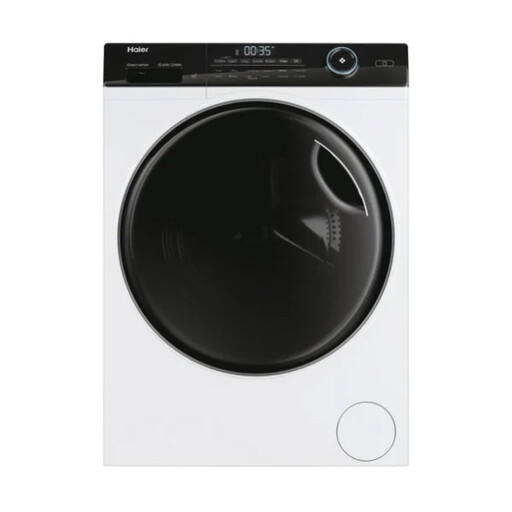
Haier HW90-B14959U1 I-Pro Series 5 washing machine, 9 kg

Haier HW90-B14959U1 I-Pro Series 5, 9 kg, 1400 rpm

This 9 kg capacity suits everyday family loads and households that alternate between smaller and larger washes.

Energy class A, 49 kWh/100 cycles, 48 L/cycle, automatic load detection, steam and Refresh programme listed; dimensions 850 × 595 × 583 mm.

Check the permitted duvet load, the depth with the door open and the durability information applicable to sales in France.

View on Joybuy
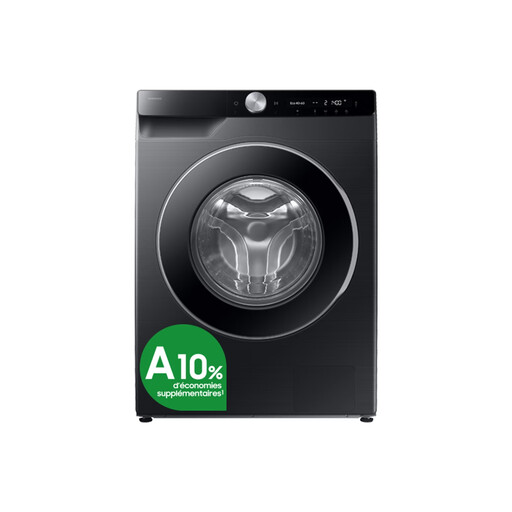
Samsung WW90DG6U85LBU3 AI Wash 6000 Series washing machine, 9 kg

Samsung WW90DG6U85LBU3 AI Wash 6000 Series, 9 kg

A 9 kg model designed for everyday family laundry with variable load sizes.

Energy class A, 44 kWh/100 cycles, 50 L/cycle, AI Wash, Auto Dispense, steam and Drum Clean+ listed; depth of 63 cm including the door.

Check that the selected programme genuinely accepts your duvet or bulky textile, and allow sufficient clearance for the door to open.

View on Joybuy

Electrolux EW7FI259160V washing machine, 9 kg

Electrolux EW7FI259160V, 9 kg, 1600 rpm

A 9 kg capacity for regular family cycles and sorted loads of different sizes.

Energy class A, 44 kWh/100 cycles, 48 L/cycle, SensiCare and SmartSelect listed; dimensions 84,7 × 59,7 × 66,0 cm.

Its depth requires careful checking of the alcove; consult the manual for the limits of delicate programmes and bulky textiles.

View on Joybuy

Electrolux EWF1410N2 washing machine, 10 kg

Electrolux EWF1410N2, 10 kg

This 10 kg option suits households where bedding, towels and full laundry baskets are frequent occurrences.

Energy class A, 51 kWh/100 cycles, 52 L/cycle, Inverter motor and cotton, delicate, wool and sports programmes listed; dimensions 847 × 597 × 658 mm.

Information about its suitability for small loads is not provided; also check the load limits for each programme and the installation space required.

View on Joybuy

Frequently asked questions

Does the capacity shown in kg refer to the weight of wet laundry?

No. The rated capacity refers to the maximum mass of dry textiles declared for a particular cycle and programme. The Eco 40-60 programme is used as the reference for the label; nevertheless, consult the manual, as the limits are lower for synthetics, delicates and wool.

Should you choose 10 kg solely to wash a duvet?

Not necessarily. A capacity of 10 kg or more is mainly worth considering if large loads and bulky laundry are regular requirements. Check that the duvet is permitted by the model's manual and by the selected programme.

Which energy label details should you compare?

Compare the energy class, kWh per 100 cycles, litres per cycle, the duration of the Eco 40-60 programme, spin efficiency and spin noise. The European Commission explains that these figures relate to the standardised programme and do not summarise every cycle offered by the machine.

How should you take a washing machine's durability into account?

Compare the displayed durability index, warranty terms, information about parts and maintenance instructions. In France, the durability index for washing machines includes factors relating to repairability, reliability and maintenance.

How can you limit unpleasant smells in a frequently used machine?

Follow the detergent dosage and the manufacturer's maintenance instructions. ADEME states that using too much detergent does not improve washing performance and can cause build-up in the appliance; also remember to maintain the filter and run the recommended cleaning cycles.