Families with laundry baskets that are often full
You quickly build up clothes, towels and household linen and want to reduce the number of cycles without choosing a drum that is unnecessarily large for your usual loads.


For a household of 3 to 4 people, a capacity of 8 to 9 kg is generally sufficient; move up to 10 to 12 kg when you regularly have several large loads in a row. According to UFC-Que Choisir, the stated capacity applies to cotton or the Eco 40-60 programme. Check the permitted load for each programme and, for a duvet, make sure there is enough room in the drum.
You quickly build up clothes, towels and household linen and want to reduce the number of cycles without choosing a drum that is unnecessarily large for your usual loads.
You are looking for a capacity suitable for bulky textiles and an appropriate programme, while checking the manual before washing each type of duvet.
You also compare spin performance, noise levels and stated consumption figures, so large laundry loads do not come at the expense of everyday comfort.
Start by considering how often you actually wash large loads, then check each programme’s load limits and the information on the energy label.
| Priority | What to check | Your needs |
|---|---|---|
| Load by programme | Check the manual’s table for the limits for cotton, synthetics, delicates, wool and duvets. The stated capacity applies to cotton or Eco 40-60. | I want to avoid choosing an appliance based solely on its kg rating, only to find that I need to split synthetic or woollen loads. |
| Suitable capacity | Compare how often you wash large loads with the capacity you are considering. UFC-Que Choisir states that 8 to 9 kg is generally suitable for a household of 3 to 4 people, while 10 to 12 kg becomes worthwhile when large loads are frequent. | My laundry baskets regularly contain clothes, towels and household linen, without necessarily including a thick duvet in every cycle. |
| Energy, water and spinning | Compare kWh/100 cycles, litres per cycle, programme duration and the noise level of the reference programme. Also look at the spin speed or spin results where the figures are comparable. | I want to reduce residual moisture before drying, while also taking account of water, electricity and noise levels in my home. |
| Duvets and installation | Look for a Duvet programme or an explicit indication that the machine is suitable for bulky items, then check its maximum load. Measure the overall depth, delivery access and door clearance. | A duvet needs to be able to move freely in the drum; I do not want to compress it or discover too late that the appliance will not fit in its intended location. |
The reference capacity applies to cotton or Eco 40-60. UFC-Que Choisir points out that synthetic, delicate and wool programmes may accept a significantly smaller load.
Before buying, check the model’s manual for the maximum loads of the programmes you will actually use.
LG lists 11 kg front-loading washing machines with a large drum; on the French product pages for the F14R31WHSA, a Duvet programme is explicitly mentioned.
Samsung offers 11 kg front-loading models with stated external dimensions of 600 × 850 × 600 mm, including models in its SpaceMax range.
Haier’s French range includes 10 kg front-loading washing machines, including the X7 HW100-B14367GU1, which is rated at 1 400 rpm and has an A rating.
Joybuy options for frequent family laundry, with 10 or 11 kg washing capacities and useful features to compare when washing bulky items.
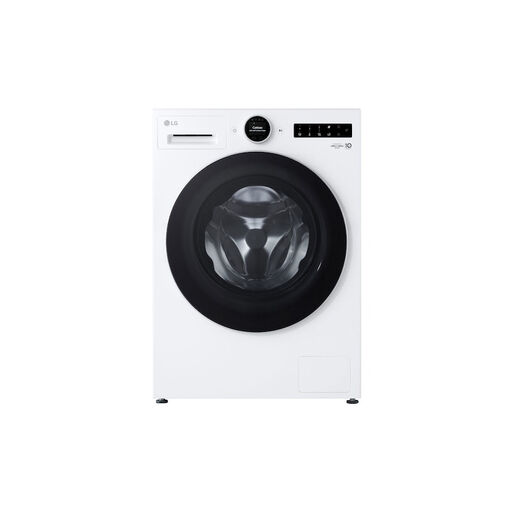 Image unavailable
Ideal for large family laundry loads and bulky textiles, thanks to its 11 kg capacity and the stated Duvet programme.
A rating, 37 kWh/100 cycles, 50 L/cycle, maximum spin speed of 1 360 rpm and spin noise level of 71 dB.
Check the manual for the permitted load for Duvet, synthetics, delicates and wool, as well as the dimensions and door clearance before installation.
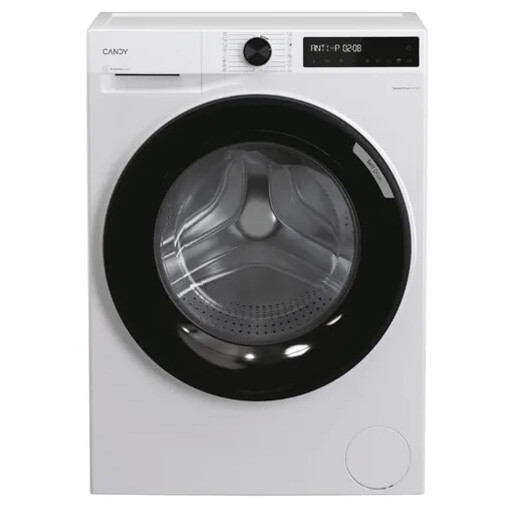 Image unavailable
An 11 kg option for large family laundry baskets and frequent loads.
A rating, 78 L drum, 37 kWh/100 cycles, 48 L/cycle, 1 400 rpm spin speed and spin noise level of 72 dB.
Check the manual for the Duvet programme and textile-specific loads; its stated depth of 68.1 cm also means you will need to check the available space.
 Image unavailable
Suitable for regularly washing large family loads, with a 10 kg capacity and a freestanding front-loading design.
A rating, 41 kWh/100 cycles, 48 L/cycle, 1 400 rpm spin speed, spin noise level of 68 dB and dimensions of 595 × 850 × 611 mm.
Check the manual before planning to wash duvets regularly, and make sure the connections and delivery access are suitable.
 Image unavailable
Designed for large family loads, with a 68.6 L drum.
A rating, 51 kWh/100 cycles, 52 L/cycle, maximum spin speed of 1 351 rpm, spin noise level of 76 dB and dimensions of 847 × 597 × 658 mm.
For a duvet, check the selected programme, permitted load and textile care label. The 76 dB noise level is also worth considering if the machine will be near living areas.
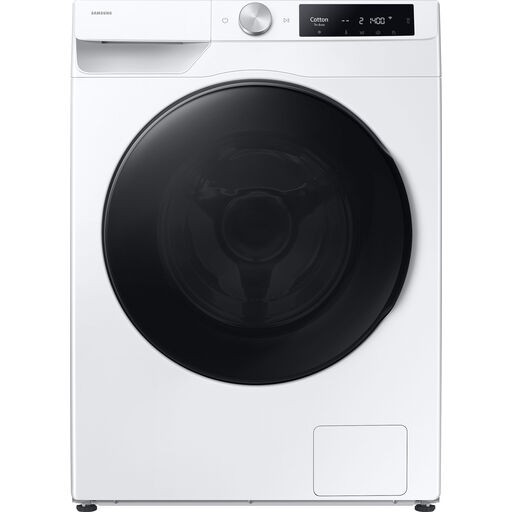 Image unavailable
For households that want to wash up to 11 kg and have an integrated dryer for a separate load.
11 kg washing capacity, 6 kg drying capacity, A rating and dimensions of 60 × 85 × 60 cm.
A full washing load may need to be divided before drying. Also check the programme and permitted load before washing a duvet.
No. According to UFC-Que Choisir, the stated capacity refers to the weight of dry laundry permitted for cotton or Eco 40-60. Synthetic, delicate and wool programmes may allow smaller loads, so check the manual’s table before mixing different textiles.
For a household of 3 to 4 people, 8 to 9 kg is generally sufficient according to UFC-Que Choisir. A capacity of 10 to 12 kg becomes more suitable when you regularly wash several large loads in a row; capacities of 12 to 15 kg are mainly intended for households that regularly wash blankets or thick duvets at home.
No. Check the duvet’s care label, the maximum load for the selected programme in the manual and whether the textile can move freely around the drum. A dedicated programme is a useful point to check, but it is not a universal guarantee.
Compare the energy rating, kWh per 100 cycles, litres per cycle, reference cycle duration and noise level. ADEME recommends considering these figures alongside the spin information; on their own, they do not describe the consumption of every programme or load level.
Yes. Measure doorways, corridors, lifts and the intended installation space, then check the model’s overall depth and door clearance. These measurements are just as important as width and height for a straightforward installation.