
Livraison le jour même ou le lendemain

Qualité garantie

Débloquez vos offres de bienvenue: Livraison GRATUITE | Jusqu'à -80 % | 30 jours d'essai gratuits à JoyPlus
Téléchargez l'application
Apartment living has many perks, but a spacious laundry area is rarely one of them. Fitting both a washing machine AND a dryer becomes a real challenge when every square metre counts. This is where the washer-dryer comes in: a 2-in-1 appliance that washes and then dries your laundry in a single drum.
Our mission? To help you navigate the options. This guide is designed to showcase the best models currently available and give you practical advice for choosing the right washer-dryer combo for your needs, all without the unnecessary marketing jargon.
The washer-dryer market is vast. To make an informed decision, focus on the criteria that truly matter for apartment use.
The first criterion is, of course, the space you have available. Precisely measure the niche where the appliance will be installed.
Capacity, expressed in kilograms (kg), is presented in two parts. You will always see two figures: one for washing (higher) and one for drying (lower). For example, an 8kg/5kg model can wash 8?kg of laundry but can only effectively dry 5?kg. For a single person or a couple, a compact washer-dryer with a 7-8?kg washing capacity is often sufficient.
Modern appliances do more than just wash and dry. Certain features can make your life easier:
The energy label is your best friend for anticipating running costs. It displays two classes: one for the wash cycle alone (generally good, from A to C) and one for the complete wash + dry cycle (often less impressive, from D to F).
For an apartment, a quiet washer-dryer is a key comfort factor. Opt for models equipped with an induction motor (or Inverter/BLDC). In addition to being quieter, they are also known for their durability.
Here are three models that stand out for their features and meet different needs, whether you're looking for a versatile, high-tech, or ultra-compact appliance.
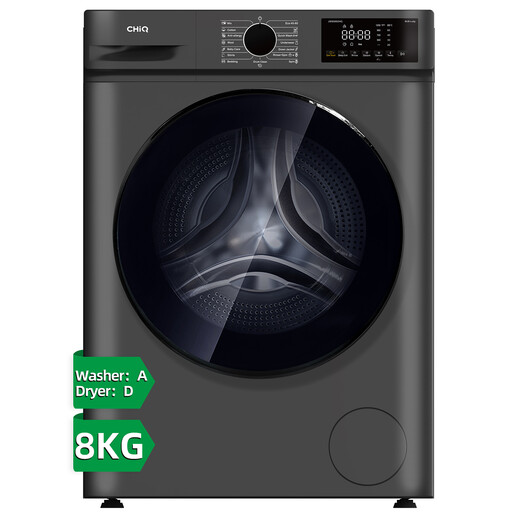
Why it stands out: This CHiQ model is an excellent compromise for those seeking a high-performance appliance without breaking the bank. Its shallow depth of 46.5?cm (overall 52?cm) makes it easy to install, while its 8?kg wash and 5?kg dry capacity is perfect for a couple or a small family.
Pros:
Who is it for? Ideal for city dwellers, whether couples or singles, who need a reliable, compact 2-in-1 appliance with useful features like steam, all on a controlled budget.
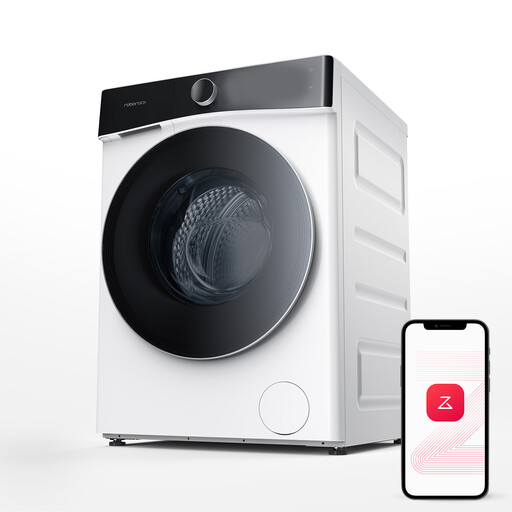
Why it stands out: The Roborock Zeo Lite is positioned as a high-end smart washer-dryer. Its low-temperature Zeo-Cycle drying technology, inspired by zeolite, is designed to care for the most delicate fabrics like wool or silk by minimising the risk of shrinkage.
Pros:
Who is it for? Perfect for families or tech enthusiasts looking for a high-performance, autonomous appliance capable of caring for all types of textiles, including the most fragile ones.
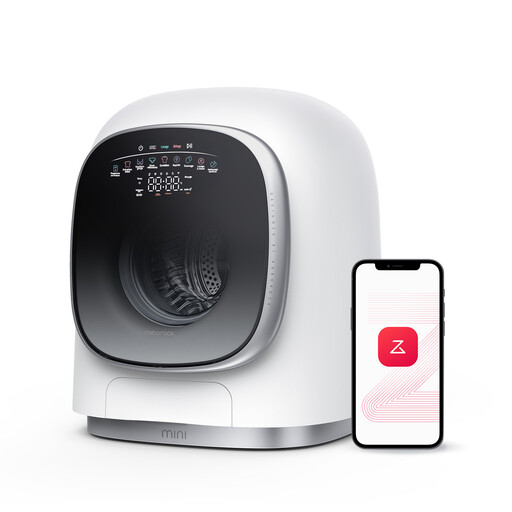
Why it stands out: This model is a unique proposition on the market. The Zeo Mini is an ultra-compact washer-dryer designed for micro-loads. With its 1?kg wash and 0.5?kg dry capacity, it's not meant to replace a family machine but to complement one or to equip a studio apartment.
Pros:
Who is it for? For people living alone in a very small space, or for families looking for a second machine dedicated to delicate textiles, sportswear, or baby clothes.
Our selection focuses on specific needs related to space constraints. If these models don't perfectly match your expectations in terms of capacity, budget, or features, many other solutions are available.
? Explore our full range of washing machines and dryers to find the model that's right for you.
To dry effectively, laundry needs more space for hot air to circulate. A drum filled to its maximum washing capacity would be too dense to allow for even drying. This is why it's recommended to either dry only a portion of the washed load or to run cycles with less laundry from the start.
Historically, yes. Older models were very energy-intensive, especially for drying, which used water to condense the steam. However, recent appliances, particularly those with heat pump technology (still rare and more expensive) or optimised drying systems, have made huge progress. Always check the energy label: the class shown for the complete "Wash & Dry" cycle is the best indicator of its real-world consumption.
This is a common concern. Drying at too high a temperature can indeed wear out fibres over time. This is where modern technologies make a difference. Models with humidity sensors that stop the cycle as soon as the laundry is dry, or those offering low-temperature drying like the Zeo-Cycle technology, are specifically designed to preserve the quality of your textiles.