
Livraison le jour même ou le lendemain

Qualité garantie

Débloquez vos offres de bienvenue: Livraison GRATUITE | Jusqu'à -80 % | 30 jours d'essai gratuits à JoyPlus
Téléchargez l'application
Finding the right vlogging camera can often be a daunting task. Between compact models, action cameras, and more professional options, it's easy to get lost. The holy grail? A camera that combines high-quality imaging, perfect stabilisation, and ease of use, without being weighed down by pro-level gear. Whether you're a YouTube content creator, an avid traveller, or an outdoor sports enthusiast, this guide is designed to help you sort through the options.
Our editorial team has sifted through the most popular models to select only the cream of the crop. Our checklist is simple: performance, portability, and versatility.
Before diving into our selection, here are the key points that will help you make the right choice.
A shaky video is simply unwatchable. Stabilisation is therefore a non-negotiable feature.
4K has become the standard for a YouTube camera, but resolution isn't everything—far from it.
A pocket camera or a stabilised mini camera often proves to be the nomadic vlogger's best friend. It all depends on your use case: will you need to mount it on a helmet, a bike, or your clothing? The presence of a flip screen, easy file transfers via Wi-Fi, and battery life are all details that make a difference in daily use.
Here are three models that tick all the boxes, but with different philosophies, from casual city vlogging to the most extreme expeditions.

Why it stands out: The DJI Osmo Pocket 3 achieves the feat of engineering of packing the power of a mechanical gimbal into a pocket-sized format. Its large sensor and 3-axis stabilisation make it the ultimate weapon for a professional look, with effortless simplicity.
Key features:
Who is it for? For discerning creators, vloggers, and travellers who refuse to compromise on image quality and smoothness, all in a format that fits in your pocket.
See details for the DJI Osmo Pocket 3
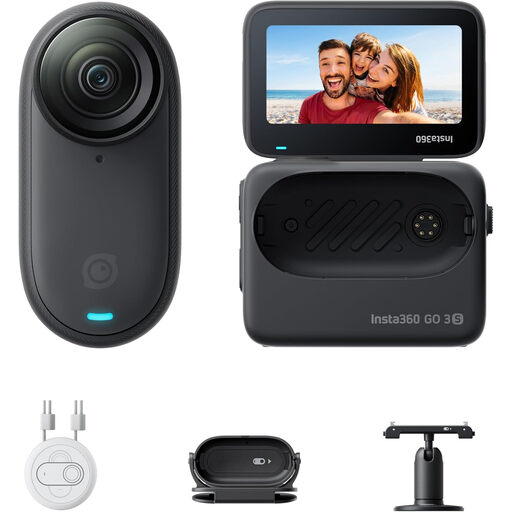
Why it stands out: With its feather-light weight of 39 grams, the Insta360 GO 3S is a true game-changer that unleashes creativity. Its magnetic design and accessory ecosystem allow you to stick it anywhere to capture unique 4K perspectives.
Key features:
Who is it for? For fans of POV shots, athletes, and adventurers who want a "go-anywhere" camera to capture the action from impossible angles, without any of the bulk.
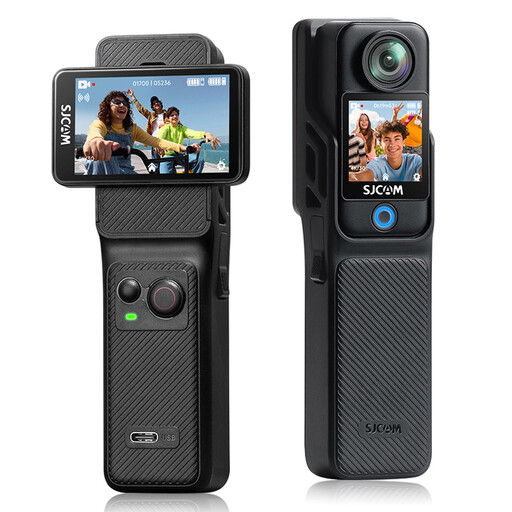
Why it stands out: The SJCAM C400 presents itself as a very comprehensive alternative in the 4K action camera segment. With its solid spec sheet, dual screens, and record-breaking battery life, it's a smart choice for long shooting sessions.
Key features:
Who is it for? For athletes and adventurers (mountain biking, hiking, water sports) who need a rugged, long-lasting, and practical camera to film themselves in the middle of the action.
This selection is just a glimpse, and the market is full of options. If you want to explore other types of cameras or compare different accessories, feel free to browse our dedicated category. There you'll discover a wider range of products, especially if you're looking for a vlog stabiliser for your smartphone.
Explore the entire Vlog Stabiliser category
Although the line is increasingly blurry, their philosophies differ. A vlogging camera like the DJI Pocket 3 focuses on image quality and smooth shots thanks to its gimbal, with special attention paid to audio for speaking to the camera. An action camera, on the other hand, is an adventurer: its priority is ruggedness, waterproofing, and shock resistance to withstand the harshest conditions.
Not necessarily. Most recent models, whether they feature a built-in gimbal or electronic stabilisation, are already very effective. An external handheld video stabiliser remains relevant if you're filming with a smartphone or a mirrorless camera with limited internal stabilisation.
Aim for at least 90 to 120 minutes of continuous recording to last a full day of sightseeing or hiking. Some models, like the Insta360 GO 3S with its Action Pod or the SJCAM C400 with its battery grip, offer clever solutions to extend the fun. Pro tip: always keep a power bank in your bag to recharge your gear during breaks.