
Livraison le jour même ou le lendemain

Qualité garantie

Débloquez vos offres de bienvenue: Livraison GRATUITE | Jusqu'à -80 % | 30 jours d'essai gratuits à JoyPlus
Téléchargez l'application
Choosing the right vlogging camera can quickly become overwhelming given the sheer number of options. Whether you're a budding TikTok creator, a traveller documenting your adventures, or a seasoned YouTuber looking to level up, your choice of gear is crucial. This guide is here to help you cut through the noise and find the vlog camera that truly fits your needs and budget, without the confusing marketing jargon.
Before diving into our top picks, here are the key factors to consider to make the right choice and avoid any regrets.
Resolution has a direct impact on the sharpness of your videos. While Full HD (1080p) can still get the job done, a 4K video camera has now become the standard on platforms like YouTube. It not only offers a more detailed image but also provides much more flexibility in post-production. For example, you can reframe (or crop) your shots without sacrificing quality—a real game-changer for making your videos more dynamic. The sensor size is just as crucial: a larger sensor captures more light, which translates to better low-light performance and a more beautiful background blur (the famous bokeh).
There's nothing worse than shaky footage! A stabilised video camera is therefore a must-have, especially if you plan on filming while walking. There are two main types of technology:
A good vlog camera should be easy to use solo, hassle-free. A camera with a flip screen or a fully articulating screen is a non-negotiable feature: it allows you to see yourself while filming to perfect your framing. Also, remember to check for other essentials: a fast and reliable autofocus (ideally with eye-tracking), decent internal audio quality, and, most importantly, a mic input to connect an external microphone and take your sound to the next level.
Let's get down to business with our selection of three models that caught our eye. Each one targets a different audience and budget, but all are excellent for content creation.
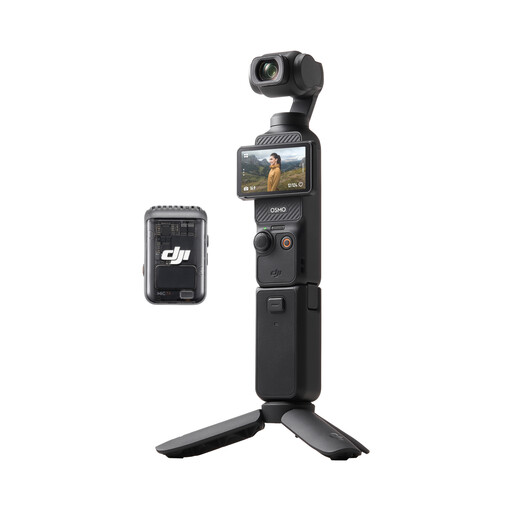
Why it stands out
The DJI Osmo Pocket 3 is the Swiss Army knife for the on-the-go vlogger. It's an all-in-one camera that's all about portability and mind-blowing stabilisation. Its secret weapon: an integrated 3-axis mechanical gimbal that guarantees unshakeably smooth footage, even in the middle of the action. Its large 1-inch CMOS sensor can shoot in 4K at up to 120 frames per second, delivering first-class image quality and creative slow-motion shots. The "Creator Bundle" takes it a step further by including key accessories like the DJI Mic 2 wireless microphone. It's everything you need to get started with an ultra-complete kit.
Key Features?:
Who is it for??: The ideal companion for travel vloggers, athletes, or anyone who is constantly on the move. Compact and easy to use, it's aimed at those who want a professional look without lugging around a heavy camera bag.
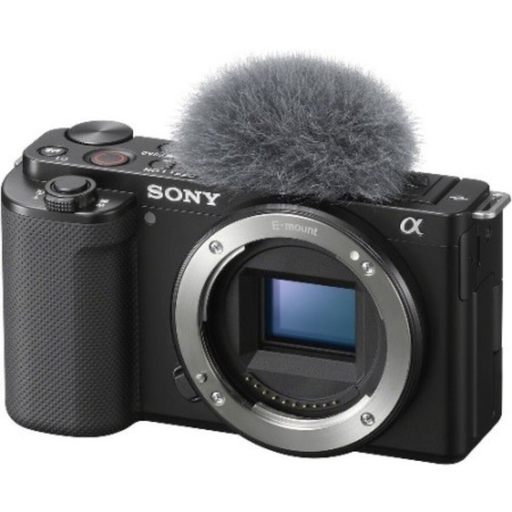
Why we love it
The Sony ZV-E10 plays in a different league: it's a mirrorless camera that offers the full flexibility of interchangeable lenses. With its large 24.2MP APS-C sensor, it delivers near-cinematic image quality with superb control over depth of field. Designed for creators, it packs handy features like "Product Showcase" mode (which shifts focus to an object you're presenting) and a dedicated button to get a beautiful background blur with a single click.
Key Features?:
Who is it for??: It's clearly aimed at the YouTuber or creator who wants to take things to the next level. Its versatility makes it a future-proof investment: it will grow with you, adapting to all your projects (talking-head shots, interviews, wide shots...) simply by changing the lens.
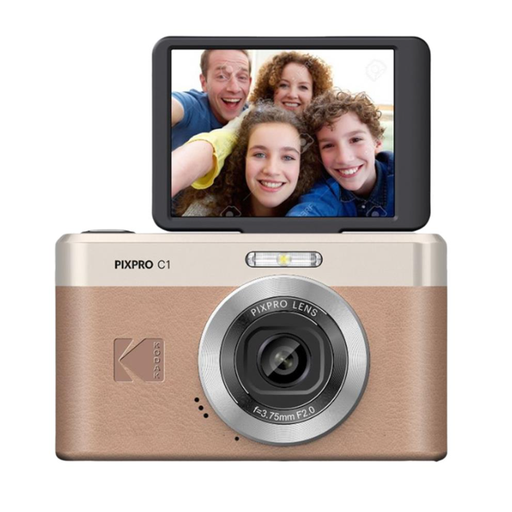
The Bottom Line
The Kodak C1 is the perfect entry point for starting a vlog without breaking the bank. This compact camera is all about simplicity. It features a 13MP sensor and shoots in Full HD (1080p). Its real vlogging advantage is a 180° tilting screen that lets you see yourself while filming and nail your talking-head shots on the first take. Lightweight with a small footprint, it slips easily into a pocket or bag.
Key Features?:
Who is it for??: The Kodak C1 is perfect for aspiring vloggers, teens, or for capturing family holidays without any fuss. It allows you to cut your teeth in video creation on a tight budget.
Our selection is just a starting point, and the market is full of hidden gems. If you haven't found your perfect match here or if you have your eye on other types of cameras (expert mirrorless, versatile bridge cameras...), take a look at our full catalogue.
Discover our full range of digital cameras
1. What's the difference between a vlogging camera and a smartphone? Even though high-end smartphones have become incredibly impressive for video, a dedicated camera still has the edge: larger sensors (the key for low-light scenes), interchangeable lenses on mirrorless models for more creativity, often superior stabilisation, and, most importantly, much better audio quality thanks to the ability to connect a proper microphone.
2. Do I really need a 4K camera to start on YouTube? Not mandatory, but very, very highly recommended. 4K has become the standard and ensures your videos won't look dated in a year's time. More importantly, it gives you enormous flexibility in post-production: you can crop, zoom into the image, or stabilise a sequence without any visible quality loss on a final 1080p export. It's a real game-changer.
3. Is a camera with a flip screen essential? For anyone filming themselves, it's not an option, it's a necessity. A camera with a flip screen allows you to check your frame, focus, and expression in real-time. Filming blind is a surefire way to end up doing 10 retakes. For a YouTuber, it's a priceless time-saver that offers peace of mind.