
Livraison le jour même ou le lendemain

Qualité garantie

Débloquez vos offres de bienvenue: Livraison GRATUITE | Jusqu'à -80 % | 30 jours d'essai gratuits à JoyPlus
Téléchargez l'application
Slicing, dicing, grating… Prepping vegetables is the foundation of healthy cooking, but let's be honest: it's a long and repetitive chore. Achieving perfectly even slices, uniform dice, or a chef-worthy julienne by hand is often an uphill battle. That's where a good vegetable chopper becomes a game-changer: it saves you precious time, ensures even cooking, and elevates the presentation of your dishes.
But with so many options, from traditional mandolines and manual choppers to heavy-duty electric models, it's hard to know where to start. This guide is here to bring clarity and help you find the vegetable cutting tool that will revolutionise your daily routine, whether you're a weekend cooking enthusiast or a seasoned pro.
To ensure you're making the right investment, here are the essential points to consider before you decide.
The first choice to make: manual or electric? It all depends on the quantity of vegetables you typically cook and how often you'll use it.
Versatility is the name of the game. Carefully check the range of blades provided and the types of cuts possible. A multifunction vegetable chopper worthy of the name should be able to offer:
The ability to adjust the cutting thickness is a real plus, especially on a mandoline-style vegetable slicer, allowing you to switch from an ultra-thin carpaccio to thick slices for a gratin in a flash.
With blades this sharp, safety is non-negotiable. A good model must include a safety guard to keep your fingers protected, as well as non-slip feet for rock-solid stability. In terms of materials, stainless steel for the blades remains the gold standard for durability and hygiene. Finally, think about the aftermath: a device that is easy to disassemble will save you a lot of trouble when it's time to clean up.
To put theory into practice, we've scoured the market and selected three models that caught our eye. Each one meets a specific need.
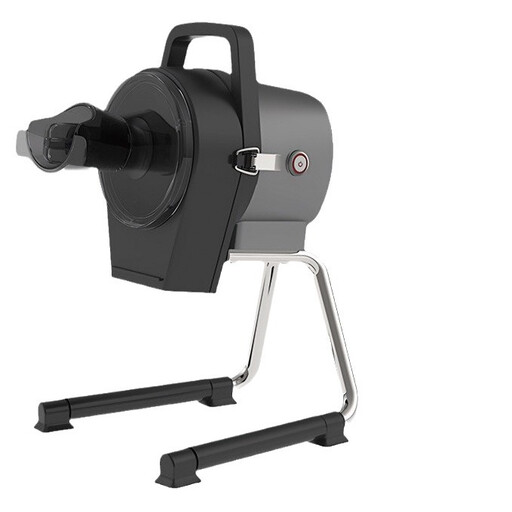
Why it stands out: This model has all the features of a professional vegetable chopper, without the hefty price tag. Armed with a 200W motor running at 6000 RPM, it's built for high output. Its three interchangeable hoppers allow you to vary your cuts (straight, angled, grated) and tackle any vegetable, from carrots to ginger.
Advantages:
Who is it for? Restaurant professionals (small establishments, caterers) and home cooks who think big (batch cooking, large family meals) and for whom every minute counts.
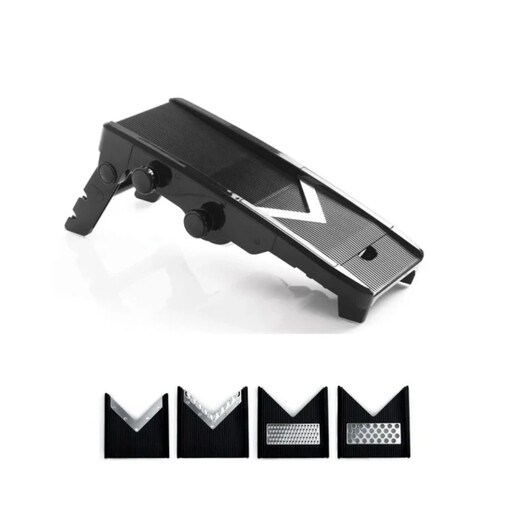
Why it stands out: The Mastrad mandoline is the benchmark for fans of surgical precision. Its incredibly efficient V-shaped blade makes short work of vegetables, even delicate ones like tomatoes. It comes with 6 interchangeable stainless steel blades and allows you to adjust the cutting thickness from 1 to 9 mm for absolute control.
Advantages:
Who is it for? Demanding cooks who value precision and consistency. It's the perfect tool to wow your guests with vegetable carpaccios, a gratin dauphinois with perfectly uniform slices, or chef-quality salads.
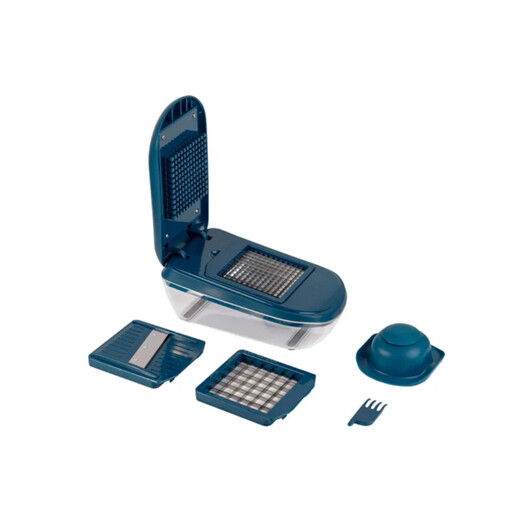
Why it stands out: Simplicity and convenience are the name of the game here. Its brilliant feature? A collection container that catches the vegetables directly, preventing your worktop from turning into a war zone. With its 3 grids, it excels at dicing and making sticks in the blink of an eye. Its compact size is a bonus for storage.
Advantages:
Who is it for? The perfect ally for everyday cooks who want a fast, efficient, and clean solution for preparing salads, stir-fries, or appetiser platters.
If these three models don't check all your boxes, or if you're simply curious to see other options, explore our complete selection. There you'll find a much wider range of solutions for all your cutting needs.
? Explore Our Selection of Slicing Blades
1. What's the difference between a mandoline and a multifunction vegetable chopper?
Simply put, the kitchen mandoline is the queen of slices (thin, even, adjustable thickness), while the multifunction vegetable chopper is the champion of versatility. Thanks to its different grids, it allows you to create various shapes: dice, sticks, wedges, etc.
2. How do I clean a vegetable chopper safely?
Golden rule: never touch the blades with your bare hands. Use a brush or the cleaning comb (often included) to remove any residue. Most models can be disassembled for a thorough cleaning. Even if some parts are dishwasher-safe, hand washing is always recommended to preserve the sharpness of the blades. Remember to dry all components thoroughly before reassembling and storing the device.
3. Is an electric vegetable chopper suitable for home use?
Absolutely! The electric vegetable chopper is no longer just for professionals. If you're a fan of meal prep, cook for a large family, or have a bountiful vegetable garden, it's an investment that will quickly pay for itself. It cuts prep time in half (or even by two-thirds!), allowing you to focus on what's most important: the joy of cooking.