
Livraison le jour même ou le lendemain

Qualité garantie

Débloquez vos offres de bienvenue: Livraison GRATUITE | Jusqu'à -80 % | 30 jours d'essai gratuits à JoyPlus
Téléchargez l'application
Brewing a delicate green tea at 100?°C? A terrible mistake! Its delicate aromas will simply evaporate. Making instant coffee with lukewarm water? The result will be disappointingly weak. For any self-respecting hot beverage enthusiast, precision isn't an option—it's the key to the perfect brew. That's why the variable temperature kettle has graduated from a niche gadget to a kitchen essential, capable of extracting the very best from every tea leaf or coffee bean.
But with the overwhelming number of models available, how do you make the right choice? This guide is here to help you navigate the options and find the model that's right for you, whether you're outfitting your home or simply looking to brew the perfect cup.
Before you dive in, here are the key points to consider to find the perfect appliance for your daily routine.
This is the heart of the matter. Some convenient models offer preset temperature levels (e.g., 70?°C for green tea, 80?°C for white tea, 90?°C for coffee). Purists, on the other hand, will prefer versions that allow for manual adjustment to the exact degree.
Also, consider the keep warm function: a real bonus for maintaining the water at the correct temperature for 30 to 60 minutes, saving you from having to restart a heating cycle for a second cup.
Capacity generally ranges from under 1 litre for portable models to over 1.7 litres for family-sized versions. A 1.7 L kettle can serve about 7 cups, making it ideal for family breakfasts or when entertaining guests.
As for speed, it all comes down to power (in watts). Aim for at least 2000?W for a rapid boil: a good 2200?W model will bring 1.7 litres of water to a boil in under three minutes.
For both durability and taste, materials are a crucial factor. Stainless steel remains a reliable choice for its robustness and neutrality, ensuring water without any unwanted taste. Also, make sure that any plastic parts in contact with water are certified BPA-free (Bisphenol A).
On the safety front, a double-wall construction is a major advantage: it keeps the exterior cool to the touch and prevents burns. Finally, check for basic safety features: automatic shut-off at boiling point and boil-dry protection are indispensable today.
After our tests and analysis, here are the models that particularly caught our attention, each tailored to a specific user profile.
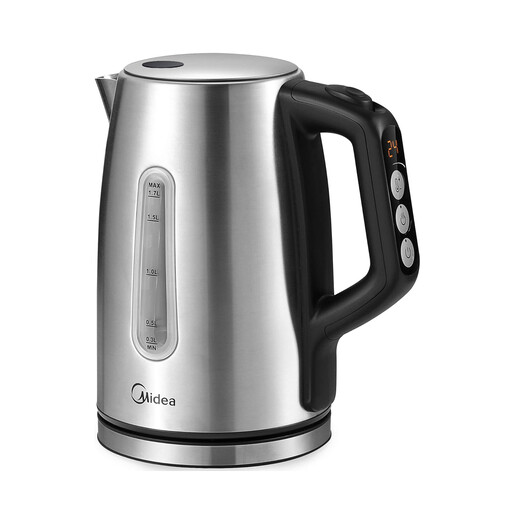
Why it stands out: This is the Swiss Army knife of family kettles. It combines a large capacity with excellent versatility thanks to its six temperature settings, making it a comprehensive appliance capable of satisfying the most demanding users.
Highlights:
Who is it for? For families and heavy tea or coffee drinkers looking for a versatile, high-performance, and safe appliance for intensive daily use.
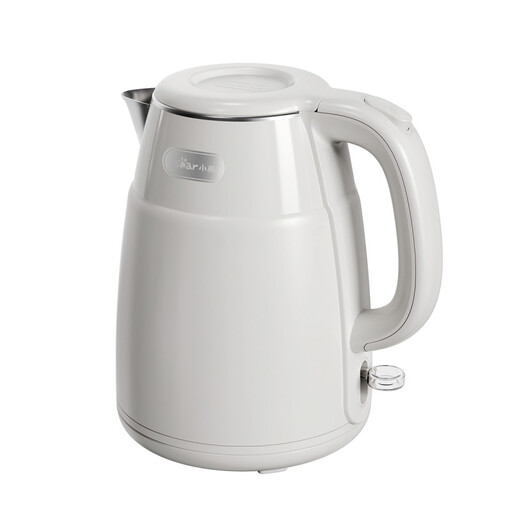
Why it stands out: This model gets straight to the point: simplicity, safety, and quality materials. Its 100% stainless steel interior and clean design make it a reliable choice built to last.
Highlights:
Who is it for? For those who prioritise simplicity and durability above all else, without needing precise temperature control. An excellent, no-fuss choice for everyday use.
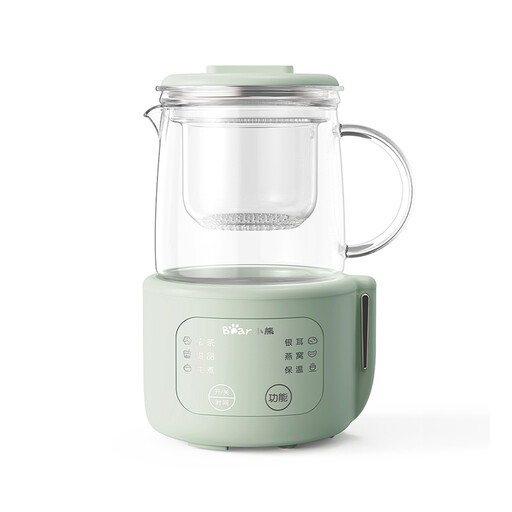
Why it stands out: More than just a kettle, this is a true multifunctional electric tea maker for your desk. Its portable design and dedicated programs make it the ideal companion for personalised wellness breaks.
Highlights:
Who is it for? For students, remote workers, or anyone looking for a compact and versatile solution for the office or a small space. Perfect for those who love to try new infusions and mix things up.
The perfect kettle is, above all, one that fits your habits. If our selection doesn't check all your boxes, feel free to explore our full range to find that hidden gem.
Explore our complete collection of kitchen dispensers to discover other models.
Each type of tea releases its flavours at a specific temperature. Green tea brewed above 80?°C becomes bitter, while black tea needs simmering water (around 95?°C) to reveal its full strength. A variable temperature kettle ensures these rules of the craft are respected for a perfect tasting experience.
To tackle limescale, regular descaling is necessary (about once a month for daily use). The method is simple: fill your kettle with a 50/50 mixture of water and white vinegar, bring it to a boil, let it sit for an hour, then rinse several times with clean water.
Bisphenol A (BPA) is a chemical compound sometimes used in food-grade plastics but is suspected of having health effects. A "BPA-free" certified kettle guarantees that the plastic parts in contact with water are completely free of it. It's an essential mark of safety.