
Livraison le jour même ou le lendemain

Qualité garantie

Débloquez vos offres de bienvenue: Livraison GRATUITE | Jusqu'à -80 % | 30 jours d'essai gratuits à JoyPlus
Téléchargez l'application
Overflowing closets, winter duvets hogging half the wardrobe in the middle of summer, a suitcase that refuses to close… Lack of space is a daily struggle. On paper, the vacuum storage bag is the miracle solution for compressing the volume of your textiles. But in reality, not all models are created equal. Make the wrong choice, and you're guaranteed disappointment: the bag reinflates in a few days, ruining all your efforts.
To help you avoid falling into this trap, our guide breaks down the pitfalls to avoid and the essential criteria for a successful purchase.
The market is flooded with options, but many hide critical design flaws that render them useless after just a few weeks.
travel compression bag kits with a manual pump often come with a gadget-like accessory that requires superhuman effort for a disappointing result.To ensure you don't get tricked, here are the technical points to examine closely.
A bag's longevity comes down to its composition. The most reliable models combine Polyamide (PA) and Polyethylene (PE).
The entire effectiveness of the compression relies on a perfect seal. Two points to check without fail:
vacuum bag for clothes to be used at home, check that the valve is truly universal and compatible with your vacuum cleaner. For nomads, there are very practical no-vacuum compression bag models that are emptied of air by simply rolling or pressing them, thanks to a one-way valve.There's a format for every need. It's pointless to try to fit a king-size duvet into a bag designed for t-shirts.
vacuum bag for duvets.hanging vacuum storage bags are the ultimate solution for compressing coats, suits, and dresses without wrinkling them, right on the closet rod.Based on these criteria, we have selected three products that each meet a specific need.
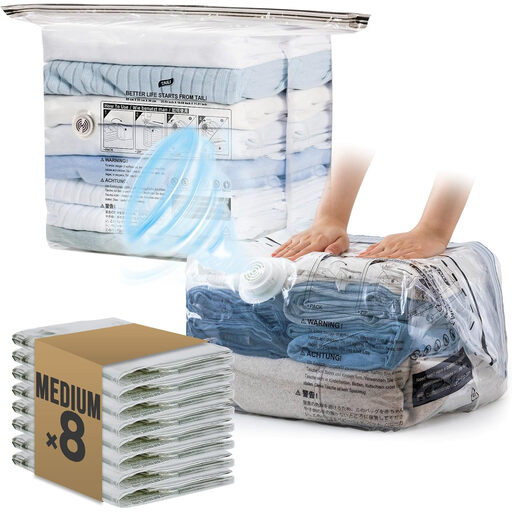
Why we chose it: This set is designed for globetrotters or those without a vacuum cleaner on hand. Compression is done manually with a simple press, making it a breeze on the go. The cube format is perfectly optimised for carry-on suitcases.
Its patented valve allows for compression without a pump or vacuum, which immediately eliminates the trap of compatibility issues or a gimmicky pump. The PA+PE material is designed to withstand the rigours of travel.
Ultra-fast manual compression and a cube format that optimises every square inch of your luggage.
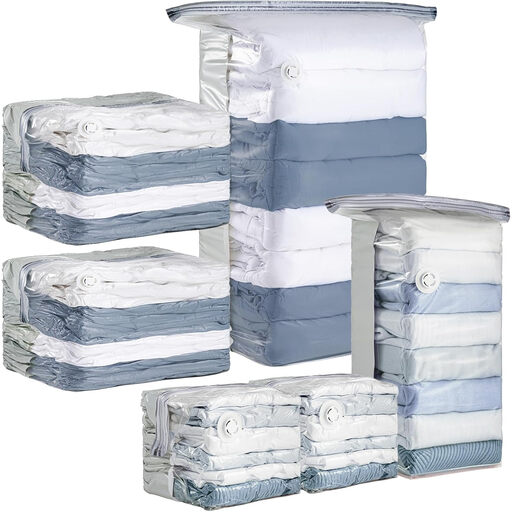
Why we chose it: This mixed set is perfect for major seasonal storage (duvets, winter clothes...). The self-standing cube structure is a real plus: it makes filling easy and allows you to stack the bags like Tetris blocks, transforming chaos into a model of organisation.
The cube design and reinforced PA+PE material limit the risk of tearing, even with thick duvets. Its cap-free universal valve is compatible with almost all vacuum cleaners, which solves the compatibility issue.
Large capacity and a stable structure that allows for easy filling, even when you're alone. Perfect for impeccable vertical storage.
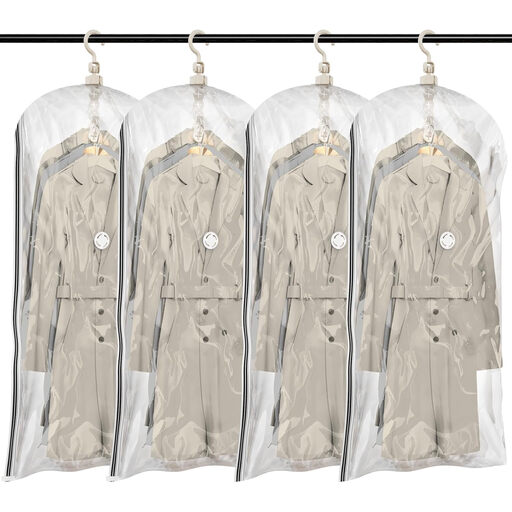
Why we chose it: The custom-made solution for clothes on hangers. It allows you to compress coats, suits, and jackets directly in the wardrobe, protecting them from dust and moths while freeing up an incredible amount of space.
The built-in hanger prevents folding and damaging fragile garments. Cleverly, the zip changes colour to visually confirm that the seal is airtight, eliminating the risk of air leaks.
A spectacular vertical space saving in the wardrobe, while taking care of long or delicate clothes.
Discover our complete selection of products that meet our quality criteria and current safety standards.
Ideally, no more than 6 to 12 months at a time. Beyond that, it's a good idea to open the bag to air out the textiles for a few hours before re-vacuuming. This allows the fibres to "breathe" and prevents creases from becoming permanent.
Yes, absolutely. There are no-vacuum compression bag models specifically designed for this. The most common are roll-up bags: you push the air out by simply rolling the bag up. Others, like the TAILI travel model in our selection, work with a simple manual press. This is ideal for suitcases.
If used correctly, no. Most textiles handle compression very well. However, you should be cautious with delicate or high-end materials. Avoid over-compressing items made of feathers or down, as you risk breaking the fibres and losing their precious loft. Leather and fur should be avoided entirely. For everything else, a 50% compression is often the best compromise between space saving and respecting the textiles.