
Livraison le jour même ou le lendemain

Qualité garantie

Débloquez vos offres de bienvenue: Livraison GRATUITE | Jusqu'à -80 % | 30 jours d'essai gratuits à JoyPlus
Téléchargez l'application
Running out of space? It's a daily struggle for many of us, whether we live in an apartment, a studio, or are simply trying to manage seasonal wardrobe changes. The promise of a vacuum storage bag is tempting: reclaiming up to 80% of your storage space. However, the reality is often less than perfect. Who hasn't found their bags reinflated after just a few days, or worse, torn during the very first use?
As a Product Specialist at Joybuy, my mission is to help you navigate the options and make the right choice. Let's break down the common pitfalls to ensure your purchase of space-saving clothing storage is a lasting success.
Before you buy, it's crucial to understand the weaknesses of many models on the market. A little awareness can save you a lot of disappointment.
To avoid these traps, you just need to check a few simple technical details. They make all the difference between a purchase you'll regret and a storage solution that delivers on its promise.
The durability of a garment compression bag depends primarily on its material. The most resilient models combine Polyamide (PA) and Polyethylene (PE).
The seal is the most critical feature. Always look for a model with a double-zip closure. Some even feature a colour-changing slider that indicates when the zip is securely closed—a clever detail that ensures a perfect seal.
When it comes to the valve, compatibility is king. Universal or "capless" valves are designed to fit most vacuum cleaners. For travel, a travel vacuum bag is an excellent option, especially no-vacuum compression bags that expel air simply by being rolled up.
Here are a few models that check all the boxes for durability and practicality.
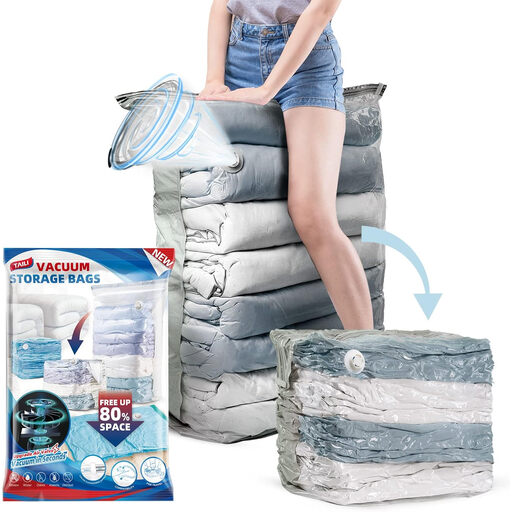
Why we chose it: Ideal for storing duvets, blankets, and winter coats. The self-standing cube shape makes it easy to organise closets, basements, or attics by creating stable stacks.
Its cube structure with a widened base reduces stress on the seams, a common weak point in flat bags. The capless valve is designed for compatibility with most vacuum cleaners, avoiding the incompatibility trap.
Extra-large capacity (one cube bag can replace up to 4 flat bags) and a stable structure for flawless organisation.
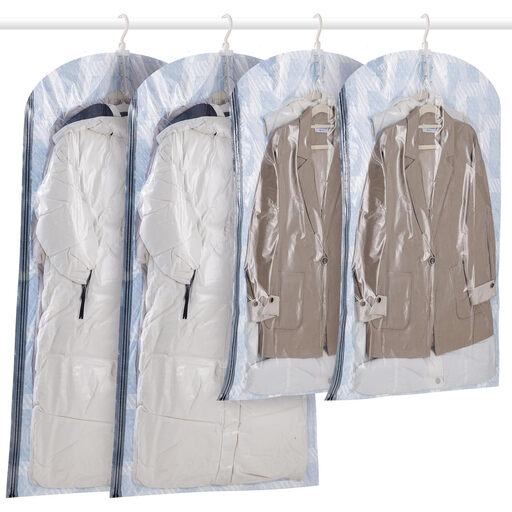
Why we chose it: Perfect for compressing coats, suits, and dresses without folding them, keeping them hanging in the wardrobe. The pack includes two sizes to accommodate both jackets and long coats.
The built-in hook lets you hang clothes directly, preventing creases and damage from prolonged folding. The patented valve is designed for broad compatibility with vacuum cleaners.
Vertical space-saving in your wardrobe and protection for long garments. The 360° rotating hook is a real bonus for easily accessing any item.
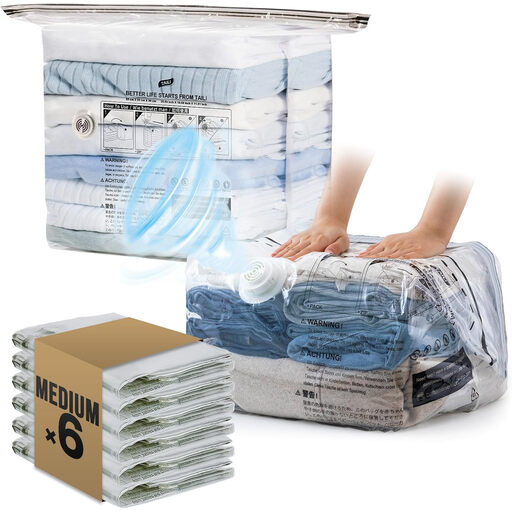
Why we chose it: Designed for travellers or students who may not have a vacuum cleaner handy. Its medium size is perfect for carry-on luggage and backpacks, optimising every square inch.
It completely solves the valve compatibility problem and the need for an external device. The roll-up system is a self-sufficient and reliable solution for on-the-go use.
Completely self-sufficient: no pump or vacuum needed. The transparent plastic lets you see the contents at a glance.
Explore our full selection of products that meet our standards for quality and reliability.
How long does a vacuum storage bag last? The lifespan depends on the material quality (the PA+PE composite is an excellent indicator) and how often it's used. A well-made bag, handled with care (no sharp objects or overfilling!), can be reused dozens of times over several years.
Can vacuum storage bags damage clothes? Yes, for certain materials. Avoid compressing natural fibres that need to "breathe," such as leather, fur, or high-quality wool. Down or feather-filled items can be compressed, but they will need some time to air out to regain their full loft. Also, avoid compressing delicate or highly structured garments that could be permanently creased.
Does the compression remain effective over time? A quality bag with a perfectly sealed zip and valve should maintain its vacuum for months. If a bag reinflates within a few days, check that a hair or thread isn't caught in the seal. If the problem persists, it's likely a sign of a manufacturing defect or a micro-puncture.