
Livraison le jour même ou le lendemain

Qualité garantie

Débloquez vos offres de bienvenue: Livraison GRATUITE | Jusqu'à -80 % | 30 jours d'essai gratuits à JoyPlus
Téléchargez l'application
The cable that takes hours to charge, the one that frays after a few months, or worse, the one that refuses to work with your new laptop… We've all been there. In the jungle of options, finding the perfect fast-charging USB-C cable can quickly become a headache.
As a product selection expert at Joybuy, my mission is to guide you. This guide gives you all the key insights to make the right choice, along with a selection of reliable cables to power your devices in 2026, whether it's a MacBook, an iPhone 16, or a Samsung tablet.
To avoid making a mistake, three criteria are essential: power, durability, and compatibility.
Power (in watts, or W) is the crucial factor: it dictates your device's charging speed.
Note: To take full advantage of the power, your wall charger must also be compatible.
A good cable must stand the test of time and handling. A braided USB-C cable made of nylon or composite fibres offers much better resistance to bending and abrasion than a standard plastic model. Also, check that the connectors are reinforced: this is the weak point of most cables, where they eventually fail.
In terms of length, a 2m USB-C cable offers maximum flexibility at home or in the office, while a 1m cable remains ideal for travel.
Double-check the format: the standard today is the USB-C to USB-C cable. Make sure your devices (charger and terminal) have this port. And what about data transfer? Most charging cables stick to the USB 2.0 standard (480 Mbps), which is more than enough for syncing photos or documents. To transfer very large files (4K videos, full backups…), you'll need a specific cable (USB 3.1, Thunderbolt...), which is a separate category altogether.
We have selected three models that excel in their category, meeting various needs in terms of power, robustness, and use.
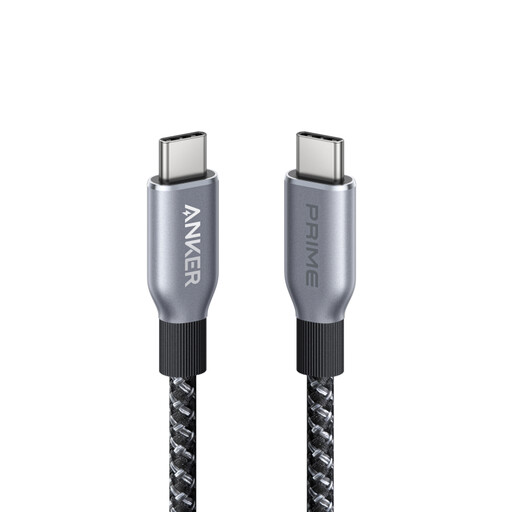
What sets it apart?: With its 240W, this cable is simply built for the future. It can power the most demanding devices, including the most powerful laptops, while remaining perfectly compatible with less demanding devices.
Pros?:
Who is it for?? For owners of powerful laptops and anyone who wants a single, ultra-high-performance, and future-proof cable capable of charging any device.
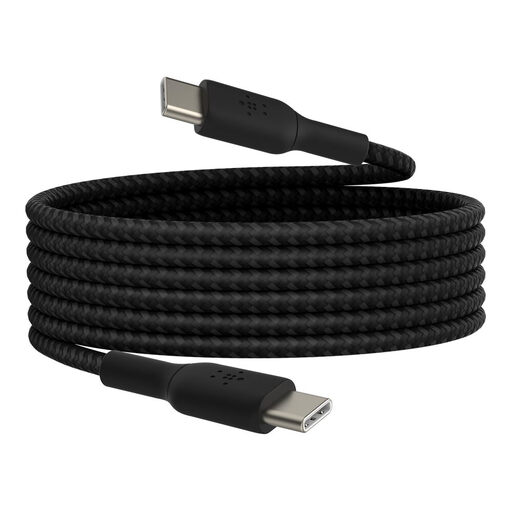
What sets it apart?: Belkin checks all the boxes for a practical and reliable cable. Its 2-metre length offers unparalleled convenience, and its USB-IF certification guarantees optimal compatibility and safety.
Pros?:
Who is it for?? For those who prioritise everyday comfort and peace of mind, with a long, durable, and certified cable for all their devices.
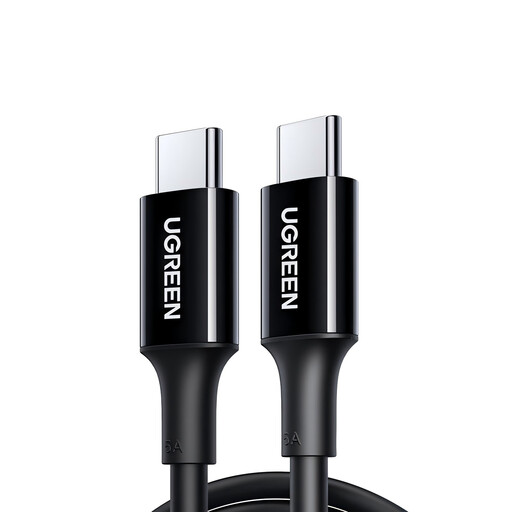
What sets it apart?: This is the champion of value for money. With 100W of power, it offers the perfect balance to quickly charge everything from a smartphone to a laptop, all in a reliable and affordable package.
Pros?:
Who is it for?? For anyone looking for a versatile and efficient 100W USB-C cable that can adapt to all their devices without compromising on speed, all at a very competitive price.
Our selection covers the most common uses, but the perfect cable is the one that meets your needs. Length, colour, specific features… there's no shortage of options.
? Explore our full range of USB Converter Cables to find the model that's right for you.
The easiest way is to check the maximum power your device accepts (indicated on the original charger or the tech specs). In short: 60W is enough for a smartphone or tablet. A 100W USB-C cable is the most versatile choice for a laptop. A 240W model is reserved for the most demanding machines. Don't worry: using a cable that's more powerful than necessary poses no risk; the device will only draw the power it needs.
Absolutely. The braided sheath (nylon, etc.) provides much better protection against twisting, pinching, and general wear and tear than the soft plastic of standard cables. It's a real guarantee of longevity, especially around the connectors, the usual weak point.
No. To benefit from fast charging, the cable must be explicitly designed to support high power levels (60W, 100W, 240W, etc.). A cheap, uncertified cable may not communicate correctly with the charger and the device, resulting in a slow charge or, in rare cases, a risk of overheating. Our advice: always opt for reputable brands that clearly state the supported power.