
Livraison le jour même ou le lendemain

Qualité garantie

Débloquez vos offres de bienvenue: Livraison GRATUITE | Jusqu'à -80 % | 30 jours d'essai gratuits à JoyPlus
Téléchargez l'application
As chargers and laptops increasingly adopt USB-C, finding the right USB-C to Lightning cable has become essential for Apple device owners. Whether your cable is frayed, you need more length, or you want to upgrade to fast charging, the sheer number of options can make choosing the right one overwhelming.
This guide breaks down the key criteria and presents a selection of reliable cables for charging and syncing your iPhone, iPad, or AirPods.
To ensure you make the right choice, let's review a few crucial technical points that guarantee performance and safety for your devices.
The acronym MFi stands for "Made for iPhone/iPad/iPod." This certification, established by Apple for third-party manufacturers, is a true mark of quality. An MFi-certified cable includes an authentication chip that ensures perfect compatibility with your devices. Using a certified cable saves you from error messages ("This accessory may not be supported"), protects against overheating, and ensures optimal charging and data transfer speeds.
One of the main advantages of a USB-C to Lightning cable is its ability to unlock fast charging for iPhone (from the iPhone 8 model onwards). To take advantage of it, you'll need to pair it with a USB Power Delivery (USB-PD) power adapter of at least 18?W. This magic combination can charge your iPhone's battery up to 50% in about 30 minutes—a valuable time-saver in your daily routine.
A cable's durability is the name of the game. A reinforced Lightning cable, often featuring a braided nylon sheath, promises much better resistance to twists and daily wear and tear. Since the connection points between the cable and the connectors are notoriously weak spots, reinforcements in these areas are a real bonus.
Length is also a convenience factor. While the standard 1-meter cable is fine for a desk, a 2m iPhone cable or longer will be much more convenient for charging your device from a distant outlet, whether you're on the couch or in bed.
To guide you, here is our selection of three reliable models, each meeting a specific need based on their performance and reputation.
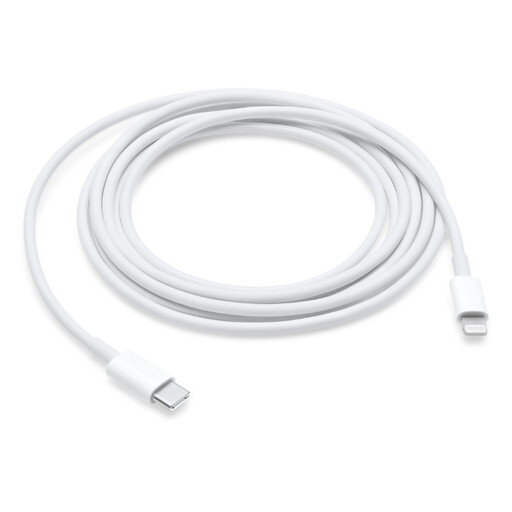
The Peace-of-Mind Choice: This is the official Apple USB-C cord, plain and simple. It guarantees perfect compatibility with the Apple ecosystem and seamless integration for charging and iPhone-Mac syncing. Its 2-meter length offers far more flexibility than the standard model.
Pros:
Who is it for? For those who swear by official accessories and seek absolute peace of mind, with added convenience.
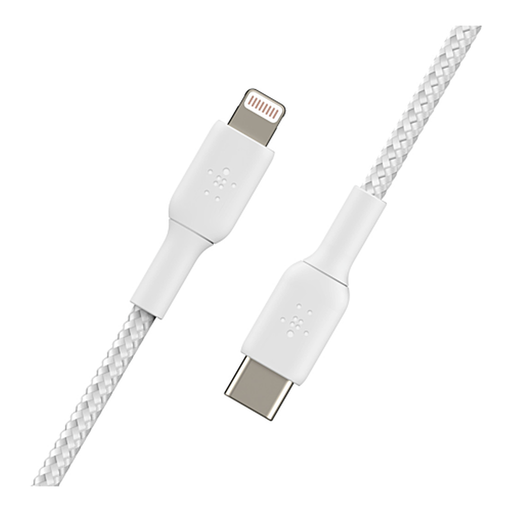
The Durable Workhorse: This cable from Belkin, a brand renowned for its Apple accessories, goes all-in on durability. Its braided nylon sheath is built to last. The manufacturer claims it has been tested to withstand over 10,000 bends.
Pros:
Who is it for? Ideal for users on the go and anyone who is a bit rough on their cables and is primarily looking for a solution built to last.
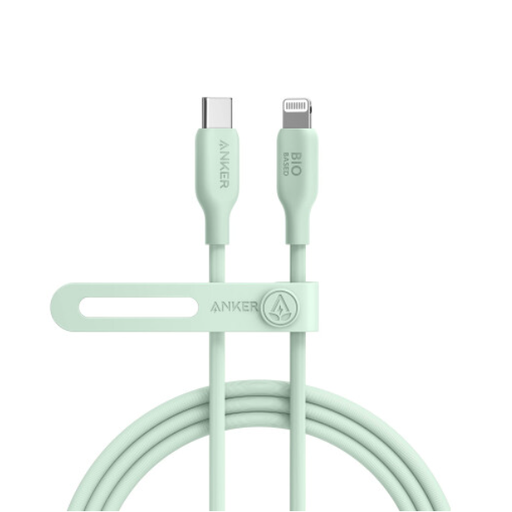
The Eco-Friendly Alternative: Anker successfully combines performance, durability, and a more eco-conscious approach. Its outer sheath is made from plant-based materials (corn and sugarcane) without sacrificing strength. Anker promises an impressive lifespan of 20,000 bends.
Pros:
Who is it for? For users who are conscious of their environmental impact but refuse to compromise on durability and charging speed.
None of these models suit you? Don't worry, there are plenty of choices.
? Explore our complete collection of USB to Lightning Cables to discover more options.
It all comes down to the connector that plugs into the charger or computer. USB-C is more modern, reversible, and capable of transmitting much more power than the older USB-A. It's what allows enough power to be delivered to enable iPhone fast charging when paired with a compatible adapter.
Absolutely. Using a non-certified cable is not without risk. Besides unstable charging, you risk overheating (of the cable or the device) and even long-term damage to your iPhone's Lightning port. Choosing an MFi-certified cable is therefore a wise precaution.
Fast charging is supported by the iPhone 8 and all newer models. To take advantage of it, you need the winning trio: a compatible iPhone, a USB-C to Lightning cable, and a USB-C Power Delivery (USB-PD) power adapter of at least 18?W (20?W, 30?W, and higher models work perfectly).