
Livraison le jour même ou le lendemain

Qualité garantie

Débloquez vos offres de bienvenue: Livraison GRATUITE | Jusqu'à -80 % | 30 jours d'essai gratuits à JoyPlus
Téléchargez l'application
USB-C is everywhere: on our laptops, tablets, and even our wall chargers. For iPhone owners, this raises a question: how do you connect your precious smartphone, still equipped with a Lightning port, to this new ecosystem? The answer lies in a single accessory: the USB-C to Lightning cable. But with an overwhelming number of options available, it can be hard to know where to start.
Don't worry. In this guide, we'll break down the key things to check before you buy and present our selection of the best models, whether your priority is fast charging, an extra-long cable, or unbeatable durability.
To make the right choice, it helps to understand a few technical details. Here are the three criteria to look at closely.
The MFi ("Made for iPhone/iPad/iPod") acronym represents a certification label created by Apple. Its purpose? To ensure that third-party accessories are 100% compatible and safe for its products. An MFi-certified Lightning cable contains a small authentication chip that communicates with your iPhone or iPad. Choosing a certified cable guarantees:
This is one of the main advantages of a USB-C cable for iPhone: its ability to unlock fast charging. To take advantage of it, you need the following winning combination:
With this setup, you can regain up to 50% battery in about 30 minutes. A real game-changer for daily use.
The standard 1-metre length is often sufficient for plugging in your phone at a desk. But for more comfort, a 2m Lightning cable (or even longer) is a game-changer: no more awkward stretching to use your iPhone while it's charging on your nightstand, on the sofa, or in the back seat of the car.
The sheathing material also plays a crucial role in the cable's lifespan and everyday convenience:
Here are three models that caught our eye, each catering to specific needs.
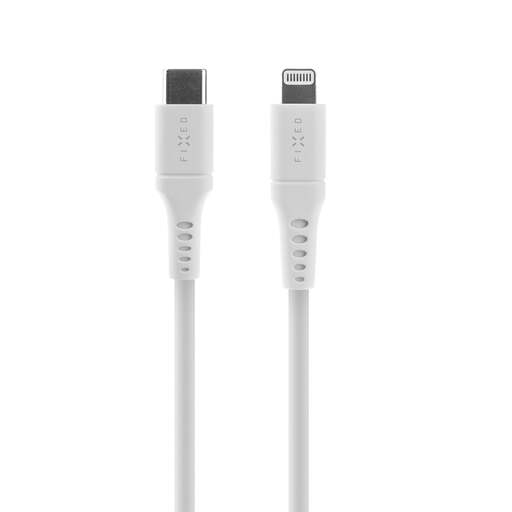
Why it stands out: This cable combines a generous length with an innovative material. The liquid silicone gives it remarkable flexibility and a very soft feel, while being designed to withstand daily wear and tear and prevent tangles.
Key features:
Who is it for? For those who want length without sacrificing quality. Perfect for home, the office, or the car, especially if you like to keep your cables tidy.
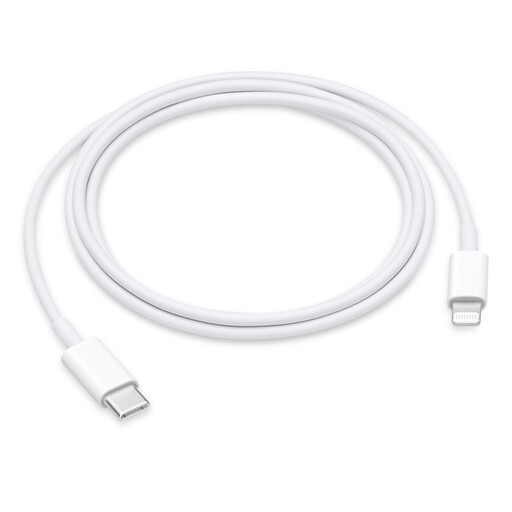
Why it stands out: This is the official Apple cable. Choosing it means getting the peace of mind that comes with perfect integration into the brand's ecosystem. Its design is optimised to work flawlessly with all Apple devices and adapters.
Key features:
Who is it for? For the purists who swear by official accessories. It's the safe and simple choice, a reliable option for everyday use.
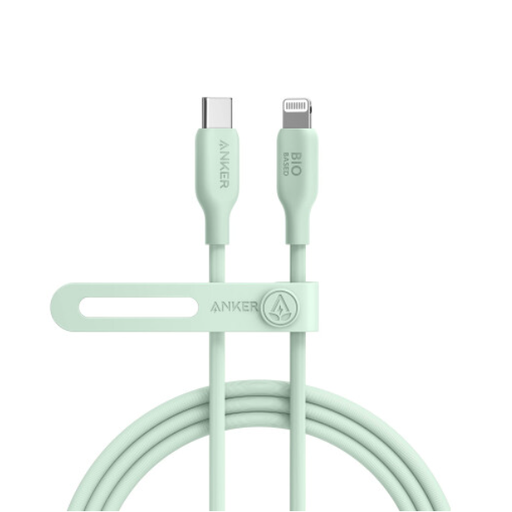
Why it stands out: Anker takes a sustainable and eco-friendly approach. This cable's sheath is made from bio-based materials (derived from corn and sugarcane). The brand also guarantees it can withstand 20,000 bends, making it an exceptionally durable companion.
Key features:
Who is it for? For those who want to combine performance, durability, and an eco-conscious mindset. An excellent choice for nomads who are tough on their accessories.
Our selection covers the most common needs, but perhaps you're looking for a specific colour, a different length, or another type of material. If our top three picks haven't won you over, take a look at our full catalogue.
Discover all our Lightning cables
Yes, but on one condition: it must be paired with a fast charger for iPhone that is compatible with the USB Power Delivery (PD) standard. For the best results on recent iPhones, an adapter of at least 20W is recommended. Remember, the cable alone isn't enough; it's the trio of cable, charger, and device that enables fast charging.
Although non-certified cables are often cheaper, it is highly recommended to opt for an MFi-certified Lightning cable. A non-certified model may stop working after an iOS update, charge more slowly, or, in the worst-case scenario, cause overheating and damage your device in the long run. Paying a few extra dollars for a certified cable is insurance for a device that's worth several hundred.