
Livraison le jour même ou le lendemain

Qualité garantie

Débloquez vos offres de bienvenue: Livraison GRATUITE | Jusqu'à -80 % | 30 jours d'essai gratuits à JoyPlus
Téléchargez l'application
Your smartphone is at 10% battery. You plug it in, hoping for a quick boost, but an hour later, the level has barely moved. Sound familiar? The culprit is often an unsuitable or poor-quality cable. With the mass adoption of the USB-C port on all our devices, from the iPhone 16 to the MacBook Pro, choosing the right USB-C cable for fast charging has become a real headache.
This guide is here to help you make sense of it all. As product experts at Joybuy, our mission is to give you the keys to making an informed choice, cutting through the often-opaque marketing jargon. We'll break down the criteria that really matter and present a selection of products that meet specific needs.
Before diving in headfirst, you need to understand what separates a good cable from a low-end model. There are three key points to check.
A cable's charging power is measured in watts (W). A standard cable often tops out at 15?W, while fast-charging models can handle 60?W, 100?W, and even up to 240?W. To take advantage of this, your cable must be compatible with the Power Delivery (PD) standard. This is a smart charging protocol that allows your devices to "negotiate" the maximum power they can safely receive.
Be aware that the charger must also keep up. A 100?W cable connected to a 20?W charger will only deliver 20?W. The weakest link always sets the pace!
A cable gets twisted, dropped, and generally put through its paces. A braided nylon cable offers incomparable resistance to bending and wear compared to standard plastic cables. Reinforced connectors are also an excellent guarantee of durability.
On the practical side, length also plays a role. A standard 1-meter cable is often too short. A long USB-C cable of 2 or 3 meters will offer you much more flexibility, whether you're using your device from your bed, at your desk, or in the back seat of the car.
A good USB-C to USB-C cable must be universal. The USB-IF (USB Implementers Forum) certification is your best ally: it guarantees that the cable complies with all electrical and mechanical safety standards. It's the ultimate safeguard for your devices, protecting them against overvoltage and short circuits. This compatibility is crucial for seamlessly switching between smartphones, tablets, computers, and even gaming consoles.
Now for our selection, featuring products that stand out for their performance and cater to specific use cases.
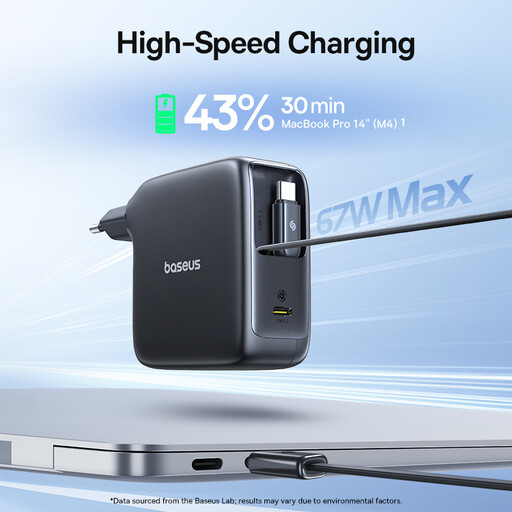
Why It Stands Out The Baseus EnerCore CJ21 is much more than a cable: it's an ultra-comprehensive travel charger. It integrates two retractable cables (one USB-C and one Lightning) and a free USB-C port. No more tangled mess of cables!
The Pros
Who Is It For? For professionals on the go, frequent travelers, and anyone who wants to end cable clutter by combining a charger and cables into a single unit.
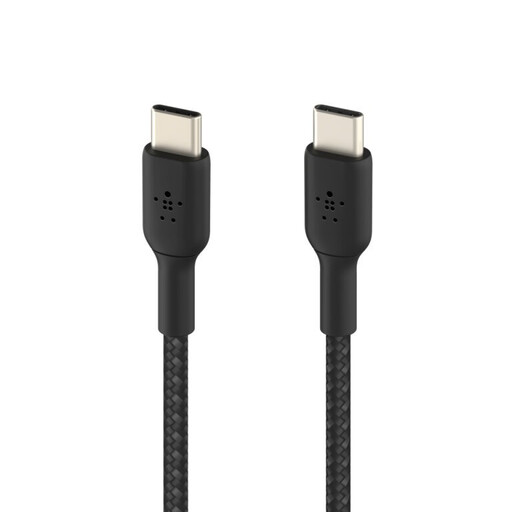
Why It Stands Out This Belkin cable is all about durability and user comfort. Its double-braided nylon coating is built to last: the manufacturer claims it can withstand over 30,000 bends.
The Pros
Who Is It For? Perfect for heavy daily use. It's the cable of choice for those who are tired of replacing cheap cables and are looking for a reliable, long-term solution.
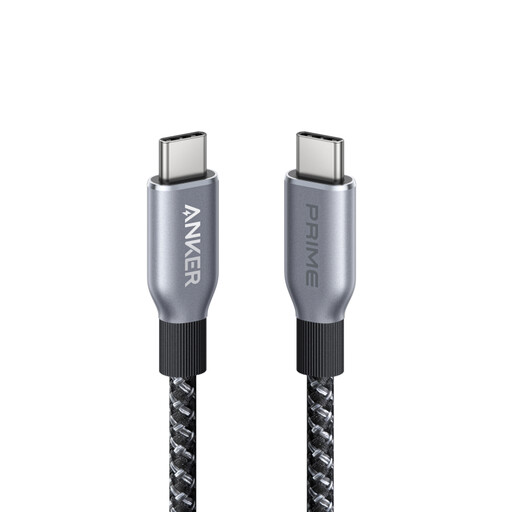
Why It Stands Out With its massive 240?W capacity, the Anker Prime cable is ready for today and tomorrow. It's designed to power the most demanding devices, like mobile workstations and gaming laptops.
The Pros
Who Is It For? For users of high-powered laptops (workstations, gaming PCs) and those who want to invest in a future-proof cable capable of handling the next generation of charging standards.
Our selection covers several scenarios, but the world of Power Delivery accessories is vast. If you're looking for a specific length, an unusual color, or simply a more budget-friendly model, dozens of other options await you.
Explore our complete collection of charging cables to find the perfect match for your needs.
Discover all our charging cables
The difference mainly comes down to the quality of the components and the diameter of the conductive wires. A USB-C cable for fast charging is designed with thicker wires, capable of handling a stronger current (more watts) without overheating. It also includes an "E-Marker" chip that communicates with the charger and the device to ensure fast and safe charging via the Power Delivery protocol.
No, there's no risk! Using a 240?W cable to charge a smartphone that only needs 25?W is completely safe. Thanks to Power Delivery technology, the device, charger, and cable constantly communicate to determine the ideal charging power. Your device will only "draw" the energy it needs.
Yes, it's essential. For fast charging to work, all three links in the chain must be compatible: the device (smartphone, PC, etc.), the USB-C fast charging cable, and the USB-C charger. Plugging a high-performance cable into an old 5?W charger won't speed up charging at all. Make sure your wall charger or car charger is Power Delivery compatible and can supply the power you're aiming for.