
Livraison le jour même ou le lendemain

Qualité garantie

Débloquez vos offres de bienvenue: Livraison GRATUITE | Jusqu'à -80 % | 30 jours d'essai gratuits à JoyPlus
Téléchargez l'application
Juggling your laptop charger, smartphone charger, and tablet charger is a real headache. Cables get tangled, wall outlets are scarce, and charging is often desperately slow when you're in a hurry. Fortunately, the widespread adoption of the USB-C port paves the way for a universal solution: a single USB-C fast charger to power all your devices.
The problem: the market is flooded with models featuring often confusing spec sheets: wattage, Power Delivery, GaN technology... it's hard to know where to start. Our mission is to cut through the noise for you. This guide will help you identify the key buying criteria before we present our selection of the best models, whether you're at the office, at home, or on the go.
To find the perfect charger for your needs, there are a few concepts you need to understand. Here are the criteria to consider to make the right choice.
Expressed in watts (W), power determines the charging speed of your devices. Logically, a low-power charger will take much longer to fill a battery.
The Power Delivery (PD) protocol is a smart charging standard. In practice, a PD-compatible charger communicates with your device to provide the exact amount of power it needs. The result: a charge that is both fast and perfectly safe. It's now a must-have standard for any versatile laptop and smartphone charger.
The acronym GaN stands for gallium nitride, a next-generation semiconductor that is replacing silicon in modern chargers. A GaN charger offers several major advantages:
For those on the go or anyone looking for an ultra-discreet charger, GaN technology is therefore a decisive factor.
The ideal charger format will depend on your daily use:
We have selected four charging solutions that meet specific needs, from the most mobile to the most stationary.
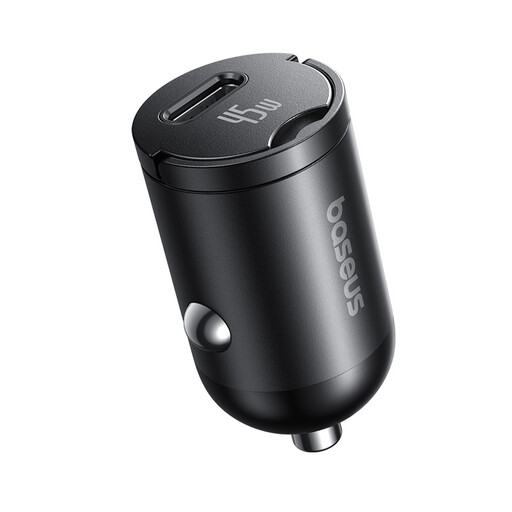
Why it stands out More than just a charger, this is a complete solution for your car. It comes with a quality USB-C to USB-C cable, saving you a separate purchase and ensuring perfect compatibility.
Highlights
Who is it for? Mobile professionals, families on vacation, and anyone who uses their vehicle as a mobile office. It's the ultimate high-performance, ready-to-use car charger.
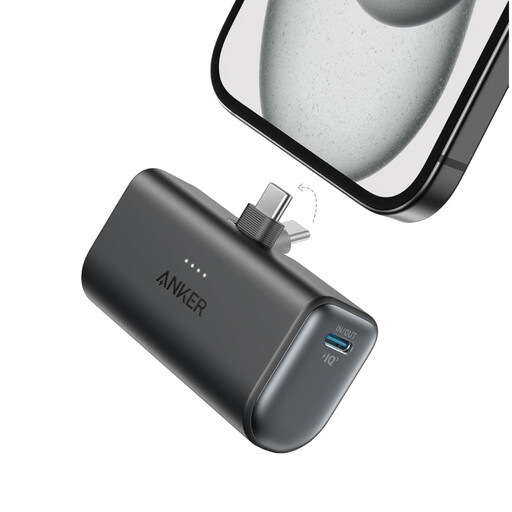
Why it stands out Its design includes a foldable USB-C connector. No more searching for your cable: the power bank plugs directly into your smartphone (or any other compatible device). It's the ultimate in convenience.
Highlights
Who is it for? Students, city dwellers, and anyone who needs a quick boost at the end of the day without the extra bulk. This USB-C power bank is the ideal backup portable charger.
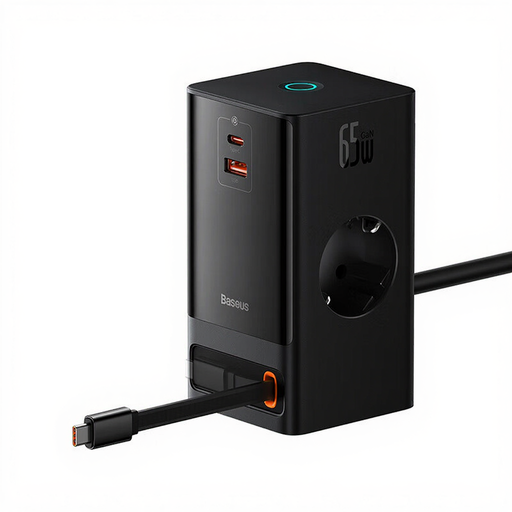
Why it stands out This charging station is the very definition of versatility. It combines AC outlets, USB ports, and even a retractable USB-C cable in a compact housing that leverages GaN technology. The retractable cable is a key advantage for maintaining a clean, tidy workspace.
Highlights
Who is it for? Remote workers, creatives, and anyone who dreams of decluttering their desk by replacing an army of chargers with a single, smart USB power strip.
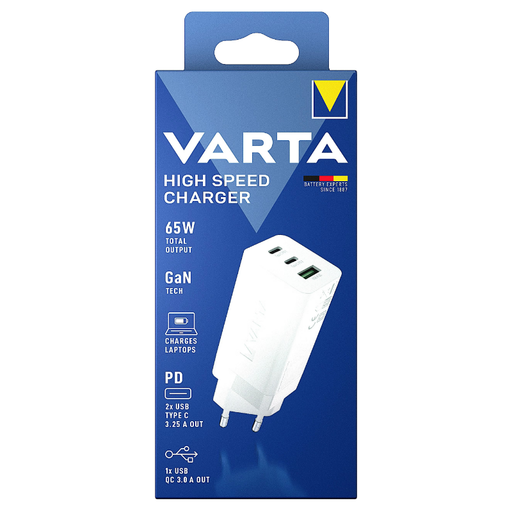
Why it stands out This wall charger embodies the perfect balance between power and portability. Thanks to GaN technology, it packs 65W and three ports into an ultra-compact format that's as practical at home as it is on the road.
Highlights
Who is it for? Travelers, students, and professionals looking for a single, powerful, and reliable charger to power all their devices, wherever they go.
Our selection highlights products that cater to well-defined use cases. If your needs are different, or if you simply want to explore other options in terms of power, number of ports, or brands, a wide range of chargers awaits you.
Discover our complete collection of chargers and adapters
The required power depends on the most power-hungry device you plan to charge. In short: 30W is perfect for a smartphone, 45 to 65W is a good middle ground for a tablet/ultra-portable laptop duo, and 65W or more is recommended for quickly charging a laptop while powering other devices. In any case, check the maximum power accepted by your devices.
Yes, especially if compactness is a key criterion for you. A GaN charger will be significantly smaller and lighter than a silicon charger of the same power. It is also more energy-efficient, which means it generates less heat. For mobile use, this is an undeniable advantage.
Yes, absolutely, and it's completely safe. Thanks to smart charging protocols like Power Delivery (PD), the charger and the device "communicate" to agree on the optimal charging power. The charger will never deliver more energy than the device can safely accept. No more, no less.