
Livraison le jour même ou le lendemain

Qualité garantie

Débloquez vos offres de bienvenue: Livraison GRATUITE | Jusqu'à -80 % | 30 jours d'essai gratuits à JoyPlus
Téléchargez l'application
USB-C has established itself as THE universal connector for all our devices, from smartphones to laptops. However, finding the ideal cable that can deliver both fast charging and reliable data transfer can quickly become a headache. Between the different standards, power ratings, and materials, it's easy to get lost. To help you make sense of it all, we've broken down the topic and selected the best USB-C to USB-C cables available today, perfectly suited for your devices like the iPhone 16, Samsung S24, or a MacBook.
To ensure you make the right choice, here are the essential features that separate a good cable from a bad one.
This is the number-one criterion. Expressed in watts (W), power determines how fast your device recharges. To benefit from it, both your charger and your device must be compatible with Power Delivery (PD) technology.
Warning?: To take full advantage of the cable's potential, your Power Delivery charger must deliver a power output at least equal to what the cable supports.
A cable travels: folded in the bottom of a bag, hastily coiled, twisted daily... Investing in a durable cable is not a luxury. Models with a braided nylon or PVC jacket offer much better protection against wear and bending than basic plastic cables. Some manufacturers even specify the number of bends the cable can withstand, which is an excellent indicator of its longevity.
Not all USB-C cables are created equal when it comes to data synchronisation either. The majority of models focused on fast charging are limited to the USB 2.0 standard, with speeds up to 480 Mbps. This is more than sufficient for syncing photos, music, or documents. However, to regularly transfer very large files (like 4K videos), you will need to opt for cables compatible with USB 3.1, 3.2, or Thunderbolt, which are understandably more expensive.
We have selected models for you that tick all the boxes: performance, durability, and value for money.
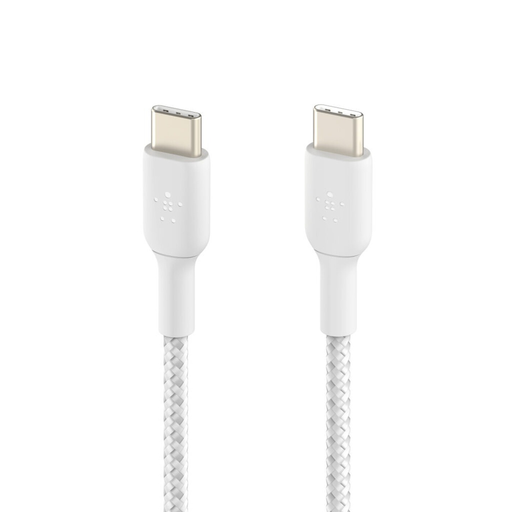
Why it stands out?? Its ultra-compact size and incredible durability. At 15 cm, it's perfect for a power bank, in the car, or on a desk, without ever getting tangled. Its braided jacket ensures excellent longevity.
Highlights?:
Who is it for?? For those on the move looking for a short, reliable, and ultra-durable cable for tight spaces.
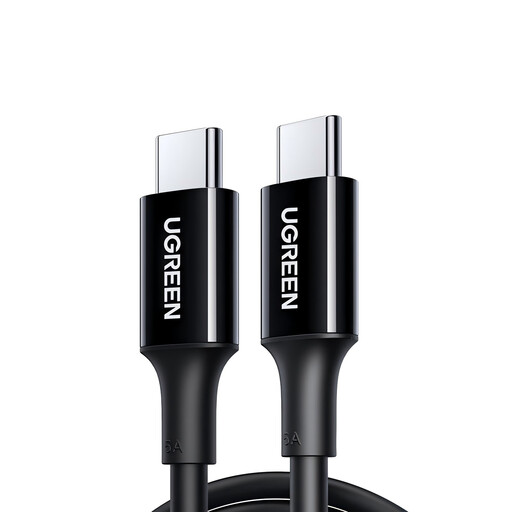
Why it stands out?? This is the Swiss Army knife of our selection. With its 100?W power and comfortable 2-meter length, it meets the most demanding needs. It can charge a powerful laptop at full speed while offering plenty of freedom of movement.
Highlights?:
Who is it for?? For those who use a laptop (like a MacBook) or want a single, powerful cable to charge everything from a smartphone to a PC without a second thought.
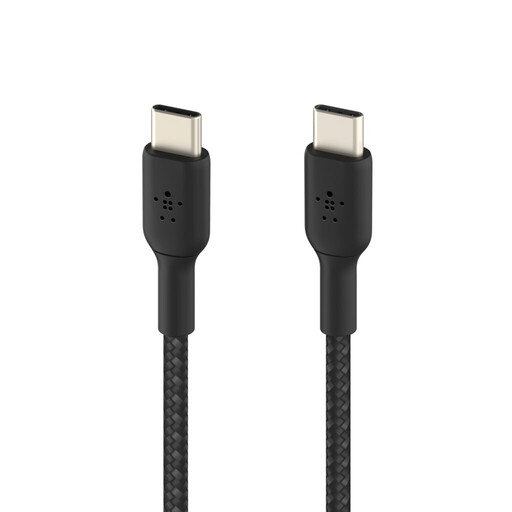
Why it stands out?? It's the balanced choice. This Belkin cable combines 60?W of power, a standard 1-meter length, and a braided design built to last. Belkin's promise: charge an iPhone 16 from 0 to 50% in just 25 minutes (with a compatible charger).
Highlights?:
Who is it for?? For anyone looking for a reliable and durable primary cable for daily use with a smartphone or tablet, without compromising on performance.
The world of connectors is vast. If you also need to connect older or specific devices, other formats are available. For example, discover our USB-A solutions.
? See our selection of USB-A cables
A 60?W cable is perfect for fast-charging smartphones, tablets, and small ultra-portable laptops. A 100?W cable is necessary to power the most demanding laptops (e.g., 16-inch MacBook Pro) at full speed. Good to know: a 100?W cable is backward-compatible and will safely charge a less power-hungry device.
Absolutely. The USB-C standard is universal. A fast-charging USB-C to USB-C cable will work with any device equipped with a USB-C port: iPhone 16, Samsung S24, Google Pixel, iPad Pro, MacBook, etc. The charging speed automatically adjusts to the capabilities of the device and the charger, ensuring a safe charge every time.
Because it is much more durable. The braided jacket of a USB-C cable provides far better protection from everyday wear and tear. It reinforces the flex points, especially near the connectors, the very spot where standard cables always end up failing. It's a true guarantee of longevity, particularly if you are often on the go.