
Livraison le jour même ou le lendemain

Qualité garantie

Débloquez vos offres de bienvenue: Livraison GRATUITE | Jusqu'à -80 % | 30 jours d'essai gratuits à JoyPlus
Téléchargez l'application
By Joybuy, Our Product Expert
It's the classic pre-vacation scene: the suitcase is almost packed, but a timeless tangle of cables and an army of chargers are still waiting to find their spot. One for the smartphone, another for the laptop, a third for the smartwatch... When travelling, managing power for our devices quickly turns into a headache.
To put an end to single-outlet anxiety, we've reviewed the best travel chargers on the market today. Power, technology, versatility... Follow our guide to find the model that will go everywhere with you, without ever weighing you down.
To make the right choice, let's go over the key criteria that will help you find the perfect charger for your devices and your nomadic lifestyle.
Power, measured in watts (W), is the name of the game: it dictates charging speed. A modern smartphone will get the full benefit of a fast charger with at least 20?W, while a laptop charger will require between 65?W and 100?W for efficient power delivery.
Also, consider the number and type of ports. USB-C has become the standard for fast charging, thanks to Power Delivery (PD) technology. Choosing a model with multiple ports (a mix of USB-C and USB-A, for example) allows you to power several devices simultaneously with a single multi-port charger. A significant space-saver in your suitcase.
You'll often come across the term "GaN charger". Gallium nitride (GaN) is a next-generation semiconductor that is replacing silicon. Its main advantage? It enables the creation of much more compact and lightweight chargers that also generate less heat. For a travel charger, where every gram and square centimetre counts, GaN technology is a true game-changer.
For globetrotters, a universal adapter is a must-have. Some travel chargers come with built-in prongs compatible with outlets in different countries (EU, UK, US, Australia...). This all-in-one solution is extremely practical, saving you from packing a myriad of accessories.
We've selected models that cater to every type of user, from the minimalist traveller to the hyper-connected digital nomad.
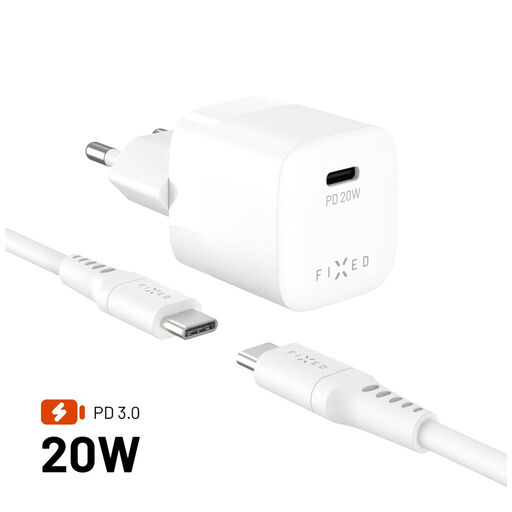
Why it stands out: Its extreme compactness makes it a discreet yet powerful travel companion for everyday charging needs.
Pros:
Who is it for? Ideal for the minimalist traveller who packs light with just a smartphone and a few accessories. It's the ultimate simple, efficient, and fast-charging solution. Note: The USB-C cable is not included.
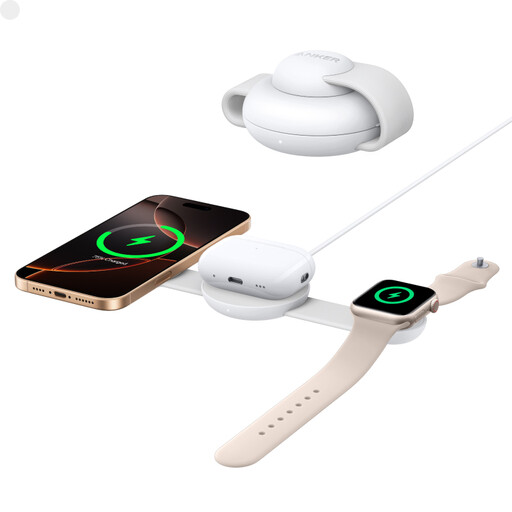
Why it stands out: This is a foldable charging station, designed for the Apple ecosystem, that offers a clean and perfectly organised wireless experience.
Pros:
Who is it for? The dream travel companion for fans of the Apple ecosystem. It lets you charge all your gear with a single, elegant solution, saying goodbye to the clutter of multiple cables and adapters.
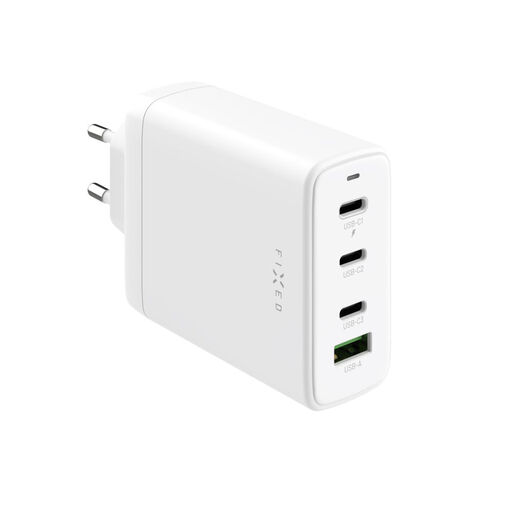
Why it stands out: Its colossal 120W of power and four ports make it a true pocket-sized power station.
Pros:
Who is it for? Perfect for the digital nomad or the professional on the go who needs to juggle a full tech arsenal (laptop, tablet, smartphone...). A single outlet is all you need to power your entire ecosystem.
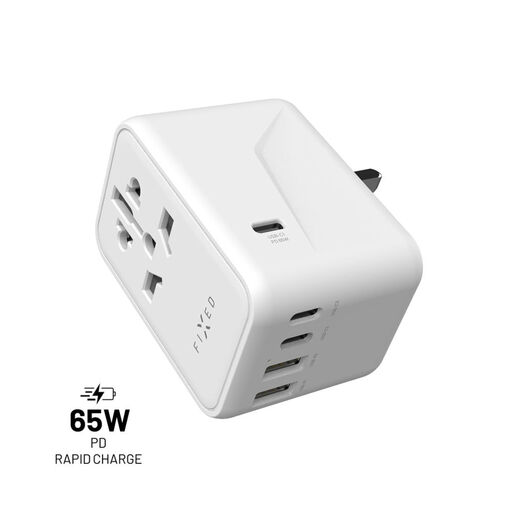
Why it stands out: This is the ultimate all-in-one solution, merging a powerful GaN charger with a universal plug adapter.
Pros:
Who is it for? The globetrotter's essential. A single solution to plug in anywhere in the world and charge all your devices at top speed, completely worry-free.
Did none of these models catch your eye? Don't worry, your ideal charger might be waiting in our full selection of USB-C travel adapters.
1. What wattage should I choose for a travel charger? The required wattage depends on your devices. 20W to 30W is enough for a smartphone fast charger. For a laptop, aim for at least 65W. If you want to charge multiple devices at once, especially a laptop, a model with 100W or more is a wise choice.
2. What is a GaN charger, and is it really useful? A GaN charger uses gallium nitride, a material that allows for smaller, lighter chargers that generate less heat than traditional chargers at the same wattage. For on-the-go use, where every gram counts, the advantage is undeniable.
3. Can you use a phone charger for a laptop? Generally, no. A standard smartphone charger (20-30W) doesn't have enough power for a laptop (which often requires 65W or more). Charging will be incredibly slow, or even non-existent if you're using the laptop at the same time. It is essential to use a charger with a wattage at least equal to that of your machine's original power brick.