
Livraison le jour même ou le lendemain

Qualité garantie

Débloquez vos offres de bienvenue: Livraison GRATUITE | Jusqu'à -80 % | 30 jours d'essai gratuits à JoyPlus
Téléchargez l'application
With the vast number of musical learning toys on the market, choosing a child's first toy phone can quickly become a daunting task. As parents or relatives, we want an item that is fun, stimulating, and, above all, completely safe. The goal is to find a pretend phone toy that supports a child's development without falling for marketing traps.
This guide is designed to shed light on the most important criteria and present a selection of products that meet specific needs, helping you make an informed choice.
Before diving into specific models, it's helpful to understand the key points to consider when choosing a suitable interactive and educational toy.
The first thing to check is the toy's compliance with European standards. The CE marking is an essential indicator that certifies the product meets the safety requirements in force within the European Union. Pay close attention to the following points:
A good toy phone should be more than just a gadget. It must contribute to the child's early development. Look for features that stimulate:
Manufacturers provide a recommended age range. This indicator is not just about safety; it also relates to the relevance of the features to the child's developmental stage. A toy that is too complex for a baby phone will be frustrating, while a model that is too simple won't engage an older child.
With these criteria in mind, here are two options that stand out for their unique approach and target audience.
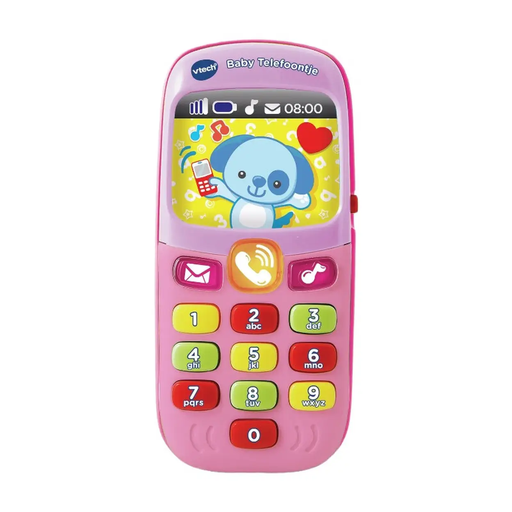
Why We Recommend It
The VTech Baby Pink Phone is a classic and reliable option for a first toy phone. Its design focuses on the fundamental needs of toddlers: discovery and simple interaction. It gets straight to the point by offering clear developmental features (numbers, animals, colours) without overwhelming the child with information. Its durability is also a key advantage, built to withstand the sometimes rough handling of young children.
Advantages
Who Is This Product For?
This model is especially suitable as a baby phone for a first introduction to electronic toys. It's perfect for parents and grandparents looking for a simple, effective, and safe developmental toy for a child aged 6 to 36 months.
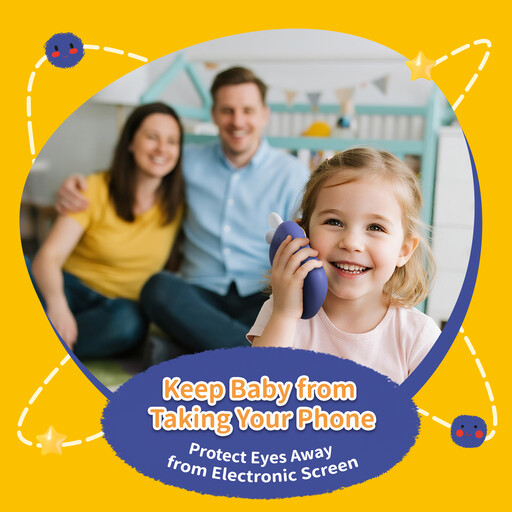
Why We Recommend It
The alilo model positions itself as a more comprehensive and scalable interactive and educational toy. More than just a phone, it serves as a portable learning platform. Its key strengths lie in its rich pre-loaded content, long-lasting battery, and original features like voice-changing effects, which stimulate creativity and verbal expression.
Advantages
Who Is This Product For?
This kids' phone is intended for slightly older children, from 3 years and up, according to the manufacturer's recommendations. It will appeal to parents looking for a longer-term investment in a toy that will support their child through more complex learning and stimulate their imagination on a deeper level.
Our selection focuses on two distinct user profiles to illustrate the diversity of the market. One is geared towards simplicity and early development, while the other emphasizes rich functionality and creativity. If you wish to explore a wider range, including other models with different features or suited for other age groups, we invite you to browse our full category.
Discover our entire collection of toy phones.
Models are available for children as young as 6 months. These toys, often called baby phones, are designed with large buttons, soft materials, and simple sensory features (gentle lights, moderate sounds). For more complex models with educational games, it is generally recommended to wait until the child is 2 or 3 years old. It is essential to always follow the minimum age indicated by the manufacturer.
Yes, when chosen correctly. A pretend phone toy encourages role-playing, a crucial stage for social and emotional development. Cognitively, it helps teach cause and effect ("if I press this button, a sound is made"). Educational models introduce numbers, letters, and colours in a fun way, while handling the buttons develops fine motor skills.
Safety and hygiene are paramount. Never submerge an electronic toy in water or rinse it under the tap, as this will damage the internal components. The recommended method is to use a soft, dry cloth to wipe the surface. For light disinfection, you can very slightly dampen the cloth with a mild soap and water solution, then wipe it thoroughly with another dry cloth. Ensure the toy is completely dry before giving it back to the child.