
Livraison le jour même ou le lendemain

Qualité garantie

Débloquez vos offres de bienvenue: Livraison GRATUITE | Jusqu'à -80 % | 30 jours d'essai gratuits à JoyPlus
Téléchargez l'application
Improperly calibrated tightening can have serious consequences, whether on a car wheel, a carbon fibre bike frame, or a sensitive engine component. Too little torque, and the part is almost certain to come loose; too much torque, and you risk stripping a thread or warping a component. Choosing the right torque wrench is therefore not a luxury, but a necessity to ensure the safety and longevity of your equipment.
With the jungle of available models, it can be hard to know where to start. To help you see more clearly, this guide breaks down the essential selection criteria and presents our pick of the best tools on the market, whether you're a seasoned mechanic or a passionate DIYer.
To ensure you make the right choice, three criteria should be carefully considered before you decide.
The choice between a mechanical torque wrench and a digital (or electronic) torque wrench depends on your work habits and the required precision.
A single wrench cannot cover all needs. The torque range, expressed in Newton-metres (N.m), is the decisive criterion.
A good habit to adopt: always consult the torque specifications recommended by the manufacturer of your vehicle or equipment.
Accuracy, usually expressed as a percentage (e.g., ±3%), indicates the tool's margin of error. A certified and calibrated wrench is a guarantee of reliability. For greater versatility, tools like a torque adapter can turn a simple ratchet into a precise torque-measuring instrument. It's a clever and cost-effective solution for occasional needs. A complete torque wrench set can also be an excellent choice to cover a wide range of applications.
Here are the models that caught our eye, selected for their reliability, performance, and suitability for different use cases.
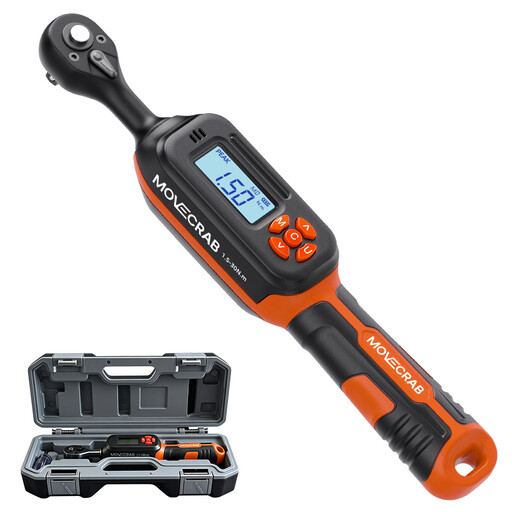
What Sets It Apart
This electronic torque wrench stands out with its triple alert system (vibration, sound, LED light), making it impossible to miss the target torque, even in a noisy or poorly lit workshop. Its stated accuracy of ±2% makes it a prime tool for the most delicate operations.
Key Features
Who Is It For?
Ideal for motorcycle and car mechanics seeking high precision and smart features. It is particularly well-suited for challenging work environments and for tightening critical components.
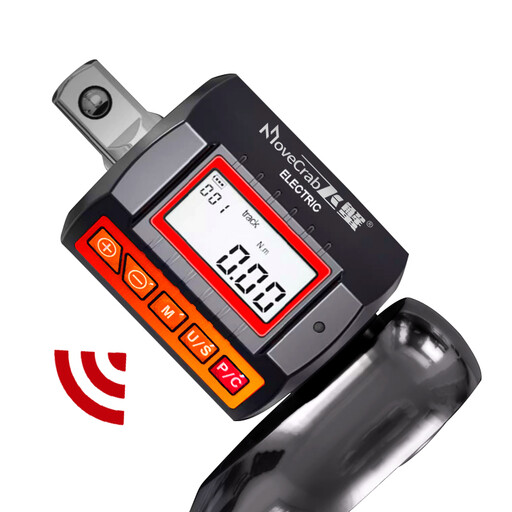
What Sets It Apart
This torque adapter is an ingenious and cost-effective solution. It transforms any standard ratchet (1/2", 3/8", or 1/4" thanks to the included adapters) into a digital torque wrench. Its wide range of 6 to 200 N.m makes it extremely versatile.
Key Features
Who Is It For?
Perfect for the savvy DIYer who already owns a good set of ratchets and wants to equip themselves for torque-specific tasks without breaking the bank or adding more tools. An ultra-flexible solution for various uses.
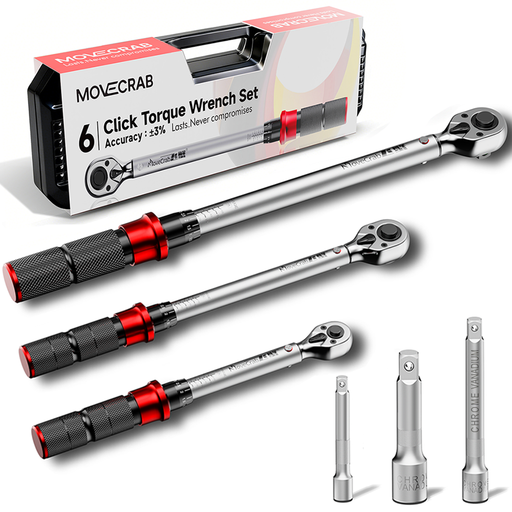
What Sets It Apart
This torque wrench set is the ultimate all-in-one solution, covering almost all mechanical needs. It contains three distinct mechanical wrenches, each covering a specific torque range, from 5 N.m to 220 N.m. Each wrench comes with its own calibration certificate.
Key Features
Who Is It For?
Aimed at professional mechanics and demanding hobbyists looking for a complete, reliable, and durable solution. Ideal for outfitting a workshop and working on any type of vehicle, from a car torque wrench for wheels to a small precision wrench for engine casings.
Our selection covers the most common needs, but every project is unique. Do you need a very specific torque range, a particular drive size, or do you simply want to explore other models?
Explore our complete collection of torque wrenches to find the perfect tool for your requirements.
For tightening the wheels of a passenger car, the recommended torque is typically between 90 and 120 N.m. A car torque wrench with a 1/2" drive and a torque range of about 40 to 210 N.m is the most suitable tool. It provides the necessary power and accuracy for this critical safety operation.
Yes, it is highly recommended to have a torque wrench checked and recalibrated periodically. The frequency depends on its usage. For a professional, an annual calibration is good practice. For a DIYer, a check every two or three years (or after about 5,000 cycles) is advisable. Editor's tip: After each use, remember to unlock it and set it to its lowest value before storing it. This simple action preserves the long-term accuracy of the internal spring.
The mechanical wrench (click-type) is simple, proven, and robust. It signals that the torque has been reached with a distinct mechanical "click". It operates without batteries. The electronic wrench (or digital) uses sensors for a precise measurement, displayed on a screen. Often more accurate, it offers multiple alerts (sound, light, vibration) and memory functions, but it requires batteries to operate.