
Same-day & Next-day Delivery

Quality Guaranteed

Unlock Your Welcome Offers: FREE Delivery | Up to 80% OFF | Free 30-day JoyPlus trial
Download the APP
Choosing toilet paper might seem trivial. Yet, when faced with shelves overflowing with promises of softness, XXL formats, and eco-friendly claims, it's easy to get lost. The result? A product that falls apart at the slightest touch, irritates your skin, or, despite its giant packaging, disappears in a flash.
Before you fill your shopping cart, here are the common traps to avoid so you don't regret your purchase:
To make an informed choice that ticks all your boxes (comfort, budget, sustainability), here are the three key points to examine closely.
The thickness, and therefore the strength and absorbency, depends directly on the number of plies (or layers).
The raw material is just as crucial. Pure cellulose wadding is the champion of softness, making it the top choice for soft toilet paper suitable for sensitive skin. Recycled toilet paper is the ultimate eco-friendly alternative; forget the old stereotypes—it has made huge strides and no longer compromises on comfort. Finally, bamboo toilet paper is gaining ground as a rapidly renewable resource.
Buying toilet paper in bulk is often a great way to save money and reduce the frequency of shopping trips. However, to assess the true value of a bulk pack of toilet paper, don't fall for the roll-count trap.
The only calculation that matters is the cost per sheet or cost per metre. To find it, divide the total price of the pack by the total number of sheets (number of rolls × sheets per roll). This is the only foolproof method to determine if a pack of maxi toilet paper rolls is a real bargain or just a marketing illusion.
For environmentally conscious consumers or those with sensitive skin, certifications are your best friends.
Here are a few options that meet different needs, based on the objective criteria we've just discussed.
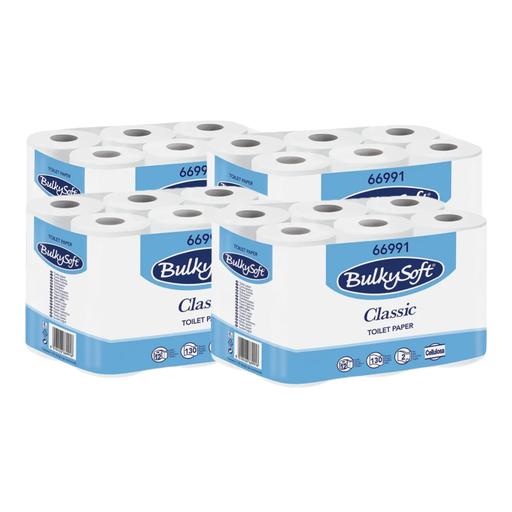
Why we chose it: Perfect for families who want to manage their budget and stock up on an essential product. This 48-roll pack offers unbeatable value and the peace of mind of never running out.
No vague marketing here. The XXL format focuses on sheer quantity (48 rolls of 130 sheets each). The math is simple, and the value is transparent.
An ultra-economical format that doesn't sacrifice sustainability, thanks to its Ecolabel certification. Your wallet and the planet will thank you.
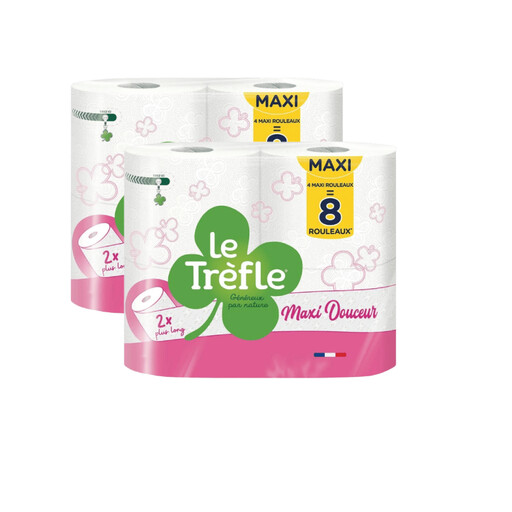
Why we chose it: Dedicated to those for whom softness is non-negotiable. Its pure cellulose wadding composition, free from perfumes or lotions, makes it the perfect ally for the most delicate skin.
The "Maxi Roll" claim isn't just for show: it's 50% longer than the brand's standard roll. The promise of extended use is fulfilled.
Unparalleled softness thanks to pure cellulose wadding, combined with a hypoallergenic formula and FSC certification.
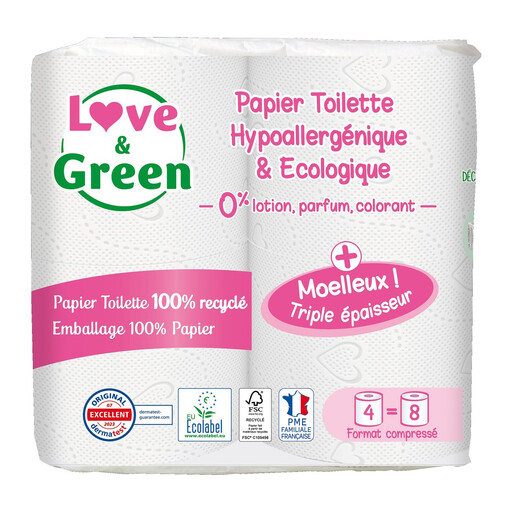
Why we chose it: For those who put sustainability at the top of their priority list. This product ticks all the boxes: 100% recycled, multiple certifications, and paper packaging, making it plastic-free.
No *greenwashing* here. The environmental commitment is backed by facts: 100% recycled paper, FSC and Dermatest certifications, and zero-plastic packaging.
A 360° eco-friendly approach, from the product to the packaging, that doesn't forget comfort (3-ply) or skin-friendliness (hypoallergenic).
Discover our full selection of toilet papers that combine respect for the planet and your skin.
This is a stubborn myth! While it may have been true in the past, manufacturing techniques have advanced significantly. Today, a good recycled toilet paper, especially a 3-ply version, offers comfort that is entirely comparable to paper made from virgin fibres. It's the ideal compromise, so you don't have to sacrifice your well-being or the planet.
It's a valid concern. Thicker paper is more absorbent, but it also takes longer to break down in water. If you have old plumbing or a septic system, it's wise to be cautious. Using a large amount of 4- or 5-ply paper at once can indeed increase the risk of a clog. It's best to use it sparingly or opt for a 3-ply paper, which is designed to dissolve more quickly.
Forget the price per roll—it's a decoy. The only true indicator is the price per 100 sheets or per metre. Do the simple math: divide the pack's price by the total number of sheets (or metres). It's the only way to objectively compare two products, even with different formats, and to spot fake promotions.