
Livraison le jour même ou le lendemain

Qualité garantie

Débloquez vos offres de bienvenue: Livraison GRATUITE | Jusqu'à -80 % | 30 jours d'essai gratuits à JoyPlus
Téléchargez l'application
Securing your home shouldn't involve hidden monthly fees or a complicated setup. Many of you are looking for a simple, effective, and above all, economical solution to keep an eye on your front door, whether it's to welcome loved ones or never miss a package again. The smart doorbell market can be overwhelming, but rest assured: subscription-free models do exist, guaranteeing true peace of mind without adding to your monthly bill.
In this guide, we break down the essential features and present our selection of the best models available today: subscription-free wireless video doorbells. Our goal is to help you make an informed decision, far from the marketing hype.
Before comparing models, let's review the criteria that make all the difference for a good, standalone wireless video doorbell. Here are the key points to watch for.
The secret to a subscription-free model is how it stores video. Instead of sending your data to a paid remote server (the cloud), these doorbells record everything locally. There are two main solutions:
In addition to saving you recurring fees, this approach ensures much better privacy for your personal data.
When we say "wireless," we're talking about two things: the network connection (Wi-Fi) and the power source. A battery-powered doorbell is the ultimate in flexibility: no need to run cables, you can place it wherever you want. Battery life then becomes the number one criterion. It can range from a few months to over a year depending on usage, detection frequency, and the weather. Keep in mind that cold temperatures and heavy use will drain the battery faster. It's essential to check the capacity (in mAh) and the manufacturer's estimates.
The simplest models make do with basic motion detection, which can be triggered by a passing car or a cat. To avoid being bombarded with false alerts, it's better to opt for a doorbell with smart motion detection. Here are the game-changing technologies:
Here are a few models that stand out for their features and their subscription-free philosophy.
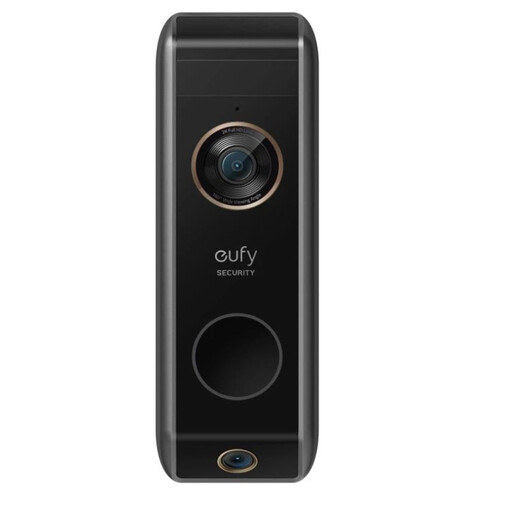
Why it stands out: This model packs a punch with its innovative dual-camera system. The main camera offers a wide view in 2K resolution, while the second is designed for package detection, eliminating blind spots at the foot of your door. Storage is handled locally on the HomeBase (sold separately or in a kit), which ensures data privacy and no monthly fees.
Pros:
Who is it for? Those who want a cutting-edge solution to secure their deliveries and who appreciate the idea of a complete security ecosystem.
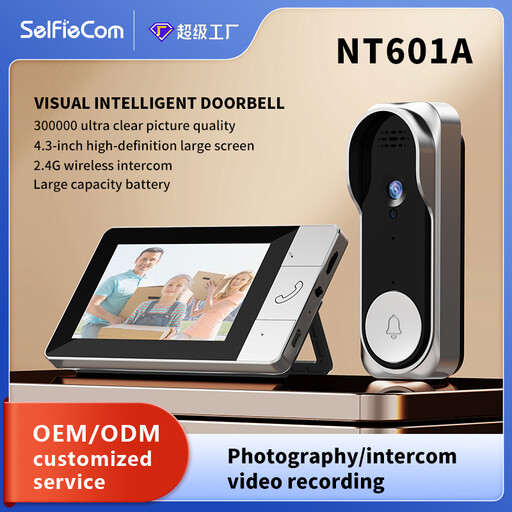
Why it stands out: The Verbex NT601A offers a radically different approach: it's a doorbell that doesn't need Wi-Fi to work. It comes with its own 4.3-inch indoor monitor that connects directly to the outdoor unit. No smartphone or app required. As soon as a visitor rings, the screen turns on and can record a photo or video (requires a TF card, not included).
Pros:
Who is it for? Ideal for those who prioritise absolute simplicity, for a second home, or for areas where Wi-Fi is unreliable.
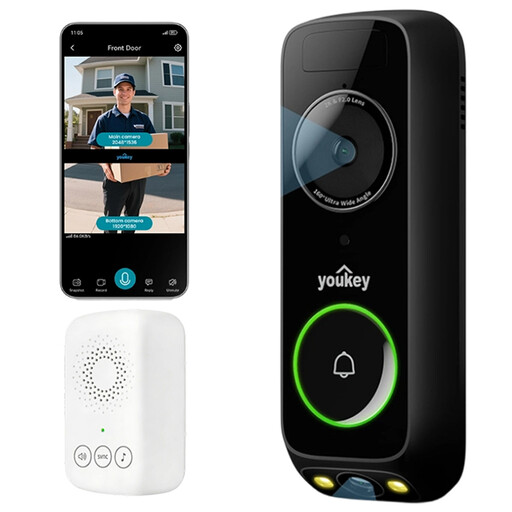
Why it stands out: This model is a powerhouse of cutting-edge technology for ultra-precise detection. It relies on triple detection (Radar, PIR, and AI) to identify humans and packages with formidable reliability. Like the eufy model, it's a dual-camera doorbell with 2K resolution. Storage is provided by 8 GB of built-in eMMC memory; the result: no subscription and no memory card to buy.
Pros:
Who is it for? Tech enthusiasts who demand pinpoint detection accuracy and an all-in-one, ready-to-use solution.
If these models don't check all your boxes, or if you want to explore other types of standalone cameras, feel free to browse our full catalogue.
Discover our range of battery-powered cameras
Generally, a battery-powered doorbell lasts between 3 and 6 months. But be aware, this figure depends on many factors: the frequency of alerts, the length of recorded videos, the strength of your Wi-Fi signal, and especially the temperature (cold is the enemy of batteries).
It's simple: instead of storing videos on a paid cloud, it records them onto a physical medium at your home. This could be a microSD card, internal memory (eMMC), or a base station connected to your network. You can then access your recordings via the manufacturer's app without ever paying an extra penny.
Not at all, it's one of their biggest advantages! Most models can be mounted with a few screws or a strong adhesive strip that comes included. Since they are battery-powered, there are no electrical wiring headaches. The configuration is then done in minutes from a mobile app that guides you through each step.