
Livraison le jour même ou le lendemain

Qualité garantie

Débloquez vos offres de bienvenue: Livraison GRATUITE | Jusqu'à -80 % | 30 jours d'essai gratuits à JoyPlus
Téléchargez l'application
Creating an interior that is as beautiful as it is practical can be a design puzzle, especially when square footage is limited. Between throws lying around, magazines piling up, and a lack of seating for guests, the living room can quickly descend into chaos. This is where the storage ottoman makes its entrance?: a clever 3-in-1 piece of furniture that serves as a seat, a footrest, and a secret hiding spot for your clutter.
Our mission?? To help you navigate the multitude of available models, cutting through the sometimes-empty marketing promises. This guide offers our expert advice and our selection of the most compelling products for 2026.
Before you commit, there are a few key points to check to ensure your future ottoman will fit perfectly in your home, both practically and aesthetically.
A storage ottoman must, above all, be the right scale. The first essential step?: take out your tape measure and measure the available space. Then, think about its primary use. If it's meant to be a storage footstool in front of your sofa, its height should not exceed that of the seat. For an entryway, check that it won't obstruct traffic flow. An overly massive model will overwhelm a small room, while a tiny ottoman will look lost in the middle of a large living room.
The upholstery of your ottoman will set the tone, but it will also determine how easy it is to maintain.
As for the frame, a structure made of MDF (medium-density fibreboard) or solid wood is a guarantee of sturdiness.
Ask yourself the right questions. Do you mainly need extra seating with storage for nights with friends?? Or rather a hiding place for the toys that take over the living room?? The storage volume varies enormously from one model to another. Some can hold a few magazines, while others can swallow several throws and cushions. Also, consider the opening mechanism?: a simple removable lid often remains the most practical solution.
To move from theory to practice, here are a few models that caught our eye for their design, practicality, or excellent value for money.
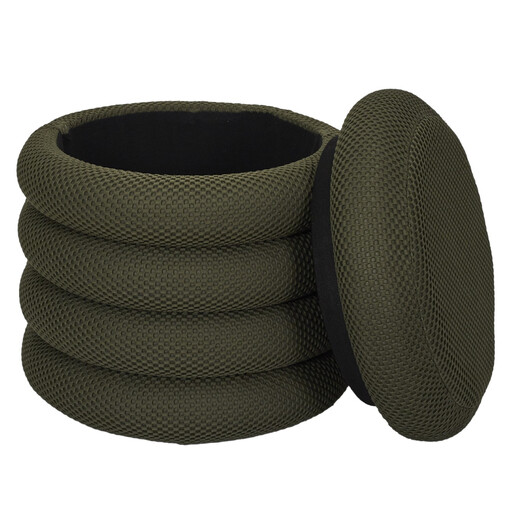
Key feature?: Simplicity that gets straight to the point. Its khaki colour adds a natural and trendy touch that's easy to integrate into many decors.
Pros?:
Who is it for?? Ideal for those looking for an effective and budget-friendly extra storage solution. Its compact dimensions (37?x?37?x?42?cm) make it an excellent choice for small spaces?: a studio, a student's room, or a reading nook.
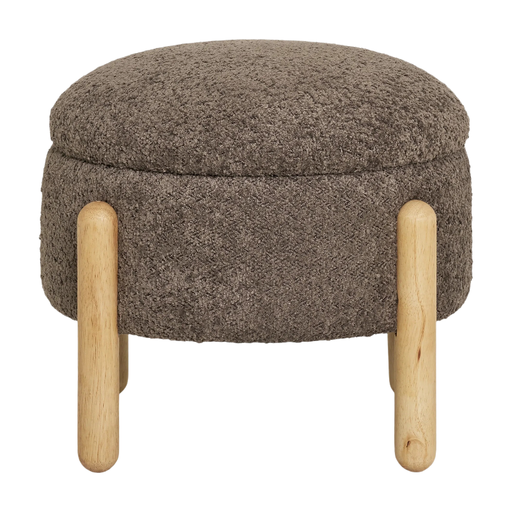
Key feature?: The trendy Scandinavian look, with added comfort. The combination of textured brown fabric and natural wood legs creates a warm piece of furniture that doesn't sacrifice functionality.
Pros?:
Who is it for?? For fans of Scandinavian style and the hygge vibe who want a piece of furniture that is as beautiful as it is clever. It will be perfect as a footrest near an armchair or as a stylish extra seat in the living room or bedroom.
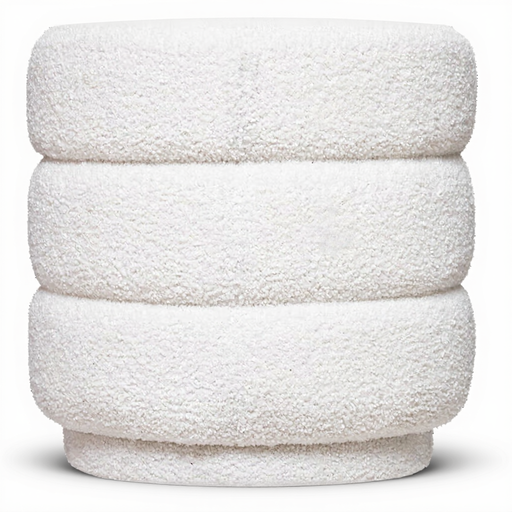
Key feature?: Minimalist design and comfort above all. Note that this one does not have storage, but its style justifies its place in our selection.
Pros?:
Who is it for?? For those who prioritise style and comfort over storage. It's a beautiful piece that will elevate the aesthetic of a living room or bedroom by adding a touch of softness and modernity.
If none of these models have caught your eye, don't worry. There is a multitude of shapes, colours, and textures to explore. A well-chosen ottoman can truly transform a room by bringing both character and welcome functionality.
? Discover our entire collection of fabric ottomans and poufs
For most fabrics, spot cleaning is sufficient. In case of a stain, gently dab with a damp cloth and a little neutral soap (most importantly, do not rub?!). For routine maintenance, a quick vacuum with a soft brush attachment is enough to remove dust. In any case, check the label and the manufacturer's recommendations.
Honestly?? In everyday language, not much anymore. Historically, a pouf is a low, soft seat, while an ottoman is larger, firmer, and often serves as a footrest or coffee table. Today, the lines are blurred, and the two terms are often used interchangeably, especially when they include storage.
It all depends on its structure. A model with an MDF or solid wood frame can generally support the weight of a seated adult (between 80 and 120?kg on average). However, avoid standing on it—it's not a step stool?! To be sure, always check the maximum load capacity indicated by the manufacturer on the product page.