
Livraison le jour même ou le lendemain

Qualité garantie

Débloquez vos offres de bienvenue: Livraison GRATUITE | Jusqu'à -80 % | 30 jours d'essai gratuits à JoyPlus
Téléchargez l'application
A tidy home often starts with one game-changing detail: the right storage box. But with an overwhelming number of options, it's easy to end up with products that don't live up to their promises. Warping lids, cracking plastic, wobbly stacks... We've all been there, but these common frustrations are easy to avoid.
As the Head of Product Curation at Joybuy, I'm breaking down the essential criteria for choosing a truly durable and functional storage solution, whether it's for your kitchen, garage, or closets.
Before diving in headfirst, let's review the traps that turn a good deal into a purchase you regret.
To make the right choice, three fundamental criteria make all the difference in the quality and practicality of a storage box.
The choice of material depends primarily on its intended use.
The effectiveness of a set of airtight containers relies entirely on its locking mechanism.
A good storage system is one that optimises space. For effective kitchen storage, look for ranges where containers of different sizes are designed to nest together. A truly stackable design is recognisable by the ridges on the lid that fit snugly into the base of the box above. This is the secret to a stable column.
Here are a few options that meet specific needs, taking into account the quality criteria we've just discussed.
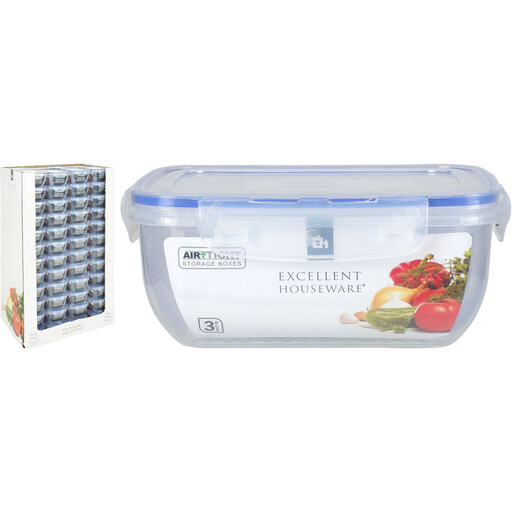
Our take: Perfect for a starter set or as a simple, cost-effective solution for storing leftovers and meal prepping. This set covers the essentials without breaking the bank.
Countering the "fake airtight" trap, this model relies on a twist-lock closure with a silicone seal. It's a simple but incredibly effective mechanism for guaranteeing a leak-proof seal.
Made from BPA-free polypropylene, it's food-safe and can go straight into the fridge, freezer, and microwave (without the lid).

Our take: For those who prioritise sustainability and health. Glass is the ideal solution for meal prep and storage: it goes directly from the freezer to the oven, and then to the table.
This set sidesteps the "low-grade plastic" trap by using borosilicate glass: a material that won't warp, stain, or retain odours, ensuring impeccable hygiene.
The 10-piece set, with two different sizes, offers excellent modularity for organising your fridge or prepping a week's worth of meals. The clip-on lids ensure a secure closure.
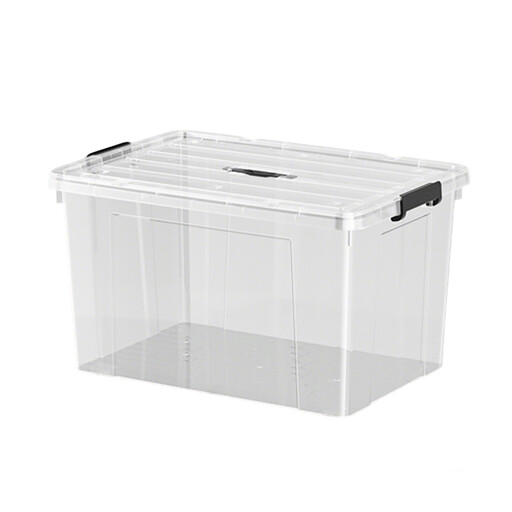
Our take: Essential for organising the garage, cellar, or attic, or for moving house. These large-volume bins are designed for storing out-of-season clothing, tools, or archives.
It solves the "unstable stacking" problem with its reinforced design. The flat lid and base fit together perfectly for secure stacking that optimises vertical space.
The container's body, thickened to 2.5 mm and featuring reinforcing ribs, gives it heavy-duty strength and an excellent load capacity. Integrated handles make transport easy.
We've put together a complete, up-to-date selection of products that meet our selection criteria and current safety standards.
1. PP Plastic vs. Borosilicate Glass: What's the difference for a storage container? PP (polypropylene) plastic is lightweight, virtually unbreakable, and budget-friendly, perfect for transport and everyday storage. Borosilicate glass, while heavier, is more hygienic (it doesn't retain odours or stains) and is oven-safe, making it more versatile for cooking and serving.
2. How can I be sure a container is truly airtight before buying? Inspect the lid: it should have a thick, flexible silicone seal. Test the locking mechanism: the clips should lock firmly with a distinct "click." A lid that bends easily under pressure is a bad sign.
3. Are all plastic containers microwave-safe? No, and this is a common mistake. It's crucial to check the manufacturer's pictograms on the container or its packaging. Only models displaying the microwave symbol are suitable. In any case, it's always recommended to remove or vent the lid before heating to allow steam to escape.