
Livraison le jour même ou le lendemain

Qualité garantie

Débloquez vos offres de bienvenue: Livraison GRATUITE | Jusqu'à -80 % | 30 jours d'essai gratuits à JoyPlus
Téléchargez l'application
Remote work is now a part of our daily lives, and with it comes the need for a workstation that is as comfortable as it is functional. Let's be honest: being glued to a chair for hours on end is the perfect recipe for muscle strain and energy slumps. This is where the standing desk comes in, establishing itself as a game-changer for energising your workday and looking after your health.
But with so many options on the market, how do you make the right choice? Don't worry. This guide is here to break down the essential criteria and present our selection of the best models, whether you're looking to build a complete ergonomic workstation from scratch or simply need a smart computer desk for working from home.
Before you take the plunge, let's review the key points to help you make an informed decision that's perfectly suited to your space and work habits.
The heart of a standing desk is its adjustment system. A height-adjustable desk can be either manual (with a crank) or electric.
The electric desk offers a far superior user experience. A simple press of a button is all it takes to switch from sitting to standing. More advanced models feature memory presets, allowing you to save your preferred heights. This is a valuable time-saver that ensures precision in your daily routine. Most modern motors are designed to be quiet and smooth.
Assess the space you have available, but also the space you actually need. A 120 cm wide desktop is often sufficient for a laptop and a single monitor. If you use multiple monitors or need to spread out documents, a 140 cm, 160 cm, or even 180 cm desktop will be more comfortable.
Also, consider organisation. Integrated cable grommets, headphone hooks, or storage baskets are the small details that make a huge difference in keeping your desk tidy. For those who need a lot of storage, a corner desk with storage can be a powerful solution, combining a large surface area with built-in drawers or shelves.
Stability is the name of the game. A good standing desk should not wobble, even in its highest position. Check the quality of the frame, which is often made of steel for better durability. The maximum load capacity is also a criterion not to be overlooked. It must be sufficient to support all your equipment (monitors, computer, peripherals). A capacity of 70 kg is generally a good indicator of sturdiness for standard use.
To help you decide, here is our selection of models that tick all the boxes, whatever your needs for ergonomics, space, and budget.
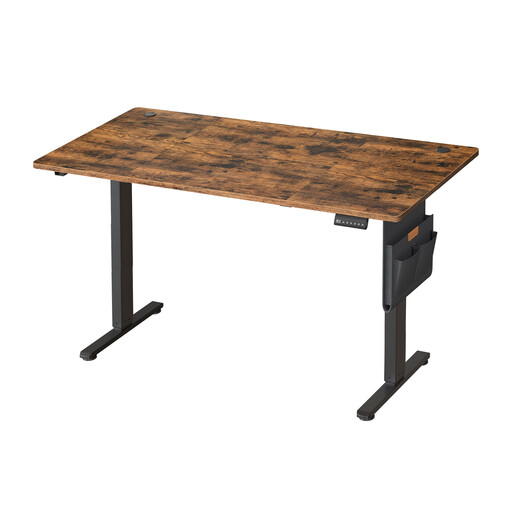
Why it stands out?: This Ochama model is an excellent entry point into the world of adjustable desks. It combines versatile dimensions (140 x 60 cm) with modern features like height memory presets and a USB-C port, all in an understated design.
Key Features?:
Who is it for?? Ideal for remote workers and students looking for their first functional and well-equipped electric desk that won't take up their entire space.
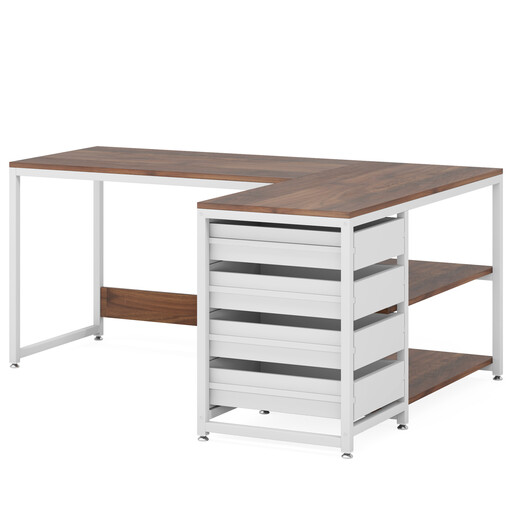
Why it stands out?: Although it's not height-adjustable, this desk meets a critical need: storage and space optimisation. Its reversible L-shaped design and numerous drawers make it a true command centre for your home office.
Key Features?:
Who is it for?? Perfect for those whose top priority is storage and a large work surface. It's the go-to option for anyone looking to set up a complete and ultra-functional office corner.
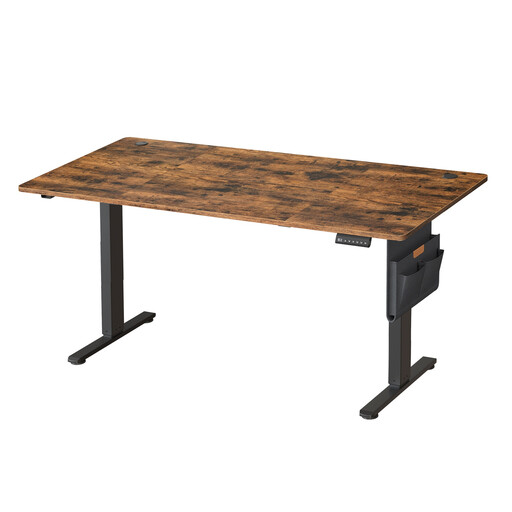
Why it stands out?: It takes the excellent foundation of the 140 cm Ochama model and expands it onto an XXL desktop. This is the solution for those who want to make no compromises on either space or ergonomics.
Key Features?:
Who is it for?? For demanding professionals, creatives, developers, or gamers who need a very large ergonomic workstation to accommodate their entire setup without feeling cramped.
Does your space have specific constraints, or are you dreaming of ultimate modularity? Other solutions exist. A rotating corner desk, for example, can adapt to different room layouts.
? Discover our selection of rotating corner desks to optimise every corner of your room.
1. What are the benefits of a standing desk? Alternating between sitting and standing throughout the day stimulates blood circulation, combats a sedentary lifestyle, and relieves tension in the back and neck. It's also an excellent way to maintain high energy and concentration levels.
2. How do I find the ideal height for my desk? When sitting, your forearms should rest flat on the desk, forming a 90-degree angle with your upper arms, and your feet should be flat on the floor. When standing, the principle is the same: your elbows should form a right angle when your hands are on the keyboard.
3. Is an electric desk noisy? Modern motors are designed to be discreet. The noise emitted when adjusting the height is very low (usually under 50 dB), which is equivalent to the ambient noise in a library. This allows you to adjust your position without disturbing your concentration or that of your colleagues or family.