
Livraison le jour même ou le lendemain

Qualité garantie

Débloquez vos offres de bienvenue: Livraison GRATUITE | Jusqu'à -80 % | 30 jours d'essai gratuits à JoyPlus
Téléchargez l'application
Goodbye plastic, hello stainless steel! It's a choice more and more households are making. Tired of containers that stain with the first splash of tomato sauce, hold onto yesterday's curry smell, or warp in the dishwasher? You're looking for a healthier, more durable, and reliable solution. More than just a container, a stainless steel food box is an investment in long-term quality and peace of mind.
But with a plethora of options available, how do you make the right choice? This guide is here to help you navigate the market. We'll break down the essential criteria and present our selection of tried-and-tested models, whether for your weekly meal prep, taking lunch to the office, or simply organising your fridge.
Before you take the plunge, let's review a few key points. They will ensure you find the perfect match that fits seamlessly into your daily routine.
The term "stainless steel" actually covers several different grades. The two most common for food use are:
To transport soup or a saucy dish without fearing a disaster in your bag, a leak-proof seal is non-negotiable. It all comes down to the lid and its gasket. Lids can be made of stainless steel, BPA-free plastic, or glass, often equipped with a food-grade silicone seal. Opt for models with strong locking clips or a system that ensures even pressure on the seal for a foolproof, airtight closure.
The size and format obviously depend on your needs.
We've selected a few gems that stand out for their quality materials, thoughtful design, and suitability for specific uses.
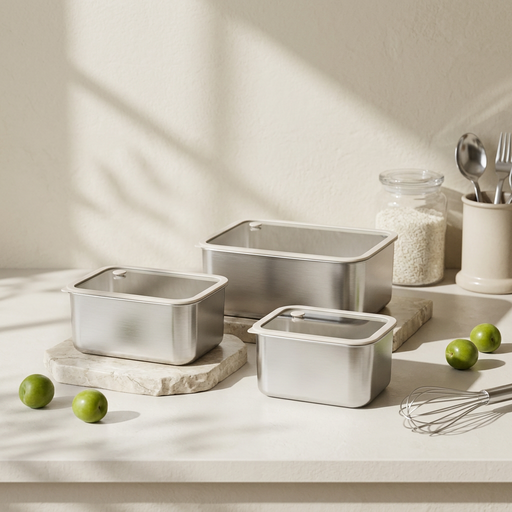
Key features: This smart set combines the durability of 304 stainless steel with the convenience of a borosilicate glass lid. No more opening every container to see what's inside: a single glance is all it takes. A real time-saver for organising your fridge. The silicone seal ensures an excellent airtight closure.
What we love:
Who is it for? For families and meal prep enthusiasts who want to streamline their kitchen and fridge organisation at a glance.
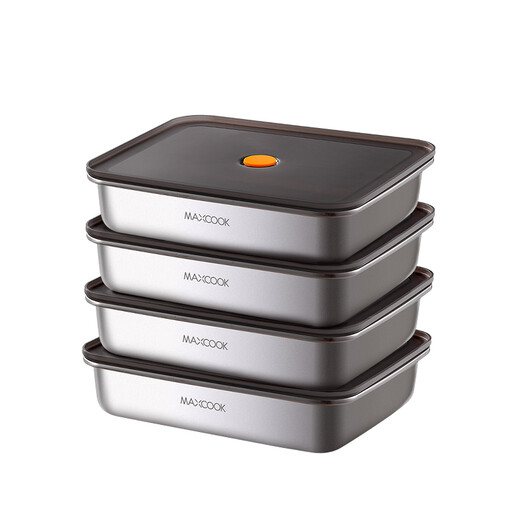
Key features: This set focuses on a single large capacity (1600 ml) format and the premium quality of 316L stainless steel. It's the high-performance choice for those who cook in large quantities or want unbeatable durability, regardless of the food type.
What we love:
Who is it for? For batch cooking pros and those who store food in bulk. It's the ideal solution for anyone seeking uniformity and the absolute peace of mind that comes with 316L stainless steel.
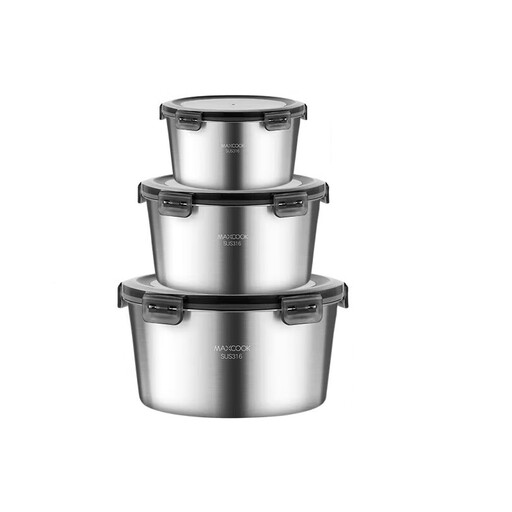
Key features: This set brings together the best of both worlds: the superior quality of 316 stainless steel and the versatility of multiple sizes. With its three capacities (600, 1100, and 2200 ml), it adapts to any situation, from a snack to a family-sized meal.
What we love:
Who is it for? This is the perfect stainless steel food container set for a first-time buyer. Versatile and ultra-durable, it's ready to handle all types of food preparations.
Our selection focuses on models that meet specific, well-defined needs. If you're looking for other shapes (round, square), compartmentalised stainless steel bento-style models, or different capacities, there are plenty of choices available.
? Discover our complete collection of food containers and lids
1. Can you put a stainless steel food container in the microwave? Absolutely not! You should never put any metal object, including a stainless steel container, in a microwave oven. The metal reflects the microwaves, which can create electrical arcs (sparks) and permanently damage your appliance. To reheat your food, simply transfer it to a microwave-safe plate or container.
2. How do you clean and maintain a stainless steel container? Nothing could be simpler. Most containers are perfectly dishwasher safe. For hand washing, a soft sponge and washing-up liquid are all you need. Absolutely avoid scouring pads or the abrasive side of a sponge, as they could scratch the surface. To tackle any limescale marks, a little diluted white vinegar will work wonders.
3. Is 304 stainless steel really good enough for daily use? Yes, by a long shot. 304 stainless steel is a perfectly safe and robust food-grade material, ideal for storing almost all of your food. Upgrading to 316L is only justified for very specific uses (repeatedly storing very salty or acidic foods) or for those seeking the ultimate in precautionary quality.