
Livraison le jour même ou le lendemain

Qualité garantie

Débloquez vos offres de bienvenue: Livraison GRATUITE | Jusqu'à -80 % | 30 jours d'essai gratuits à JoyPlus
Téléchargez l'application
Long summer evenings, the joy of dining on the patio... To enjoy them to the fullest, good lighting is essential. But the thought of installing a traditional system, with its trenches and resulting electricity bill, can be a real turn-off. This is where the solar garden light emerges as the perfect solution: cost-effective, eco-friendly, and incredibly easy to install.
This guide is here to help you see things more clearly. We'll review the key criteria to consider before you buy and present our selection of the best products available right now. Whether you're looking to light up a pathway, create a soft ambiance, or simply add some luminous garden decor without the hassle, you'll find what you're looking for here.
To avoid making a blind purchase, it helps to understand a few technical basics. Here are the three key criteria to scrutinise for an... enlightened choice.
Battery life is the name of the game. It depends on the battery and solar panel combination. Logically, a high-capacity battery (measured in milliampere-hours, or mAh) promises longer illumination. Aim for models that guarantee at least 6 to 8 hours of light after a full day's charge. For truly impressive lighting, a powerful solar light will need higher-performance LEDs and, crucially, a battery to match.
Your wireless garden light will have to face rain, wind, and dust. Its IP (Ingress Protection) rating is therefore a non-negotiable criterion. This rating, composed of two digits, measures its resistance to dust (first digit) and water (second digit).
The style of your lamp will depend entirely on its intended use.
Don't forget colour temperature: a warm white (around 3000K) is perfect for a cosy atmosphere, while a cool white (over 5000K) ensures better visibility. Some models go even further, offering coloured lights (RGB) for festive evenings.
To move from theory to practice, here are three models that caught our eye for their design, performance, and simplicity.
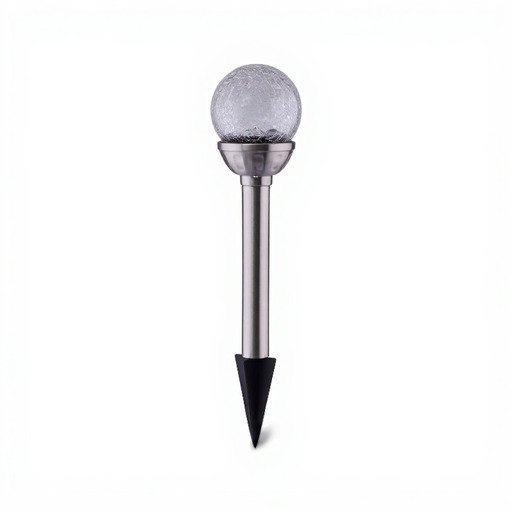
Aigostar SolBright G80 - Solar Garden Light - RGB, IP44
What makes it stand out? Without a doubt, its RGB (multicolour) lighting, which transforms your garden into a customisable light show. Its design, blending a retro touch with minimalist lines, makes it a beautiful decorative object, day or night.
Pros:
Who is it for? This model is for those who see lighting as a true decorative tool, capable of creating a unique atmosphere and personalising an outdoor space.
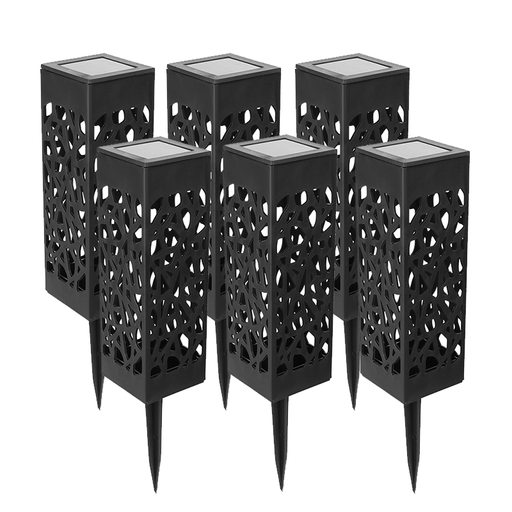
VIVREAL 6-Pack of Solar Garden Lights - Decorative Patterns
What makes it stand out? The wow factor! Its cut-out shade casts stunning light patterns on the ground, transforming a simple pathway into an enchanting walkway.
Pros:
Who is it for? For aesthetes who want to combine the practical with the beautiful, creating a light path that is as chic as it is functional along a walkway, patio, or flowerbed.

VIVREAL 12-Pack of Solar Garden Lights - In-Ground Lighting
What makes it stand out? Its ultra-discreet design. These flat spotlights can be recessed or placed directly on the ground, making them perfect for integrated, modern lighting along a wooden deck, pathway, or driveway.
Pros:
Who is it for? For those who prioritise functionality and safety. This pack is perfect for lighting large areas (pathways, patios, pool surrounds) with a solution that is both effective and nearly invisible by day.
Our selection is just a starting point. The world of outdoor solar lighting is full of gems: bistro-style string lights, designer wall sconces, floodlights with motion sensors... There's something for every taste and project.
Explore a wider range of solutions to enhance your outdoor space in our space light category.
1. What is the lifespan of a solar garden light? The lifespan of a solar light depends on two key components. The LEDs are virtually indestructible, often exceeding 20,000 hours of operation. It's the rechargeable battery that will show signs of wear first. Expect 2 to 3 years of optimal performance from a quality battery before you notice a decline in its capacity.
2. Do solar lights work in winter or on cloudy days? Yes, but with reduced efficiency. Modern photovoltaic panels can capture diffuse daylight, not just direct sunlight. On overcast days or in winter, charging will be slower, and the nightly runtime will be shorter. Pro tip: Always place your lights in the sunniest, most unobstructed spot in your garden to maximise their performance.
3. How do I maintain a solar garden light? Maintenance is a breeze. Simply remember to wipe the surface of the solar panel from time to time with a soft, damp cloth. Dust, pollen, or dead leaves can form a film that reduces charging efficiency. In winter, a quick brush-off to remove snow is all it takes.