
Livraison le jour même ou le lendemain

Qualité garantie

Débloquez vos offres de bienvenue: Livraison GRATUITE | Jusqu'à -80 % | 30 jours d'essai gratuits à JoyPlus
Téléchargez l'application
Our smartphones have become powerful pocket cameras, but even the most advanced sensor can't overcome shaky hands. For content creators, travellers, or anyone just looking to capture memories, unstable video can quickly ruin a shot. This is where the smartphone stabilizer?comes in: the essential accessory for turning shaky videos into smooth, pro-level footage.
But with a dizzying array of models on the market, how do you choose? This guide is here to help you make sense of it all by breaking down the key criteria and presenting our selection of the best models for 2026, suited for every need and budget.
Before you buy, here are the key points to consider to find the model that's perfectly suited to your needs.
This is the most critical factor when it comes to performance.
A good stabilizer is much more than just a mount. Look for features that will expand your creative options?:
Your phone mount for video should be an ally, not a burden. Consider the weight and bulk, especially if you plan to travel with it. Also, check for compatibility with your smartphone?: the clamp must be wide and strong enough to hold it securely (even with a case!), and its weight must not exceed the stabilizer's maximum payload.
We've selected three models that stand out from the crowd, each catering to a specific user profile.
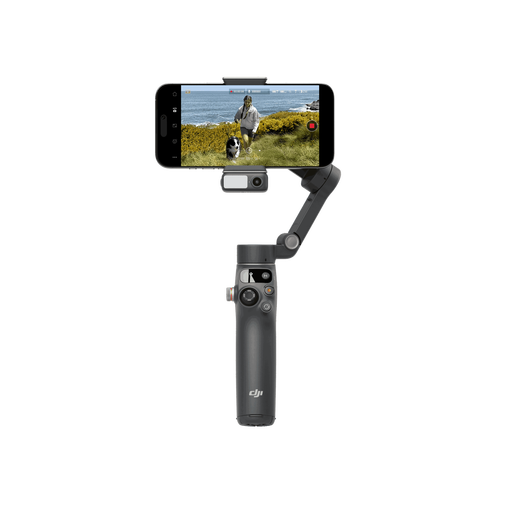
Why It Stands Out The DJI Osmo Mobile 7P is the Rolls-Royce of smartphone gimbals. Its 3-axis motorized gimbal delivers stunningly smooth stabilization, even when the action picks up. Its companion app is a true Swiss Army knife, offering intelligent subject tracking (ActiveTrack), simplified editing, and creative modes, all in a foldable and compact design.
Pros
Who It's For?? For content creators, vloggers, and demanding videographers who want a cinematic look and advanced features without the hassle.
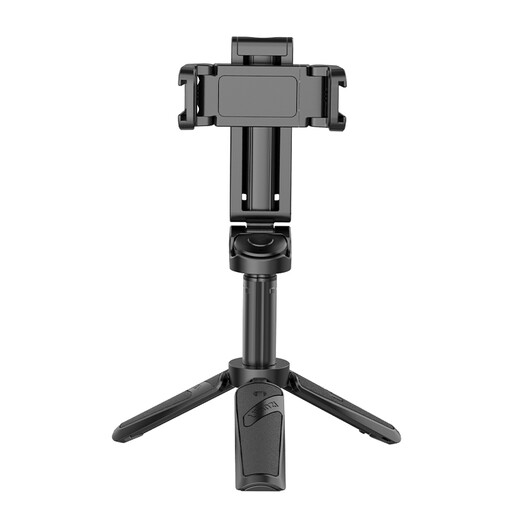
Why It Stands Out The ULANZI JJ02 is all about versatility and compactness. Note: this isn't a motorized gimbal, but a clever 3-in-1 system that functions as a grip, selfie stick, and phone tripod. Weighing in at just 116 grams, you'll barely notice it in your bag or pocket.
Pros
Who It's For?? For travellers, hikers, and anyone looking for an ultra-versatile, lightweight, and simple mount to improve their shots without the bulk of a gimbal.
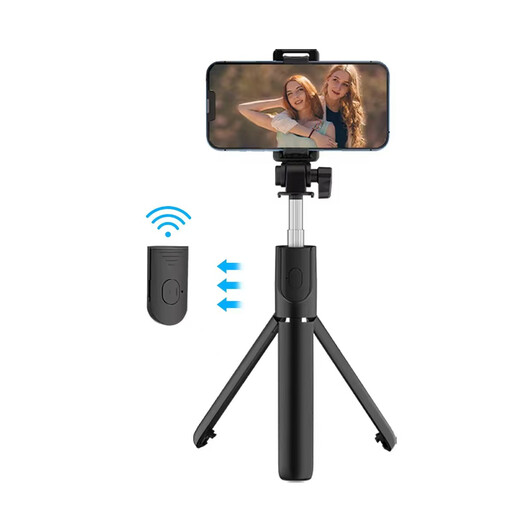
Why It Stands Out The Verbex K50 stands out with two key advantages?: a telescopic rod that extends to nearly 2 meters and dual built-in fill lights. It's the perfect tool for live streaming sessions or group photos, where extra reach and better lighting make all the difference.
Pros
Who It's For?? For live streaming enthusiasts, group photo specialists, and anyone who needs a phone mount for video with maximum reach and built-in lighting.
Our selection focuses on three profiles, but the world of video accessories is vast. To discover other models, compare technologies, or find more specialized gear (including for cameras), take a look at our full catalogue.
? Discover our full range of video tripods and stabilizers
A classic selfie stick is just a telescopic rod to move your smartphone further away and widen the frame. A smartphone stabilizer, especially a motorized gimbal model, uses motors to actively compensate for your movements. The result?: infinitely more stable and smooth video.
In theory, yes, but there are limits. Two key things to check before buying are?: the clamp width (your phone, with its case, must fit) and the maximum supported weight (payload). A smartphone that is too heavy for the stabilizer will strain its motors, and the stabilization will be ineffective.
It all depends on your use case. For static shots on a tripod or for selfies, a simple tripod stick will do the job. However, if you plan to film while walking, running, or executing smooth camera movements (like pans or tracking shots), a 3-axis stabilizer is essential. The difference in quality is striking and instantly gives your videos a professional look.