
Livraison le jour même ou le lendemain

Qualité garantie

Débloquez vos offres de bienvenue: Livraison GRATUITE | Jusqu'à -80 % | 30 jours d'essai gratuits à JoyPlus
Téléchargez l'application
Breathing clean air at home is more than a trend—it's a priority for many families. This is especially true in large living spaces where pollutants love to accumulate. Whether to soothe allergies, eliminate bad odours, or simply improve your quality of life, an air purifier is a top-tier solution. The problem? The market is flooded with marketing promises, and navigating it can be a real headache.
Before pulling out your credit card, it's best to know the common pitfalls that turn a good investment into a useless, energy-guzzling gadget.
To make an informed choice, trust the numbers, not the marketing. Here are the three indicators to examine closely.
The CADR, or Clean Air Delivery Rate, is the number one performance indicator. Expressed in cubic metres per hour (m?/h), it measures the volume of air the device can actually clean in one hour. For a large room, a high CADR isn't an option—it's a requirement.
A purifier worthy of the name combines several filtration barriers for optimal air treatment:
A smart air purifier offers unparalleled convenience. Controlling it from an app or by voice (with an Alexa-compatible air purifier or Google Assistant, for example) allows you to create schedules, monitor air quality remotely, and adjust the power on the fly.
The noise level, expressed in decibels (dB), is another crucial point. A good device should offer a night mode under 30?dB (the equivalent of a whisper) while still providing effective background purification.
Here are three models that cater to different needs, all evaluated against the objective criteria we've just detailed.
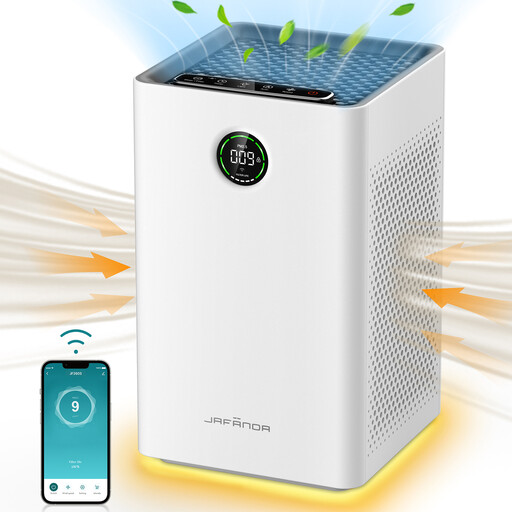
Why it's a match: Ideal for smart home fans who accept no compromise on performance. It integrates perfectly into a connected ecosystem (Alexa, Google Assistant) and its PM2.5 sensor allows for detailed air quality tracking, directly on your smartphone.
It advertises a CADR of 260 m?/h, a solid and verifiable value, perfectly sized for large volumes. Its filtration is transparently based on a true HEPA H13 filter and an activated carbon layer.
Its comprehensive smart control (Wi-Fi/App/Voice) and its ultra-quiet 23 dB sleep mode, which ensures nighttime purification without disturbing sleep.
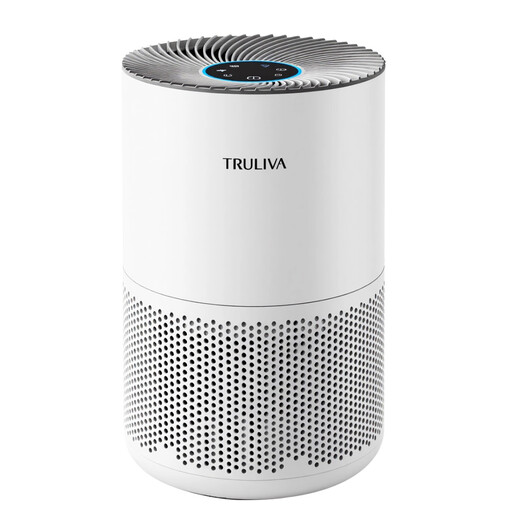
Why it's a match: Designed for maximum protection, it's ideal for households with pets or allergy sufferers. Its filtration is specifically designed to target dander, odours, and the finest allergens.
Its CADR of 260 m?/h ensures rapid and effective air sanitation. Its 24 dB sleep mode is genuinely quiet and functional, allowing it to avoid the "fake night mode" trap.
Its washable pre-filter extends the life of the main filters (HEPA and activated carbon), making it a smart, more economical, and eco-friendly choice in the long run.
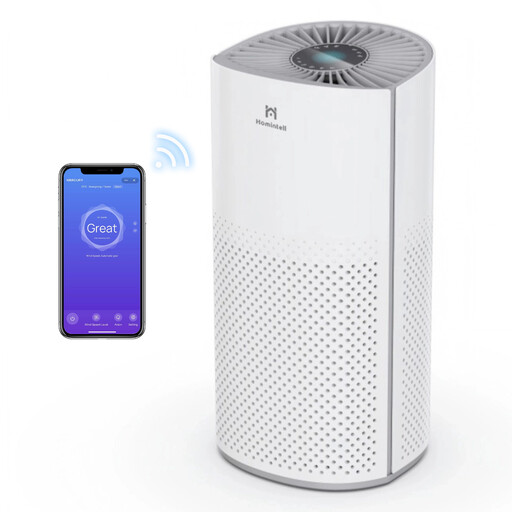
Why it's a match: A compact, all-in-one solution, perfect for rooms up to 25 m?. It combines HEPA H13 filtration, UV sterilisation, and an ioniser, all controllable via an app. Ideal for an office or a large bedroom.
It plays it straight with a clear CADR of 200 m?/h and a HEPA H13 filter. The bonus features (UV, ioniser) are presented as extras, not as substitutes for mechanical filtration.
Its 360° purification is paired with a real-time air quality sensor with a light indicator. Its 20 dB sleep mode makes it one of the quietest on the market.
Once your purifier is set up, its long-term effectiveness depends on one thing: regularly replacing its filters. A saturated filter is not only ineffective, it can even end up releasing the pollutants it has captured. To ensure continuously clean air, using quality consumables is therefore essential.
We have selected a range of consumables that meet strict quality and safety criteria to maintain your device's original performance.
The lifespan of a HEPA filter generally ranges from 6 to 12 months, depending on the intensity of use and the ambient pollution. Most smart models will notify you directly in their app when the time comes. The cost of an air filter cartridge is a recurring expense that should not be overlooked. So, remember to check the price and availability of replacement filters before confirming your purchase.
Yes, but with one essential condition: choosing the right device. To be effective against smoke, a purifier must absolutely include a thick layer of activated carbon. The HEPA filter handles the soot particles, but only activated carbon can absorb the gases, odours, and harmful chemicals from cigarette smoke.
Absolutely. These devices are specifically designed for continuous operation. Smart models with an "Auto" mode are particularly clever here: their sensors automatically adjust the fan speed according to the measured air quality. This ensures purification is constantly optimised while keeping electricity consumption in check. So you can leave it running without worry to maintain excellent air quality in your home.