Everyday reheating in a small space
You live in a studio flat, have a small kitchen or are kitting out a second home. Reheating and defrosting matter more to you than having several cooking modes.


If you mainly want to reheat and defrost food, choose a solo microwave. Add a grill for browning dishes, or consider a convection model if you also want it to work as a second oven. In a small kitchen, measure the appliance and the ventilation clearances before you decide. A built-in model also requires a compatible cabinet space and installation in line with its instructions.
UFC-Que Choisir’s guide distinguishes between solo, grill and combination models according to how you plan to use them, particularly in student accommodation or a second home.
You live in a studio flat, have a small kitchen or are kitting out a second home. Reheating and defrosting matter more to you than having several cooking modes.
You often reheat meals but would also like to brown a pizza or gratin from time to time. A grill suits this need without assuming you also need convection cooking.
You sometimes want to bake or roast in a limited space. A combination microwave with convection is worth considering, as long as it will fit on your worktop.
First decide whether you need to brown food or cook using convection, then choose between a freestanding and a built-in model. A built-in model can also have a grill: where it is installed does not determine its cooking modes.
| Feature | What to check | Best for |
|---|---|---|
| Compact reheating | Overall dimensions, space for your dishes and ventilation clearances; don’t rely on the capacity in litres alone. | In a studio flat, I mainly want to reheat and defrost without taking up too much worktop space. Around 40% of consumers would prioritise this. |
| Grilling and browning | Whether it has a grill mode and what the instructions say about using accessories. | If I sometimes make gratins, I’d like to brown the top without needing convection cooking; this would be the priority for around 30% of consumers. |
| Extra cooking options | Whether convection is explicitly listed, which modes are available and the appliance’s dimensions. | Without a handy oven, I also want to be able to cook from time to time, not just reheat. This would come first for around 20% of consumers. |
| Built-in installation | Exact cabinet-space dimensions, ventilation and the model’s installation instructions. | My kitchen unit can accommodate an appliance and I want to free up worktop space for good; around 10% of consumers would prioritise this integrated option. |
A capacity that suits you doesn’t guarantee the appliance will fit in the space you have, once you’ve allowed for ventilation.
Measure the available width, depth and height. For a built-in model, also compare the cabinet-space dimensions with the measurements specified by the manufacturer.
A grill browns food, but having one doesn’t mean the appliance offers oven-style convection cooking. UFC-Que Choisir distinguishes between these functions in its buying guide.
Start with the dishes you want to make. If oven-style cooking really matters, check that convection is explicitly listed rather than relying on the word “combination” alone.
Blocked vents can cause the appliance to overheat. Built-in installation does not mean you can ignore the appliance-specific instructions.
Check the manual for the required clearances and keep the vents unobstructed. For a built-in model, use the specified installation diagram.
Your container must be suitable for the mode you select. Anses says that heating food at too high a power setting or for too long can increase the transfer of substances from certain types of packaging.
Check that the container is compatible and follow the power and timing instructions on the packaging. For metal accessories, follow the instructions for the appliance and the mode being used.
These models illustrate different configurations. Check the specifications of the exact model rather than assuming they apply to every product from the brand.
The NN-E20JW is an example of a 20 L solo model, while the NN-C69KS is a 30 L combination model with a grill and convection.
The MG23K3515AK is an example of a 23 L microwave with a grill, worth considering if you want to brown food as well as reheat it.
The MCP349WH is an example of a freestanding combination microwave designed to bring several cooking modes together in one appliance.
The CMS4253EMX is an example of a built-in microwave with a grill, designed for a suitable cabinet space.
These freestanding models are designed for reheating and defrosting; some are also listed with a grill for browning. Compare their modes with your cooking needs before choosing, particularly if you’re looking for convection or a built-in appliance.
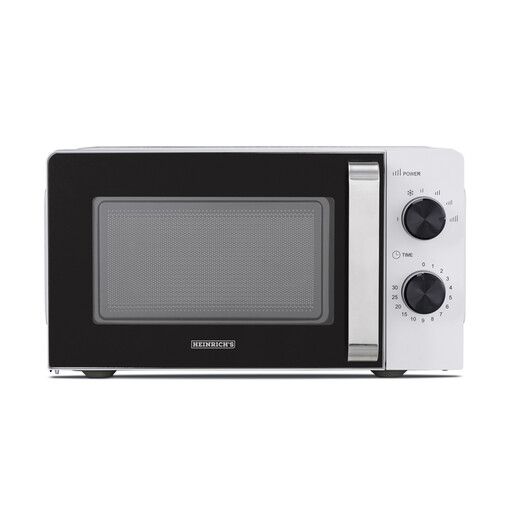 Image unavailable
Worth considering for reheating and defrosting in a small home. The product title lists a 20 L capacity, six power levels, a 30-minute timer and 700 W. Check the ventilation clearances, voltage and plug type before choosing a spot for it.
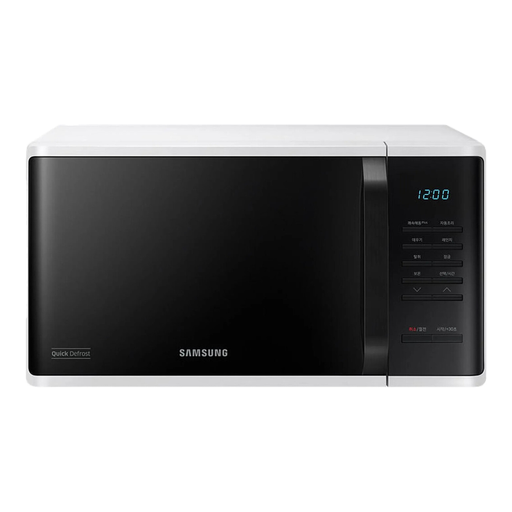 Image unavailable
Designed for reheating and defrosting, this solo model lists a 23 L capacity and Quick Defrost. Compare the appliance’s dimensions and the clearances required in its manual with the space you actually have.
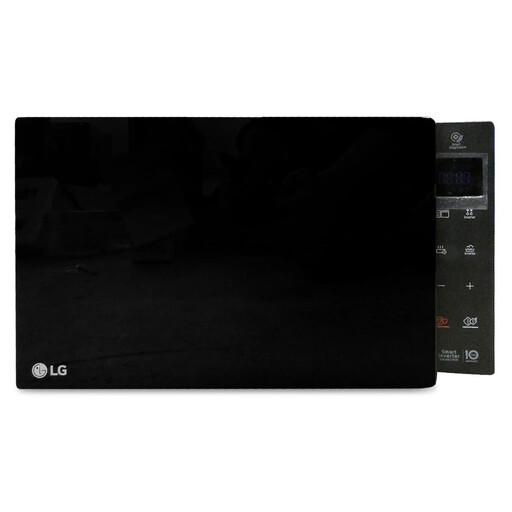 Image unavailable
Consider this model if you’d like to brown food occasionally as well as reheat and defrost; its description mentions a grill. The product title lists a 25 L capacity. If you need convection, make sure this mode is explicitly confirmed before choosing the model, then check its ventilation requirements and electrical specifications.
 Image unavailable
This model suits anyone who wants to reheat food and brown it occasionally; the product title specifies a grill, 20 L capacity and 700 W. A grill won’t be enough if you’re looking for convection cooking. Check the manual for all the required clearances, including above the appliance.
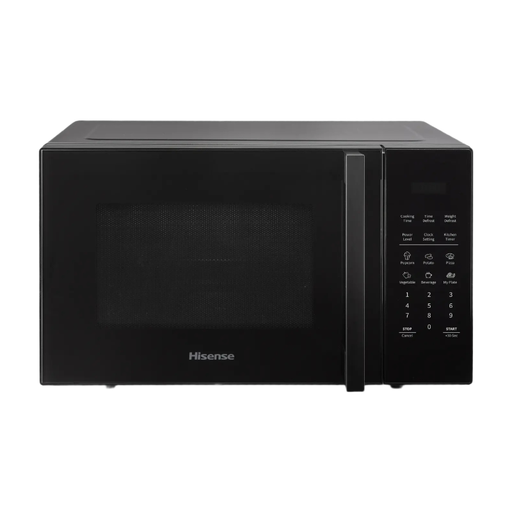 Image unavailable
The product title lists a 25 L capacity and 900 W, making this model worth considering for reheating and defrosting. If browning is important to you, check the grill function for the specific model on offer: it’s mentioned in the description, while the product title presents it as a solo model. Also check the required clearances before installation.
Yes, if you mainly plan to reheat and defrost food. To make sure it suits your studio flat, compare its overall dimensions, the space available for your dishes and the ventilation clearances in the manual, rather than looking at its capacity in litres alone.
Choose one if you also want to use the appliance for occasional cooking and don’t have a handy oven. UFC-Que Choisir distinguishes this function from a standard grill. Check that convection is listed among the model’s modes and that the appliance will fit in your kitchen.
No. The space must allow for the ventilation specified for the model. For a freestanding appliance, don’t block the vents; for a built-in model, check the cabinet-space dimensions and follow the installation diagram in the manual.
Use containers marked as suitable for the selected mode, and follow their power and timing instructions. Anses warns that heating food too intensely can increase the risk of substances migrating from certain types of packaging. Only use a metal accessory if the manual explicitly allows it for the mode in question.