
Livraison le jour même ou le lendemain

Qualité garantie

Débloquez vos offres de bienvenue: Livraison GRATUITE | Jusqu'à -80 % | 30 jours d'essai gratuits à JoyPlus
Téléchargez l'application
Whether you're a seasoned artist, an illustrator, or a passionate sketching enthusiast, choosing the right sketchbook is a crucial step. The wrong paper can stifle your creativity and, worse, compromise the preservation of your work. Faced with a jungle of options, it's easy to get lost and make the wrong choice. This guide is here to break down the essential criteria and help you find the perfect medium for your art, without any unpleasant surprises.
To start, here are the top three mistakes to avoid when buying a sketchbook:
To make an informed choice, you need to understand a few technical concepts. Don't worry, this isn't insider jargon: these few parameters simply determine how you'll be able to use your future sketchbook and how long it will last.
Expressed in grams per square metre (gsm), paper weight indicates the thickness and density of the paper. It's what determines its durability and ability to handle different media.
The surface texture, or "grain," directly influences the look of your lines and how pigments adhere to the page.
For your work in a professional sketchbook to stand the test of time, the paper must be acid-free and pH-neutral. This feature prevents the chemical ageing process that causes paper to yellow and become brittle. It's a non-negotiable criterion for any work you intend to preserve.
To guide you, we've selected three sketchbooks that each meet a specific need.
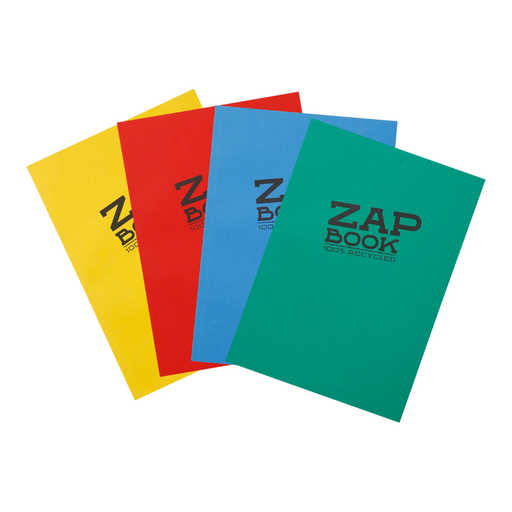
Why we chose it: Ideal for the student or hobbyist who fills pages with sketches daily. Its A5 size fits anywhere, and its 160 sheets offer an incredible page count at a very attractive price.
Its 80 gsm weight is tailored for sketching, which prevents any disappointment with wet media. The paper is acid-free and pH-neutral, ensuring good long-term preservation.
Excellent value for money. Its 100% recycled paper is a bonus for the eco-conscious artist.
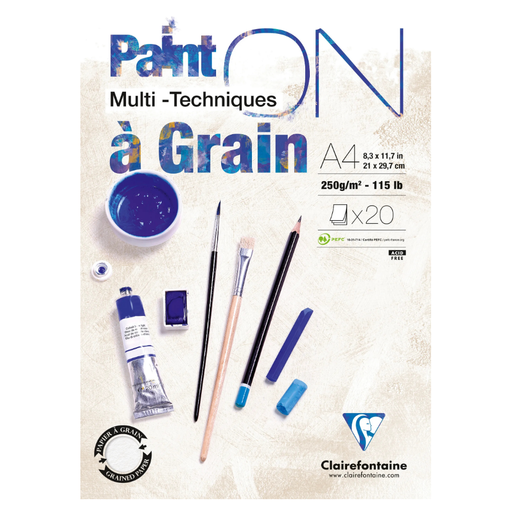
Why we chose it: The gold standard for the artist who loves to experiment. This Clairefontaine Paint'ON pad is a true Swiss Army knife, capable of handling dry media as well as gouache or ink.
Its sturdy 250 gsm weight significantly reduces buckling. Cleverly, it offers one side with a heavy grain and another with a light grain, a versatility that saves you from buying multiple pads.
Extra-white 100% cellulose paper, it offers excellent absorption and allows for "lifting" (correction by scraping), a welcome luxury.
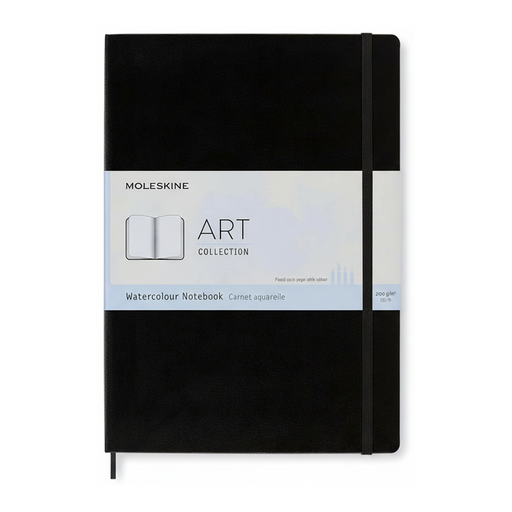
Why we chose it: Specially designed for watercolourists. This Moleskine sketchbook combines thick paper with a protective hardcover, making it a prime ally for artwork meant to last.
Its 200 gsm paper is designed for watercolour, minimising warping. The stitched binding ensures a perfectly flat opening, and Moleskine's build quality is a guarantee of sturdiness.
Acid-free, 200 gsm ivory-coloured paper that is water-resistant. The extras: an inner pocket and elastic closure, which are very practical for artists on the go.
Our selection doesn't stop here. We have compiled a comprehensive list of products that meet our strict selection criteria.
Spiral binding (or wire-o) allows the sketchbook to open a full 360 degrees, providing a perfectly flat work surface. This is an advantage for drawing outdoors or on an easel. Glued binding (or perfect binding) offers a more book-like finish. It's often preferred for travel journals or art diaries because it's more compact and durable in a bag.
120 gsm paper can be sufficient for India ink with a fine pen or nib, but it will quickly show its limits with large, flat washes of colour. For alcohol markers, which bleed through heavily, it's essential to choose a specific coated paper (like layout paper) or a multi-media sketchbook of at least 180 gsm. Also, always remember to place a protective sheet underneath your active page.
It's a key selling point for quality manufacturers, so the information is almost always displayed. Look for the words "acid-free" or "pH-neutral" on the cover or in the product description. If this information is missing, assume the paper is not designed for long-term preservation.