
Livraison le jour même ou le lendemain

Qualité garantie

Débloquez vos offres de bienvenue: Livraison GRATUITE | Jusqu'à -80 % | 30 jours d'essai gratuits à JoyPlus
Téléchargez l'application
Heatwaves, stuffy nights, unbearable work-from-home days… When the heat sets in, daily life can quickly become a nightmare. The solution? A good fan. But the quest for cool air often runs into a major obstacle: noise. An effective appliance that roars like a jet engine? No, thank you. It's impossible to sleep or concentrate. So, how do you find the perfect balance?
As a product expert for Joybuy, my mission is to do the legwork for you. This guide is designed to help you choose the perfect silent fan for your bedroom, focusing on what truly matters for your comfort. All without the unnecessary marketing jargon.
Before diving into our top picks, let's review the key points to make the right choice.
Silence is golden, especially at night. A fan's noise level is measured in decibels (dB). For a fan intended for the bedroom, a model that stays below 30?dB at its lowest speed is the holy grail. That's our benchmark. This is equivalent to a whisper, a background noise so discreet that it goes completely unnoticed. Always keep an eye on this metric: it's your best guarantee for peaceful nights.
Not all fans are created equal.
Everyday comfort also comes down to well-designed features. A fan with a remote control? Essential for adjusting the speed in the middle of the night without getting out of bed. A timer to schedule its shutdown is a real plus, as is a "night" or "sleep" mode that gradually reduces speed for near-total silence. For daytime use, a compact and portable desk fan can be an ultra-versatile solution.
Enough theory, let's get practical! Here are the models that caught our attention, each meeting specific needs.
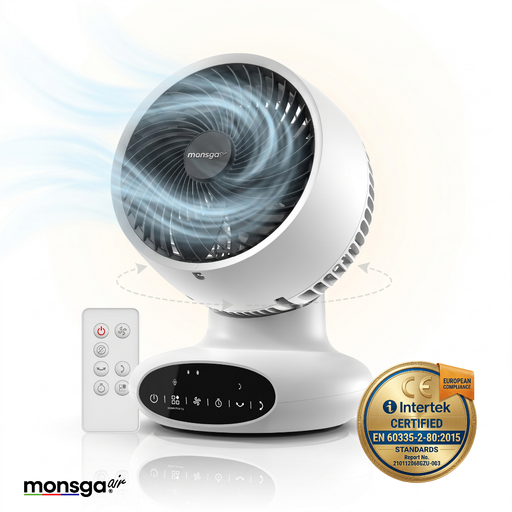
Why it stands out
The Monsga AC100 isn't just a fan; it's a true silent air circulator. Its strength lies in its ability to move air throughout the entire room thanks to dual oscillation, both horizontal (90°) and vertical (90°). The manufacturer highlights its BioFeather blade design (inspired by the flight of owls) and its VortexPeace motor. The promise is tempting: a noise level that drops to just 25?dB in sleep mode.
Advantages
Who is it for? For light sleepers and anyone sensitive to the slightest background noise. It's the ideal solution for keeping a bedroom or office cool and pleasant, day or night.
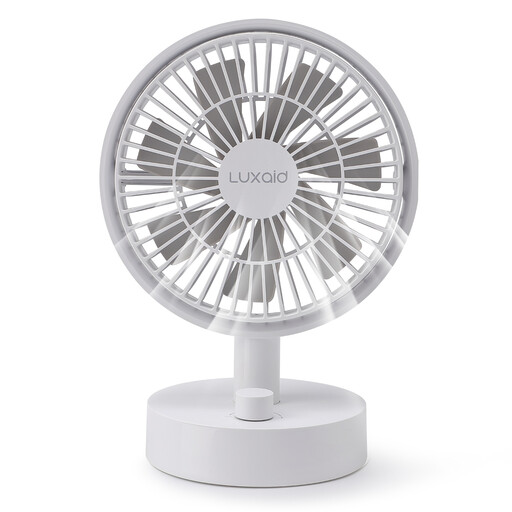
Why it stands out
This Luxaid desk fan plays the versatility card. Thanks to its 2000?mAh battery rechargeable via USB-C, it follows you everywhere without being tied to a power outlet. Its 10 speeds offer ultra-precise airflow adjustment, while its 160° oscillation ensures wide coverage, perfect for personal use.
Advantages
Who is it for? The perfect ally for remote workers, students, and anyone looking for a spot-cooling solution that's easy to move from one room to another or from home to the office.
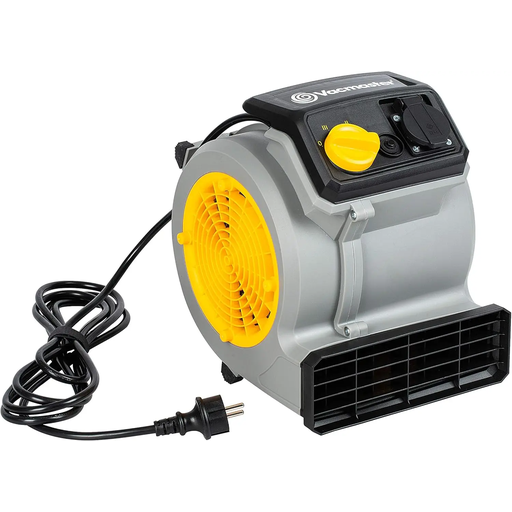
Why it stands out
With the Vacmaster, we're in a different league. This is a true air mover, a turbine designed to move an impressive volume of air: 245 litres per second. Clearly louder than the others (75?dB), its focus is entirely on power. It's incredibly effective for quickly ventilating large spaces (workshops, garages) or for speeding up drying processes.
Advantages
Who is it for? For anyone who prioritises power over silence. An excellent choice for airing out a large space before settling in, for construction projects, or for drying paint, for example.
Our selection covers a variety of needs, but choosing a fan is a very personal decision. If none of these models caught your eye, feel free to explore our complete collection. You'll find dozens of other devices for every budget and situation.
? Discover more options in our fan speed category.
To put it simply, a standard fan just pushes air in one direction. It creates a direct, highly localised breeze. An air circulator, like the Monsga AC100, sets the entire volume of air in the room into motion. It generates a current that moves air from the floor to the ceiling, which helps to homogenise the temperature, eliminate stagnant air pockets, and provide much more comprehensive comfort.
For a bedroom, the holy grail is a model that stays below 30?dB at its lowest speed. Between 30 and 40?dB, the noise remains discreet but may bother more sensitive ears. Above 45-50?dB, you don't just hear it, you listen to it: the noise becomes a real presence that can disrupt both sleep and concentration.
No, and that's a stubborn myth. A fan does not cool the air the way an air conditioner does. However, by creating a current of air on your skin, it accelerates the evaporation of sweat, which provides an immediate and very pleasant cooling sensation. Note that an air circulator can also be your air conditioner's best friend by helping it distribute cool air more evenly throughout the room.