
Livraison le jour même ou le lendemain

Qualité garantie

Débloquez vos offres de bienvenue: Livraison GRATUITE | Jusqu'à -80 % | 30 jours d'essai gratuits à JoyPlus
Téléchargez l'application
Finding that perfect little piece of furniture to complete a room can be a real challenge. Far more than a simple accessory, the side table is a key piece of decor?: it needs to be as practical as it is beautiful to transform a neglected corner into a fully-fledged living space. Whether you need an end table to keep your book within reach, an entryway console table for your keys, or a small accent table to make the most of your living room, the options are endless.
To help you navigate the choices, this guide breaks down the essential criteria and presents a selection of standout models suited for every need and style.
Before you commit to a purchase, there are a few key points to consider to ensure your new addition fits perfectly in your home.
What will you really be using it for? The answer to this question is crucial. Do you just need a surface for a lamp and your cup of tea? Or would a side table with storage be better for keeping remotes, magazines, and other small treasures out of sight? Some models come with baskets, drawers, or shelves—a clever solution for maintaining a consistently tidy space.
Dimensions are critical, especially in a living room where every inch counts. For an end table, the ideal height is level with or just below your sofa's armrests. For an entryway console table, opt for a slim model that won't obstruct the walkway. Remember to measure not only the floor space but also the height to ensure a visually harmonious result.
The material influences not only the aesthetic but also the furniture's durability. A wooden side table adds warmth and fits seamlessly into both rustic and Scandinavian decor. Metal, on the other hand, brings a more modern or industrial touch. Consider the existing colours and textures in the room to create a cohesive atmosphere. A round coffee table, for example, can soften the sharp lines of a contemporary living room.
Here are three models that caught our eye for their design, practicality, and versatility.

What sets it apart: At 160?cm long and just 29.5?cm deep, this console table is the perfect solution for long, narrow spaces. Its farmhouse-inspired design, with a light oak finish, adds a touch of warmth and authenticity to an entryway, hallway, or behind a large sofa.
Key features:
Who is it for? Ideal for furnishing a long wall, a hallway, or the space behind a sofa with a piece that is as functional as it is authentic.
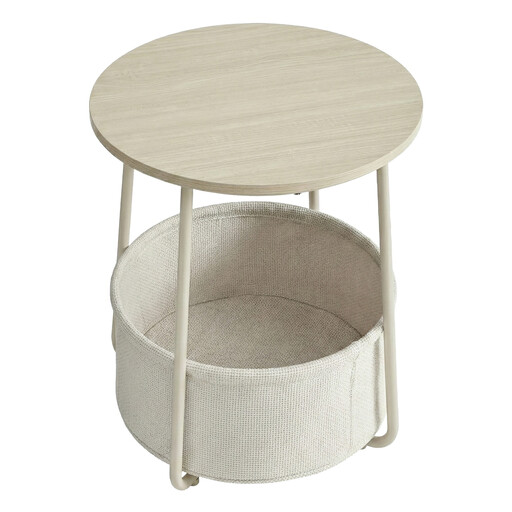
What sets it apart: This small accent table combines a round top with a fabric storage basket. A 2-in-1 solution that is as compact as it is clever. Its minimalist design, featuring U-shaped steel legs and a natural beige finish, blends beautifully into modern or Scandinavian interiors.
Key features:
Who is it for? Perfect for small apartments and studios, where you need a side table with storage that doesn't sacrifice style or square footage.
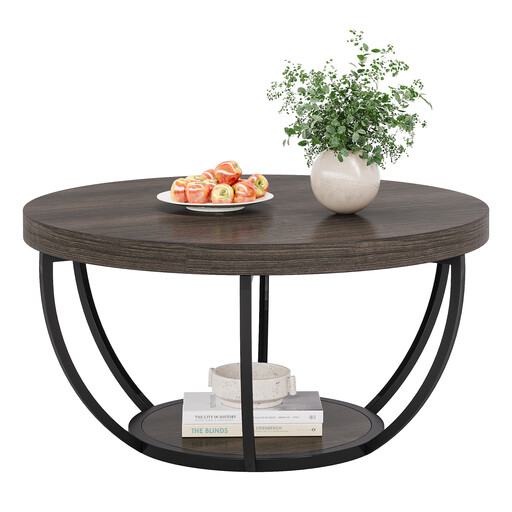
What sets it apart: More substantial, this 80?cm diameter round coffee table stands out as the centerpiece of the living room. Its two-tier structure offers ample storage space, while its modern design—combining a grey wood finish and a sculptural steel frame—gives it a timeless elegance.
Key features:
Who is it for? For those looking for a main coffee table for their living room that combines a generous surface, smart storage, and a bold design.
Our selection highlights a few standout models, but your home is one-of-a-kind. If you have specific finishes in mind, like grey, black, or pink living room furniture, or other types of tables, many more options await.
? Explore our full collection of living room furniture to find the perfect piece for you
The golden rule: choose a side table that is the same height as or slightly lower than your sofa's armrest. This makes it easier to reach items on it (like a glass, remote, or book) and creates a more visually balanced look. A height between 50 and 60?cm is suitable for most standard sofas.
An entryway console table should be as beautiful as it is practical. Consider placing a catch-all tray or a stylish box on it for your keys. Add a lamp for ambient lighting, a mirror above it to make the space feel larger, and a touch of green with a small plant. The goal is to create a welcoming atmosphere without cluttering the surface.
The two terms are often used interchangeably, but there is a subtle difference. An end table, as its name suggests, is designed to be placed at the end of a sofa, with a height suited for that purpose. The term side table is more generic?: it can refer to any small table used in a living room, a bedroom (as a nightstand), or an entryway. In practice, an end table is therefore a type of side table.