Housemates who use the kitchen every day
When meals are shared and the dishwasher is frequently filled, capacity, loading flexibility, noise levels and a clear rule for starting cycles become priorities.


For several occupants who regularly fill a dishwasher, a 60 cm model will generally be more suitable than a compact one, provided the kitchen has the necessary connections. Compare capacity, kWh per 100 cycles, litres per cycle, Eco programme duration and noise level: a good energy rating alone is not enough to organise day-to-day washing-up.
When meals are shared and the dishwasher is frequently filled, capacity, loading flexibility, noise levels and a clear rule for starting cycles become priorities.
Before buying, check the water supply, drainage, a direct electrical socket, the appliance’s stability and your landlord’s approval if the project will permanently alter the property.
If a standard dishwasher will not fit, compare the space saving with the compact model’s capacity, noise level and energy consumption.
In a shared kitchen, start by confirming the installation requirements, then compare the values on the energy label on a like-for-like basis.
| Priority | What to check | Your needs |
|---|---|---|
| Capacity and loading | Compare the number of place settings, adjustable baskets, cutlery drawer and the options for storing plates or containers. Also check the quick programmes, which are intended for lightly soiled dishes. | I want to be able to wait until there is a sufficiently full load without running out of clean crockery too quickly. ADEME advises waiting until the dishwasher is full before starting a cycle. |
| Noise | Compare the noise level in dB and the noise class shown on the energy label. Check for quiet programmes or a delay-start function only if they are specified for the exact model. | A cycle should not unnecessarily disturb people working, relaxing or sleeping near an open-plan kitchen. |
| Water, energy and Eco duration | Note the kWh per 100 cycles, litres per cycle and duration of the Eco programme. According to ADEME and the European Commission, these indicators appear on the energy label. | I want to compare consumption clearly and avoid running multiple half-loads or needlessly pre-rinsing the dishes. |
| Installation | Confirm the water supply, drainage, direct electrical socket, dimensions of the space and door clearance. Boulanger’s guide specifies a direct 16 A socket as a minimum and advises against using an extension lead or power strip. | Before ordering, I need to know whether the property allows for a stable installation that complies with the tenancy agreement. |
| Shared maintenance | Check access to the filters, spray arms and baskets, along with the salt and rinse-aid indicators. If the model displays a repairability index, compare that too. | Everyone needs to know who checks the levels, cleans the appliance according to the instructions and quickly reports a leak or fault. |
A compact model can significantly reduce capacity: the Electrolux ESL2500RO is listed as holding 6 place settings, compared with 14 place settings for the standard models considered. In a shared household, this may mean more cycles and more coordination.
Estimate the number of place settings and dishes that build up between washes. Choose a compact model only if the available space genuinely rules out a 45 or 60 cm appliance and your daily volume remains limited.
The energy rating alone does not tell you about capacity, litres per cycle, noise level or how long the dishwasher will be unavailable during a long Eco programme.
Compare appliances with similar capacities: place settings, kWh per 100 cycles, litres per cycle, Eco duration and dB should all be considered together.
A freestanding dishwasher requires a water supply, drainage, a suitable power supply and a stable floor. In a rented property, any permanent alteration deserves prior clarification with the landlord.
Measure the space, check the available connections and ask for written approval before carrying out work that could alter the plumbing, electrics or furniture.
Per-cycle consumption figures lose their value if the dishwasher is often run half empty or the dishes are pre-rinsed by hand.
Adopt a clear, visible rule: remove large scraps, load the dishwasher correctly, run it when sufficiently full and use the quick cycle for lightly soiled dishes if the model offers one.
A range of 45 and 60 cm freestanding dishwashers to consider when quiet operation and loading flexibility matter in a shared kitchen.
A range of 60 cm freestanding models to consider when capacity and a short programme for lightly soiled dishes are useful.
The range includes freestanding, integrated and compact formats, making it easier to compare a standard solution with a space-saving option.
A range of freestanding, integrated and slimline dishwashers, useful when available width or noise are decisive considerations.
Joybuy options for a shared kitchen, including 60 cm freestanding models and a fully integrated model to compare according to the available space and connections.
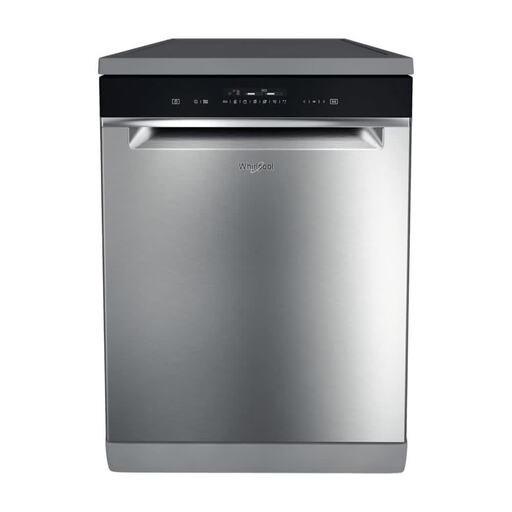 Image unavailable
For a shared kitchen that regularly builds up a large load.
14 place settings, 41 dB(A), 9.5 L per Eco cycle, 75 kWh per 100 cycles, third cutlery drawer, adjustable basket, half-load and delay-start functions listed.
Check the actual installation dimensions: the stated format and width information is inconsistent. Also confirm the connections and door clearance.
 Image unavailable
An option for a household that often fills the dishwasher and wants to adapt run times to its schedule.
14 place settings, 44 dB, 10.5 L per cycle, third basket, adjustable upper basket, Express and Eco programmes, half-load and delay-start functions listed.
Check the duration of the Eco programme if having the dishwasher available between meals is important, as well as the connections before installation.
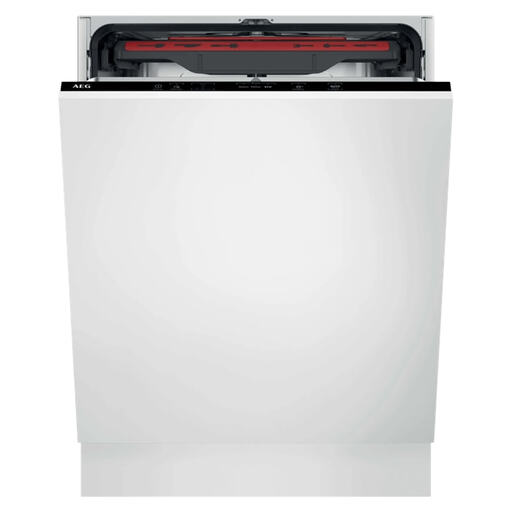 Image unavailable
Worth considering for a kitchen already designed to accommodate an integrated appliance.
14 place settings, 44 dB, 10.5 L per Eco cycle, 0.75 kWh per Eco cycle, 240-minute Eco cycle, cutlery drawer and Eco, Intensive, Automatic, Quick and Machine Care programmes listed.
Check the cabinet opening, door panel, hinges, connections and landlord’s approval if integration will permanently alter the furniture.
 Image unavailable
Suitable for a shared kitchen that needs plenty of capacity while keeping the stated noise level down.
14 place settings, 41 dB, C rating, approximately 9.5 L for the Eco cycle, Eco, Auto, Intensive and Quick programmes, automatic door opening and removable top listed.
Check the kWh per 100 cycles and the Eco programme duration on the label or in the instructions. Also keep the area in front of the door clear at the end of the cycle.
 Image unavailable
For several occupants who want to plan cycles and keep track of consumables.
14 place settings, 46 dB, stated water consumption of 9.5 L, adjustable basket even when loaded, 1- to 8-hour delay-start, salt indicator and an 85-minute Push&Go programme listed.
Check the kWh per 100 cycles and the Eco programme duration before comparing it with other models. The stated noise level deserves particular attention in an open-plan kitchen or near bedrooms.
For comparable capacities, compare the energy rating, kWh per 100 cycles, litres per cycle, Eco programme duration and noise level. The EU label displays these details; the rating alone cannot tell you whether the dishwasher will be large enough, quiet enough or compatible with your timetable.
Not necessarily: the Eco programme is used as the reference for the energy-label data and is designed to reduce water and electricity consumption. Its duration must, however, fit around your routine; avoid half-loads and use a quick programme for lightly soiled dishes when the model offers one.
Confirm the water supply, drainage, a direct electrical socket, the required space and whether the appliance can be levelled. Boulanger’s guide specifies a direct 16 A socket as a minimum, advises against using an extension lead or power strip, and specifies drainage between 60 cm and 1 m in its installation procedure.
Article 6 of the law of 6 July 1989, published by Légifrance, states that a landlord cannot object to alterations that do not constitute a transformation of the rented property. The classification depends on the work and the tenancy agreement: ask for written approval before making permanent changes to the plumbing, electrics or furniture.
Set up a rota to check the dishwasher salt and rinse aid, clean the appliance according to the instructions and promptly report leaks or faults. A level indicator can help, but it does not replace clearly assigned responsibility.