
Livraison le jour même ou le lendemain

Qualité garantie

Débloquez vos offres de bienvenue: Livraison GRATUITE | Jusqu'à -80 % | 30 jours d'essai gratuits à JoyPlus
Téléchargez l'application
A new hair color is a real investment, both in time and money. So, watching that vibrancy fade after just a few washes is a frustration many of us know all too well. The culprit? More often than not, it's an unsuitable shampoo, hastily chosen from an aisle saturated with marketing promises. To help you make the right choice, let's break down the common pitfalls that strip your color and weaken your hair.
As the Head of Product Recommendations at Joybuy, my mission is to help you navigate the complex world of hair care. Here are the most common mistakes and, more importantly, how to avoid them.
color-protecting shampoo often overlooks your hair's specific needs. Highlighted blonde hair doesn't have the same requirements as a vibrant red or a deep brunette. Using a non-targeted product not only risks letting your color fade but can also create unwanted tones.sulfate-free shampoo for colored hair label has become a powerful marketing claim. However, not all sulfates are created equal. Some "sulfate-free" products replace them with alternative cleansing agents that are just as harsh or that leave behind residue. What really matters is the overall gentleness of the formula, not the absence of a single demonized ingredient.To make an informed choice, focus on a few technical parameters that make all the difference for the longevity and vibrancy of your color.
The choice of cleansing agents is fundamental. Modern formulas favour mild surfactants derived from coconut or sugar, which cleanse without stripping the hair fibre and its pigments.
However, the most important criterion remains the product's pH. An acidic pH (generally between 4.5 and 5.5) is essential. It helps to seal the hair cuticle, locking color pigments into the core of the fibre. The result? A truly effective anti-fade shampoo that extends the shine and intensity of your color.
Coloring is a chemical process that sensitizes the hair. A good color-treated hair treatment must both protect the color and repair the fibre. Look for ingredients with proven properties:
Needs vary considerably depending on the shade.
blue or purple toning shampoo is specifically formulated with pigments that neutralize these unwanted warm tones to maintain a cool, bright blonde.color-treated hair conditioner enriched with pigments, can be used alternately to revive the intensity between coloring sessions.professional shampoo for colored hair focused on antioxidant protection and nourishment will be particularly suitable.Here are a few gems that meet these criteria, suitable for different profiles and budgets.
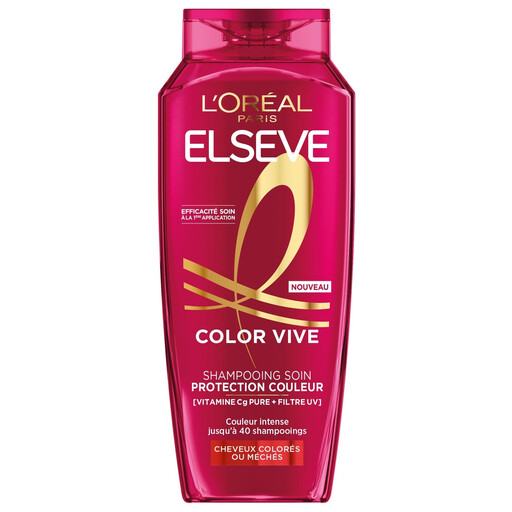
Why it's a match: Perfect for those looking for a reliable and affordable solution to maintain their hair color. It offers effective protection without breaking the bank.
By integrating UV filters and antioxidants, it beats the trap of the ineffective "all-in-one" product by offering targeted protection against aggressors that dull the color.
Its formula, enriched with Vitamin CG and UV filters, protects color from aggressors and the sun. It nourishes the hair fibre for revived radiance.
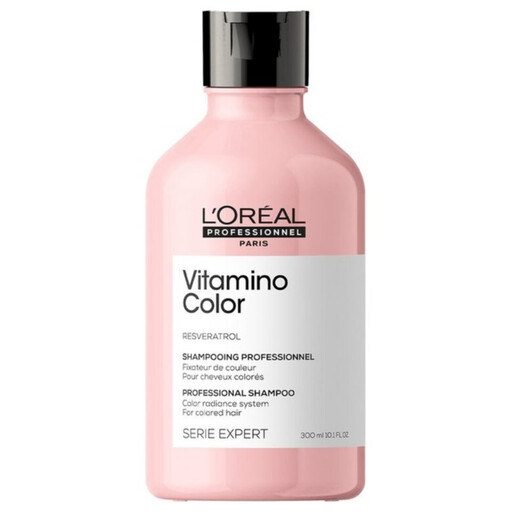
Why it's a match: For those fresh from the salon who want to protect their investment with a professional-quality treatment concentrated with active ingredients.
Its professional, acidic-pH formula enriched with resveratrol tackles the high-pH trap: it seals the cuticles to lock in pigments and protect them from oxidation.
Resveratrol, a powerful antioxidant, protects the color against fading. The formula gently cleanses and preserves a salon-worthy shine.
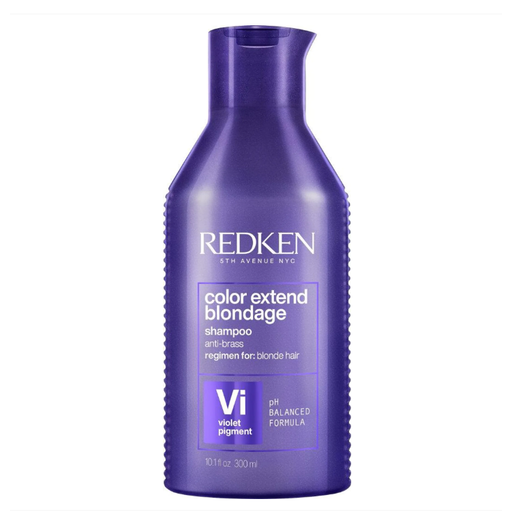
Why it's a match: The targeted solution for blonde, bleached, or highlighted hair struggling with unwanted yellow or brassy tones.
It doesn't just protect the color; it corrects it. It beats the generic shampoo trap by directly tackling the #1 problem for blondes: brassiness.
Its formula is concentrated with violet pigments to instantly neutralize yellow and brassy tones. Salicylic acid helps to strengthen the sensitized hair fibre.
We've curated a complete selection of products that meet our quality standards and the needs of color-treated hair.
Ideally, you should use it with every wash for continuous protection. However, try to space out your washes (every 2 or 3 days) to limit fading caused by water. Dry shampoo is your best friend for getting through between washes.
Not necessarily. The key is to avoid overly harsh surfactants, like Sodium Lauryl Sulfate (SLS). Many shampoos with sulfates use milder versions (like Sodium Laureth Sulfate, SLES), combined with hydrating agents. A well-formulated sulfate-free shampoo for colored hair is an excellent option, but a gentle formula with sulfates can be just as effective. Look at the formula as a whole, not just a marketing claim.
Using a purple toning shampoo is intended to neutralize yellow or orange tones in blonde or bleached hair. On brown hair with blonde highlights or a balayage, it can help neutralize warm tones in the lightened sections. However, on uniform brown hair, its effect will be nearly invisible, making it unnecessary. It's better to opt for a classic color-protecting shampoo designed to preserve the richness and shine of brown tones.