
Livraison le jour même ou le lendemain

Qualité garantie

Débloquez vos offres de bienvenue: Livraison GRATUITE | Jusqu'à -80 % | 30 jours d'essai gratuits à JoyPlus
Téléchargez l'application
For lovers of cucina italiana, it's a well-known fact: not all pasta is created equal. And for perfect rigatoni, where the sauce generously clings to every ridge, choosing the right package is crucial. But when faced with well-stocked shelves, how do you distinguish a standard box from a true gem?
This guide is here to provide the keys to an informed decision. We will break down the criteria for quality and present our top rigatoni picks that will turn your meals into an authentic and delicious feast.
Before unveiling our selection, let's review the essential points to check on the shelf to ensure you're choosing quality Italian pasta.
It all starts with the basic ingredient. The phrase to look for on the package is: “durum wheat semolina pasta”. Rich in protein, durum wheat ensures the pasta holds its shape perfectly during cooking. This is the secret to a firm yet tender texture—the famous “al dente” bite—that prevents the pasta from turning to mush.
The term “bronze-die cut rigatoni” (or trafilata al bronzo) is more than just a marketing slogan. It refers to a traditional production method where the dough is extruded through bronze dies. This process gives the pasta's surface an inimitable roughness and porosity.
The benefit is immediate: this unique texture allows the sauce to cling to and permeate the pasta optimally, unlike smooth pasta made with Teflon dies. The result: every bite is an explosion of flavour, with a perfect harmony between pasta and sauce.
Slow, low-temperature drying is another hallmark of quality. This method preserves the wheat's aromas and the semolina's nutritional properties. Finally, for those seeking an authentic experience, paying attention to the wheat's origin (for example, “100% Italian wheat”) can make all the difference.
Based on these criteria, here is our selection of 500g rigatoni packages that stand out for their production methods and the quality of their ingredients.
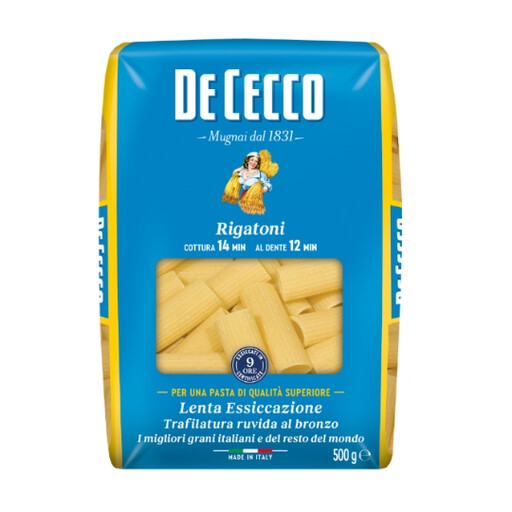
Why We Love It De Cecco has been an Italian institution since 1886, renowned for its expertise. These rigatoni are crafted using the brand's traditional method, which includes slow, low-temperature drying. Their texture, achieved through a bronze-die cut, is designed for perfect sauce adhesion.
Key Strengths
Who is it for? For cooks who trust renowned brands and are looking for a reliable choice for their classic Italian recipes, such as rigatoni all'amatriciana or alla carbonara.
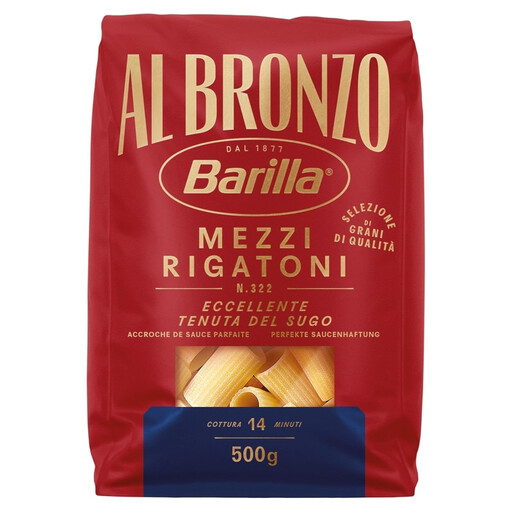
Why We Love It With its "Al Bronzo" range, Barilla bets everything on a specific production method: lavorazione grezza. The brand extrudes the pasta through micro-engraved bronze dies to create an intensely rough surface. These mezzi rigatoni (half-rigatoni) have a rich amber colour and a protein content of around 14%, promising a robust flavour.
Key Strengths
Who is it for? For those who prioritise texture above all else. If your ultimate goal is for the sauce to literally fuse with the pasta, the surface of these mezzi rigatoni was designed for you.
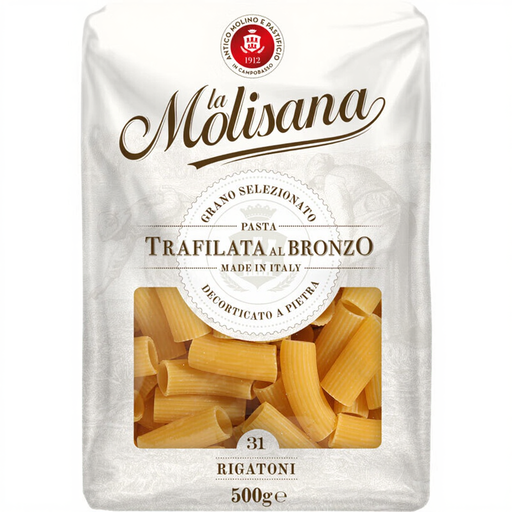
Why We Love It La Molisana stands out for its exemplary traceability and its stone-hulling process, which preserves the full integrity of the wheat grain. These bronze-die cut rigatoni are made from 100% Italian wheat sourced from specific regions. The brand also highlights its commitment to sustainability with fully recyclable packaging.
Key Strengths
Who is it for? For the consumer who is conscious of ingredient origins and sustainable practices, and who refuses to compromise on the traditional quality and texture of quality Italian pasta.
Rigatoni are a fantastic choice, but the world of Italian pasta is infinite. To discover other varieties or simply find inspiration for your next dinner, feel free to browse our complete selection.
Discover our complete selection of Italian food to find the perfect ingredients for your recipes.
Although both are tubular pastas, their shape and size set them apart. Rigatoni are wider tubes, cut straight at the ends, with straight ridges on their surface. Penne are narrower, cut on a diagonal (like a quill pen), and their ridges are often also diagonal. This difference affects how they hold sauce: rigatoni excel with rich, chunky sauces, while penne are better suited for thinner sauces.
Choosing bronze-die cut pasta is choosing texture. The bronze die creates a rough, porous surface on the pasta, which allows the sauce to cling to it and be absorbed much more effectively than with smooth pasta (made with Teflon dies). The result is a more flavourful and harmonious dish, where the pasta and sauce merge into one.
For a perfect al dente cook, it couldn't be simpler: