
Livraison le jour même ou le lendemain

Qualité garantie

Débloquez vos offres de bienvenue: Livraison GRATUITE | Jusqu'à -80 % | 30 jours d'essai gratuits à JoyPlus
Téléchargez l'application
With the multitude of vegetable oils available, it can be difficult to know which one to choose. As discerning consumers, we look for a product that combines quality, versatility, and a beneficial nutritional profile, without falling for marketing hype. Rice oil, also known as rice bran oil, is an option gaining traction in kitchens. But how do you choose the right one, and what is it really best for?
As a Product Recommendation Manager at Joybuy, my role is to provide you with clear, fact-based guidance to help you make an informed decision. This guide focuses on the objective characteristics of rice oil to help you decide if it meets your needs.
To evaluate a healthy cooking oil, it's best to rely on concrete criteria rather than advertising claims. Here are three points to consider.
The smoke point is the temperature at which an oil begins to break down and smoke, producing potentially harmful compounds. An oil with a high smoke point is therefore more stable and safer for high-heat cooking and frying.
Rice oil stands out with its particularly high smoke point, typically around 230-250°C (450-490°F). This makes it especially suitable for high-heat methods like stir-frying in a wok, deep-frying, or searing meats.
A product's label is a valuable source of information. For rice bran oil, two components are often highlighted by manufacturers:
This information, when available, allows for a fact-based comparison between products.
Unlike olive oil with its distinctive taste, rice oil is a neutral vegetable oil. Its flavour and aroma are very subtle, making it a choice ingredient that won't alter the original taste of your food. This makes it equally suitable for baking as it is for preparing light vinaigrettes or marinades.
Based on the criteria above, we have analysed several options available on the market. Here is a selection of products that stand out for their features.
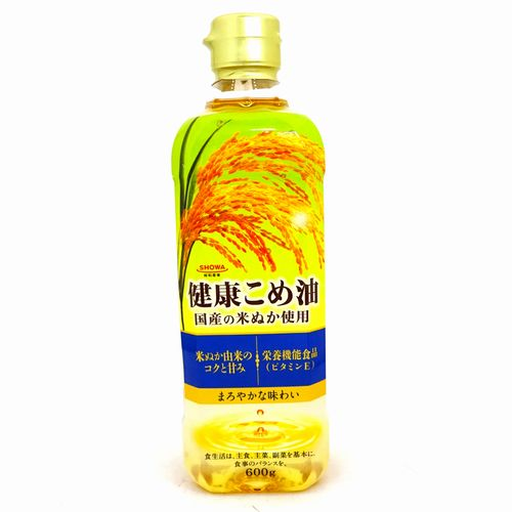
Why we recommend it Showa rice oil is made from Japanese-origin rice bran. The manufacturer states that it is rich in vitamin E, classifying it as a nutritious functional food. Its versatility is its main strength: it is suitable for Japanese, Western, and Chinese cuisine alike.
Pros
Who is this product for? For home cooks looking for an everyday oil that can adapt to a wide variety of recipes without overpowering their flavour.
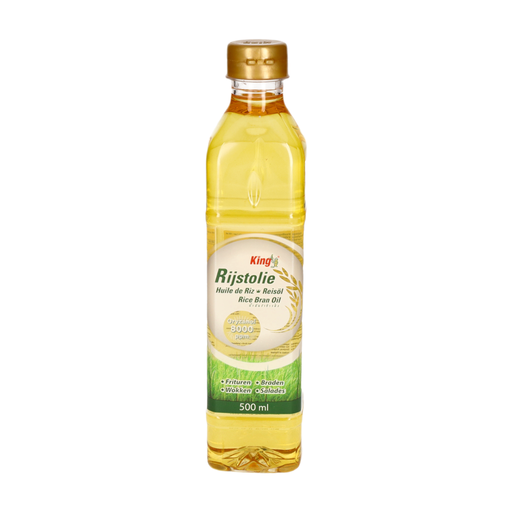
Why we recommend it This oil from the King brand is positioned as a premium, 100% refined option. The manufacturer highlights its high smoke point and neutral flavour. The product's technical sheet mentions an oryzanol content of 8000 ppm and the presence of vitamin E. It is also Halal and Kosher certified, and suitable for vegetarian and vegan diets.
Pros
Who is this product for? For health-conscious consumers looking for a versatile oil with precise nutritional information and clear certifications.
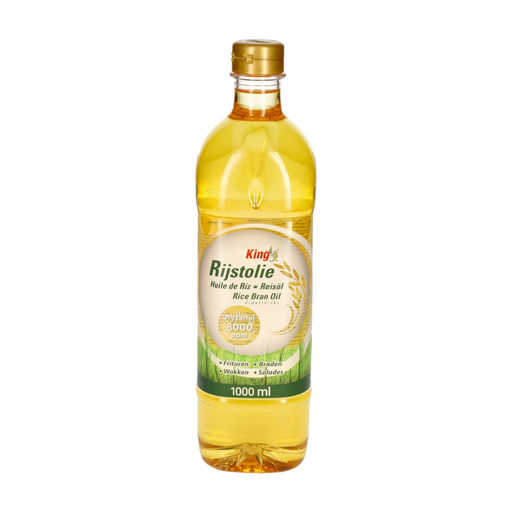
Why we recommend it This large-format version from the King brand offers excellent value for money for regular users. It shares the qualities of the 500 ml version but stands out with an even higher oryzanol content, advertised at 12000 ppm. It is a 100% pure, additive-free oil that maintains a neutral taste to preserve the flavour of dishes.
Pros
Who is this product for? For fans of Asian cuisine, families, and anyone who frequently uses oil for frying and cooking and is looking for an economical size without compromising on product features.
Rice oil is an excellent candidate for versatile cooking. However, every oil has its own specific characteristics. If you want to compare it with other vegetable oils like sesame, sunflower, or peanut oil, or simply explore other sizes, our complete category of cooking oils offers a wide range of possibilities to meet all your culinary needs.
1. Is rice bran oil good for frying? Yes, that's one of its main advantages. Thanks to its very high smoke point (around 230-250°C / 450-490°F), rice oil for frying is very stable at high temperatures. It helps you achieve crispy, less greasy food, as it absorbs less oil during cooking.
2. What is the difference between rice oil and olive oil? The main difference lies in the taste and smoke point. Olive oil (especially extra virgin) has a pronounced, fruity taste and a lower smoke point, making it ideal for dressings and low-heat cooking. Rice oil is a neutral vegetable oil with a high smoke point, which makes it more versatile for all types of cooking, including high-heat methods, without affecting the flavour of the dish.
3. What is the oryzanol found in rice oil? Oryzanol, or more specifically gamma-oryzanol, is a mixture of natural substances (ferulic acid esters) found specifically in the fatty fraction of rice bran. It is one of the components that characterises rice bran oil. Its concentration can vary depending on the refining process, and some brands choose to mention it on their packaging as a quality indicator.