
Livraison le jour même ou le lendemain

Qualité garantie

Débloquez vos offres de bienvenue: Livraison GRATUITE | Jusqu'à -80 % | 30 jours d'essai gratuits à JoyPlus
Téléchargez l'application
By the Joybuy team, our childcare experts
The moment your little one pulls themselves up onto their feet is simply unforgettable. A new adventure begins: exploring the world vertically. For many parents, a question then arises: how can I support them safely? The push walker, also known as a walking trolley, is specifically designed to offer stable support for a child who is starting to learn to walk.
To help you make sense of it all, this guide breaks down the key criteria and presents our selection of the best models, tailored to your child's needs and pace.
Before you start shopping, here are the key points to check to make an informed choice that meets your expectations for safety and development.
Stability is the number one priority. A good push toy for learning to walk must have a wide base and an anti-tip structure (often triangular). Check the following points:
A push walker can be much more than just a walking aid. Many models include an activity board for a 1-year-old, turning the toy into a true play station. These activities (shape sorters, turning gears, bead mazes) are excellent for:
A multifunctional developmental toy for 12-month-olds is a smart investment with a much longer lifespan.
The choice of materials directly influences the play experience. Wooden models, often inspired by the Montessori approach, favour simple interactions and a clean aesthetic that stimulate the imagination. They are known for their excellent durability. Plastic models, on the other hand, are more likely to include electronic features (music, lights) and sometimes offer removable activity panels for floor play. The final choice will depend on your preferences for development and design.
Here is a selection of products that meet different needs, whether you're looking for an adaptable model, a wooden classic, or a development-focused gift for a 1-year-old.
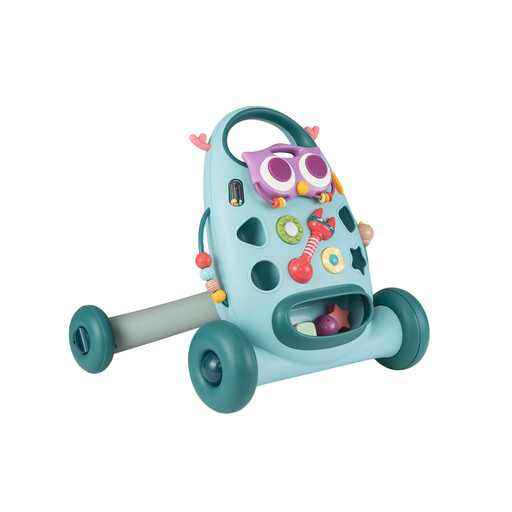
What sets it apart This baby walker with activities stands out for its 2-in-1 design. It serves as both a sturdy walking trolley and a play centre, thanks to its detachable activity board. This modularity is perfect: the child can first play on the floor, then use the walker as soon as they are ready to stand. Safety is enhanced by a stable triangular structure and speed-adjustable rear wheels.
Key features
Who is it for? Ideal for parents looking for a complete, adaptable product that combines a safe walking aid with a feature-rich activity centre.
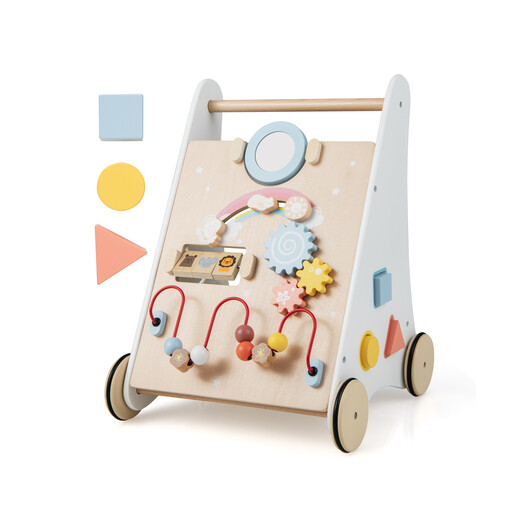
What sets it apart This wooden walking trolley embodies a more traditional and sustainable approach. Its ergonomic design is engineered to help toddlers adopt a good walking posture from the very beginning. Made from high-quality wood, it integrates several developmental activities directly into its structure.
Key features
Who is it for? Perfect for families who prefer natural materials, durability, and a minimalist design. It's an excellent choice for encouraging quiet play and imagination.
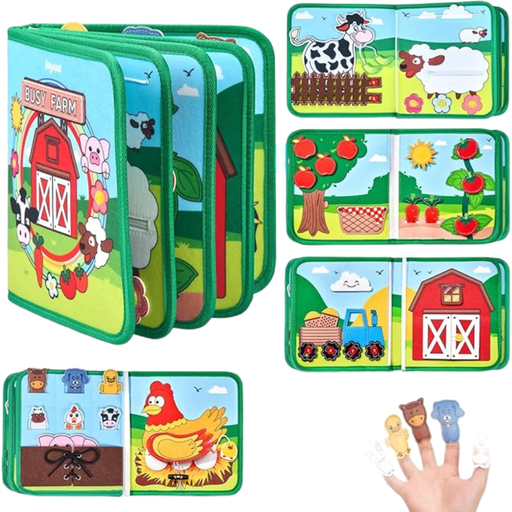
What sets it apart While not a walker, this felt activity book is an excellent complementary option, or a perfect gift for a 1-year-old focused on developing fine motor skills. Inspired by Montessori principles, it offers 15 activities for learning everyday skills (zippers, laces, buttons) in a quiet, portable format.
Key features
Who is it for? For parents and relatives looking for an educational, portable, and quiet toy to develop concentration and dexterity in toddlers aged 1 to 3.
Our selection highlights models that meet specific needs, but the world of baby toys is vast. To explore other types of walking trolleys, ride-ons, or developmental toys, take a look at our full catalogue.
? Discover our entire collection of baby toys
1. At what age can a baby use a push walker?
A push walker is recommended as soon as a child can pull themselves up on furniture and shows a desire to move around. This usually happens between 9 and 12 months, but every child develops at their own pace. Adult presence and supervision are, of course, essential.
2. What is the difference between a push walker and a seated walker?
The distinction is crucial. A push walker (or walking trolley) is a toy that the child pushes in front of them while standing on their own two feet. It promotes a natural posture, balance development, and muscle strengthening. In contrast, a seated walker is a seat on wheels in which the child is suspended. Many paediatricians and early childhood professionals warn against its use, as it can hinder the proper development of walking and posture.
3. How can I ensure a walking trolley is used safely at home?
For peace of mind, make sure to clear the play area of any obstacles (thick rugs, toys on the floor, electrical cords). Keep the walker away from stairs and hazardous areas. If your model has a speed adjustment, set it to the slowest mode at first to build your child's confidence. Finally, always stay nearby to supervise and encourage them.