A dull or unsuitable knife can turn meal prep into a chore. For any cooking enthusiast or home chef, a good knife isn't a luxury—it's a necessity. But navigating the different blade types, steels, and technical jargon can be challenging.
This guide is here to break down the key criteria and present our selection of models that stand out for their design and functionality.
Choosing the Right Kitchen Knife?: Key Criteria
Before diving into our selection, let's review the essential points that will guide you to the perfect quality kitchen knife for your needs.
1. Blade Type?: The Right Knife for Every Task
Each knife has a specific purpose. Understanding the main types will help you identify your needs?:
- The Chef's Knife?: This is the ultimate all-rounder. Its wide, sturdy blade, typically 20 cm long, is perfect for chopping, mincing, and slicing most foods (vegetables, meat, herbs).
- The Santoku Knife?: Japanese-inspired, it's prized for its high precision. Its blade, shorter and wider than a chef's knife and often dimpled, is ideal for fine cuts and helps prevent food from sticking.
- The Paring Knife?: Small and agile, its short blade (7 to 11 cm) is designed for precision work?: peeling, trimming, shaping vegetables, or deveining meat.
- The Kitchen Cleaver?: With its thick, heavy blade, it's built for tasks that require force, like splitting bones or breaking down large cuts of meat.
2. Blade Steel?: The Secret to a Long-Lasting Edge
A knife's performance depends above all on the quality of its steel.
- Stainless Steel?: A stainless steel knife offers excellent resistance to rust and corrosion, which makes maintenance a breeze. German steels, for example, are renowned for their balance of durability and ease of sharpening.
- High-Carbon Steel?: This steel allows for an extremely fine edge and a knife that stays sharp longer. In return, it requires more rigorous maintenance to prevent oxidation. Modern technologies, such as cryogenic treatments or special coatings, can now improve its resistance.
3. Ergonomics and Balance?: An Extension of Your Hand
A good knife should feel effortless, becoming an extension of your hand. The weight, the balance between the blade and the handle, and the shape of the handle are crucial for comfortable and safe use, especially during long cutting sessions.
Recommended Kitchen Knife Picks
We have selected several models that stand out for their design, performance, and suitability for different uses.
Wangmazi Shenmu Series Lu Cleaver?: Brute Force for Heavy-Duty Jobs
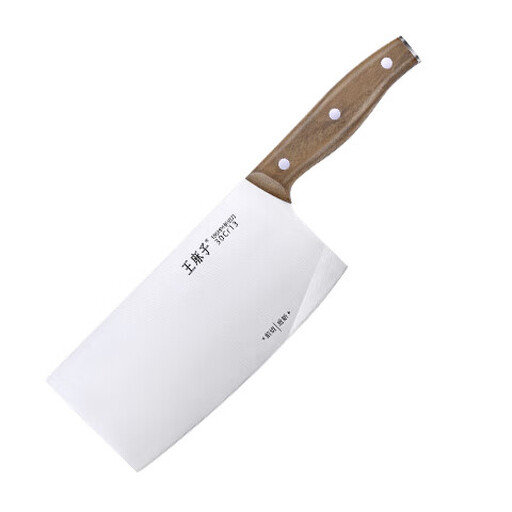
- Its Strong Suit?: This kitchen cleaver is built for performance. Its massive 400-series stainless steel blade and generous dimensions (9.1 x 30.8 cm) make it a formidable tool for tackling large cuts of meat or the toughest vegetables. The walnut handle adds a touch of elegance and ensures a firm grip.
- Advantages?:
- Wide, heavy blade, incredibly effective for chopping and splitting.
- 400-series stainless steel construction for good durability and corrosion resistance.
- Ergonomic walnut wood handle for comfortable use.
- Who is it for?? For cooks who regularly prepare large quantities or work with bone-in cuts of meat. A true powerhouse to round out your collection.
Huohou High-Carbon Steel Knife?: High-Tech Performance

- Its Strengths?: This knife, available as a Santoku knife or a slicing knife, combines cutting-edge steel with innovative technologies. The blade is forged from 50Cr15MoV high-carbon steel, known for its hardness and ability to maintain a razor-sharp edge. It is finished with an SGS-certified non-stick nano-coating that improves glide and makes cleaning easier.
- Advantages?:
- Remarkable and durable sharpness thanks to the high-carbon steel.
- Non-stick coating prevents food from sticking and simplifies rinsing.
- Hydrophobic and oleophobic "lotus effect" surface, a real bonus for hygiene.
- Ergonomic handle and a modern matte black design.
- Who is it for?? For those seeking everyday performance with a contemporary design and minimal maintenance. Ideal for intensive use, whether for mincing vegetables or preparing fish.
Tefal Ingenio Ice Force 11 cm Paring Knife?: Surgical Precision
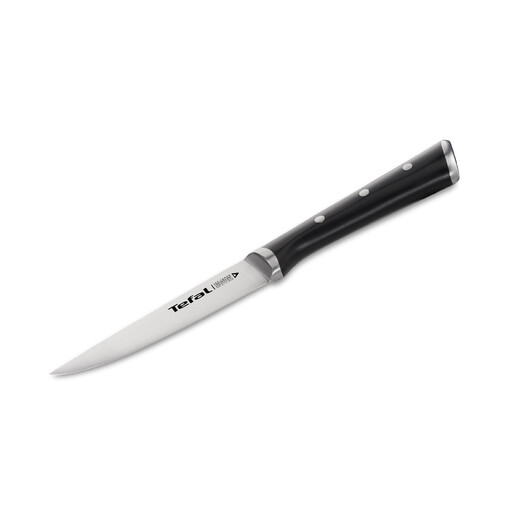
- Technology-Enhanced Sharpness?: This paring knife features Ice Force technology. The German stainless steel blade undergoes a cryogenic treatment at -120°C after heating, a process that Tefal claims strengthens its structure for a longer-lasting edge and enhanced durability. Its compact 11 cm size is perfect for delicate tasks.
- Advantages?:
- Ice Force technology for better edge retention.
- German stainless steel, a guarantee of robustness and resistance.
- Ideal size for peeling, trimming, and making precision cuts.
- Dishwasher-safe for easy maintenance.
- Who is it for?? An essential for every kitchen drawer, perfect for finishing touches that require agility and precision.
Complete Your Set
To build a great knife collection, you have to start with the basics. The paring knife is the indispensable precision tool for everyday tasks. It's an excellent starting point for expanding your arsenal.
Explore our full range of paring knives to find the model that meets your precision requirements.
Frequently Asked Questions (FAQ)
Chef's Knife vs. Santoku?: What's the Difference??
The chef's knife has a longer, curved blade, ideal for a rocking motion (for chopping and mincing). The Santoku knife, of Japanese origin, has a straighter, wider blade with a dropped point. It promotes a vertical chopping motion and excels at finely slicing vegetables.
How Do I Maintain My Knife to Preserve Its Edge??
For a knife to keep its edge, hand washing is king?: use warm water, mild soap, and dry it immediately. Unless the manufacturer states otherwise, avoid the dishwasher and prolonged soaking, which can damage the blade and handle. Store it in a knife block, on a magnetic strip, or in a sheath to protect the edge. Finally, regular honing with a steel or a sharpener is essential to maintain the edge.
Is Stainless Steel a Good Choice for a Kitchen Knife??
Absolutely. A stainless steel knife is an excellent choice for most cooks. It represents the ideal compromise between edge retention, ease of sharpening, and, most importantly, excellent resistance to rust and corrosion. It's a reliable, hassle-free material perfectly suited for the humid environment of a kitchen.


