
Livraison le jour même ou le lendemain

Qualité garantie

Débloquez vos offres de bienvenue: Livraison GRATUITE | Jusqu'à -80 % | 30 jours d'essai gratuits à JoyPlus
Téléchargez l'application
Your battery is in the red, your smartphone dies mid-commute... It's a nightmare we all know too well. Whether you're a mobile professional hopping between meetings, a frequent traveller, or a student juggling classes and library sessions, a reliable power source has become essential. The problem: the market for external batteries, or power banks, is a real jungle where it's easy to get lost.
As a product expert at Joybuy, my mission is to help you make sense of it all. The goal of this guide is to decode the key technical specs and present a selection of models that truly deliver for 2026. This will help you invest in a portable charger that genuinely meets your needs, without getting fooled by marketing jargon.
Before diving into specific models, it's helpful to understand the three pillars that define a good power bank: capacity, power, and connectivity.
Expressed in milliampere-hours (mAh), capacity gives you an idea of how many recharges your power bank can provide. Making the right choice is all about your usage:
Having a large capacity is good. Charging your devices quickly is even better! This speed, expressed in watts (W), is a crucial criterion. A fast-charging power bank will save you precious time. Pay close attention to compatible technologies, like Power Delivery (PD), which has established itself as the standard for fast charging via USB-C, or Quick Charge (QC). For the latest devices, the Qi2 wireless charger promises 15W magnetic charging, equivalent to Apple's MagSafe experience.
A good power bank must be practical for daily use. Check the available ports: most recent models include at least one USB-C port (often used for both charging the power bank and your devices) and one or more USB-A ports. If you plan to charge a laptop, you'll need a laptop power bank with a high power output (usually 45W or more) and a suitable USB-C PD port. Finally, don't overlook the weight and size: a high-capacity battery will inevitably be heavier and bulkier.
Now that the basics are covered, let's get down to business. Here is a selection of models that caught our eye, each catering to specific needs.
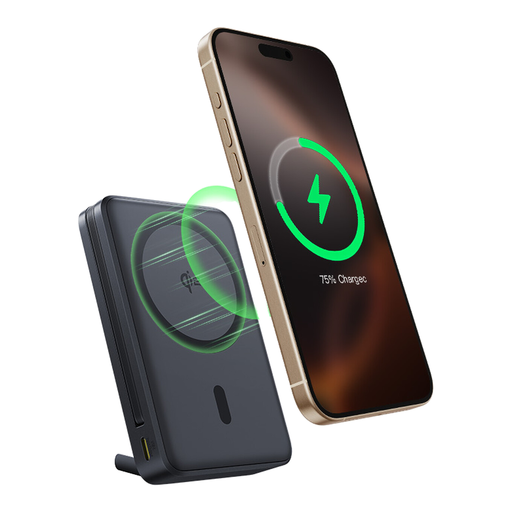
Why It Stands Out
This Baseus model is a powerhouse of modern technology. It combines a standard capacity with advanced features like Qi2 wireless charging and an integrated USB-C cable, making it a particularly convenient all-in-one solution.
Highlights
Who Is It For?
For the modern smartphone user looking for maximum convenience. With its integrated cable and Qi2 wireless charging, there's no need to carry extra accessories. It's the ideal choice for those who love high-performance, all-in-one solutions.
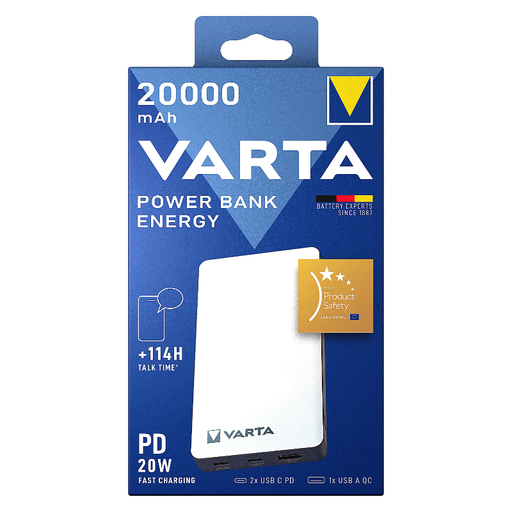
Why It Stands Out
VARTA is a brand renowned for its reliable energy solutions. This model gets straight to the point: a large capacity and comprehensive connectivity to power multiple devices over the long haul, worry-free.
Highlights
Who Is It For?
For the traveller, hiker, or anyone needing a substantial power reserve for several days. If you prioritize raw battery life and the ability to charge multiple devices (phone, tablet, headphones) over the latest wireless technologies, this model is a smart choice.

Why It Stands Out
This power bank is aimed at a demanding audience. With its colossal 140W power output and very high capacity, it's one of the few batteries on the market capable of efficiently charging a laptop in addition to your other devices.
Highlights
Who Is It For?
For the mobile professional, the on-the-go creative, or the student who depends on their laptop. If you need a single solution to power all your devices, including the most power-hungry ones, this model is a top-tier option.
Our selection covers the most common uses, but the world of power banks is much broader. If you're looking for a model with different features, a specific capacity, or a particular design, feel free to explore our full catalogue.
? Discover our complete collection of USB-C Power Banks.
It all depends on your usage. For daily use focused on your smartphone, 10,000 mAh is an excellent balance between size and battery life. For travel, long weekends, or if you have multiple devices to charge, aim for 20,000 mAh or more for peace of mind.
Yes, but under certain conditions. Lithium batteries are only allowed in carry-on luggage (never in checked bags). Most airlines set the limit at 100 Wh (watt-hours). For reference, a 27,000 mAh battery at 3.7V is equivalent to about 99.9 Wh, which is usually fine. However, always be sure to check your airline's specific rules before you fly.
No, not if you choose a quality model from a reputable brand. These integrate multiple protections against overcharging, overheating, short circuits, and power surges. The only risk often comes from a faulty or incompatible cable. Therefore, make sure to use cables that are in good condition for safe and efficient charging.